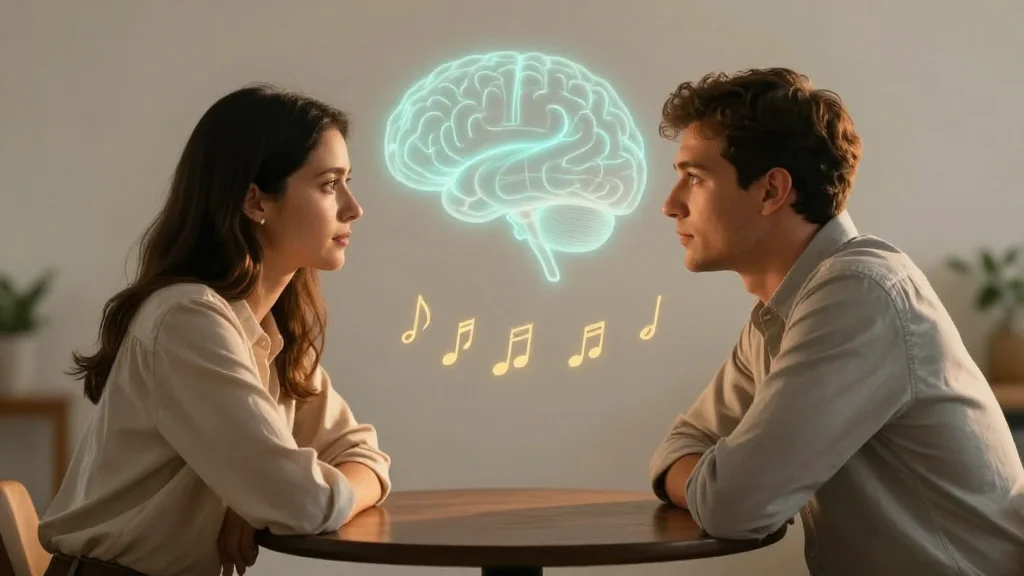
Scientists Show How Common Chord Progressions Unlock Social Bonding in the Brain
Why It Matters
The findings reveal a concrete neural mechanism by which simple musical structures can amplify social interaction, offering a potential low‑cost tool for treating conditions marked by social withdrawal. This bridges a gap between neuroscience, music composition, and mental‑health interventions.
Key Takeaways
- •Predictable chord progressions boost social brain activity during eye contact
- •fNIRS scans show right angular gyrus and somatosensory cortex activation
- •Partner brainwaves synchronize only with structured music and visible faces
- •Results suggest music‑based therapies could target social isolation disorders
Pulse Analysis
Music has long been touted as a social glue, but scientific evidence linking specific musical elements to brain mechanisms has been scarce. Recent advances in functional near‑infrared spectroscopy now allow researchers to monitor neural activity while participants interact naturally, eliminating the constraints of traditional MRI. By pairing this technology with a controlled eye‑contact paradigm, Yale scientists could isolate the impact of predictable chord progressions—common in Western pop—on the social brain, providing a clearer picture of how auditory predictability interacts with visual cues to foster connection.
The study recorded heightened activation in the right angular gyrus, somatosensory association cortex, and prefrontal regions when participants faced each other and heard a consonant progression. These areas are known for processing social information, bodily sensation, and complex planning, respectively. Moreover, inter‑brain synchrony emerged only under the combined condition of face‑to‑face gaze and structured music, indicating a shared neural state that mirrors real‑world cooperative experiences. This neural mirroring aligns with theories that social bonding relies on predictive coding, where the brain rewards expected patterns, reinforcing group cohesion.
Beyond academic insight, the research carries practical implications for mental‑health care. If predictable musical scaffolding can reliably activate social circuitry, clinicians could design low‑cost, scalable interventions for disorders such as depression, autism, or schizophrenia, where social disengagement is a core symptom. Future trials may test tailored playlists or live music sessions as adjunctive therapy, potentially reducing reliance on pharmacological approaches. As funding mechanisms improve, this line of inquiry could reshape how the health industry leverages music for social rehabilitation, making neuroscience‑informed sound design a new frontier in therapeutic innovation.
Scientists show how common chord progressions unlock social bonding in the brain
Comments
Want to join the conversation?
Loading comments...