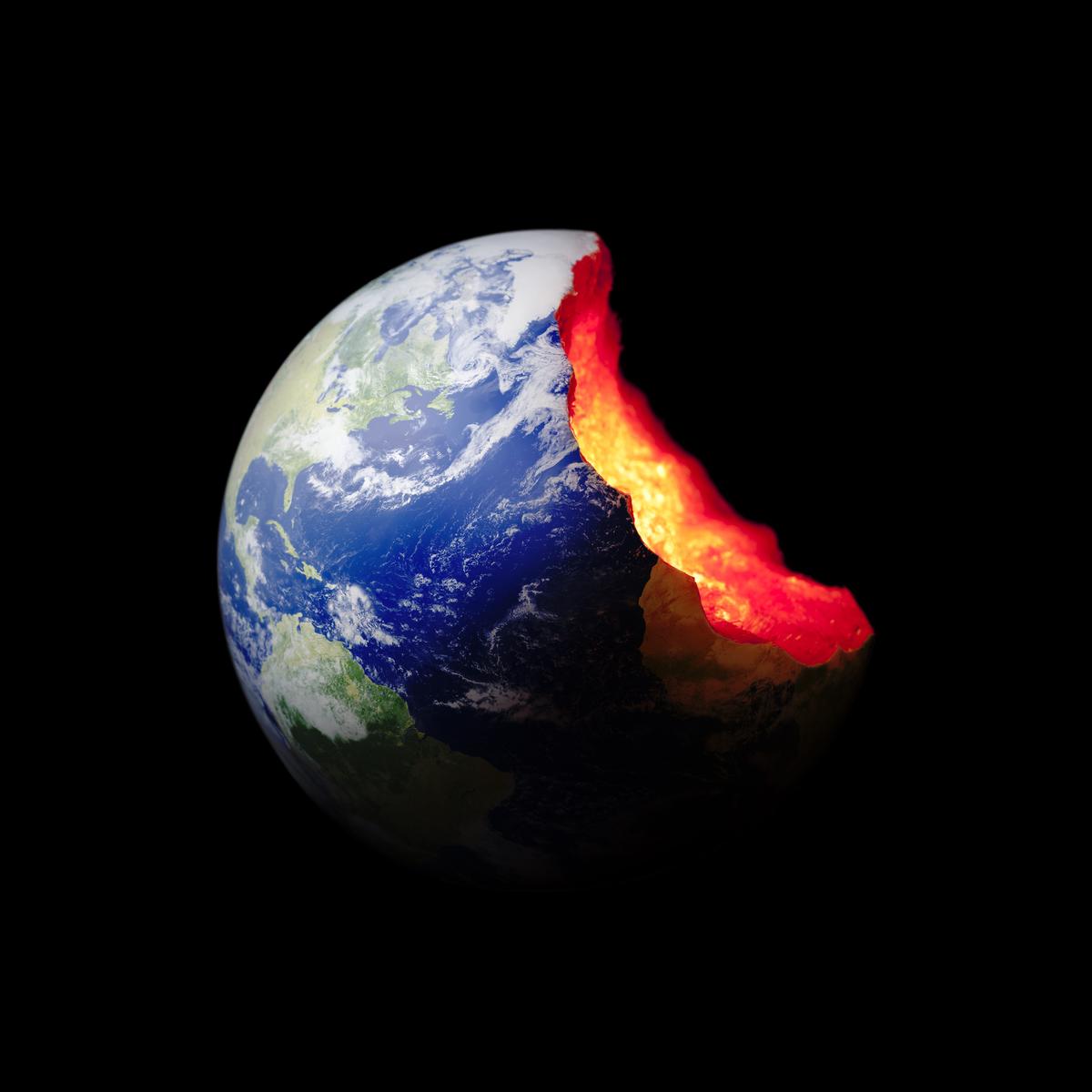
Scientists Took a Look Inside Earth’s Core—And Made a Surprising Discovery
Why It Matters
Understanding the sudden flow reversal refines models of the geodynamo, enhancing predictions of Earth’s magnetic field behavior and its protection against solar radiation. The insight also bridges gaps between core dynamics and mantle interactions, crucial for long‑term climate and navigation systems.
Key Takeaways
- •Flow in Earth's outer core reversed direction near Pacific around 2010.
- •Study combined 30 years of ground and satellite magnetic data.
- •Eastward flow weakened after 2020, hinting at inner‑core coupling.
- •Findings refine geodynamo models and improve magnetic field forecasts.
Pulse Analysis
The Earth’s magnetic shield originates from the turbulent motion of molten iron in the outer core, a phenomenon known as the geodynamo. For decades, scientists have modeled this flow as predominantly westward, a simplification that underpins many forecasts of magnetic field drift and geomagnetic storm impact. However, the newly documented reversal challenges that paradigm, suggesting that regional dynamics can shift dramatically over a single decade, a factor previously underappreciated in global magnetic models.
The breakthrough emerged from an exhaustive analysis of roughly 30 years of magnetic observations, merging data from ground stations with high‑precision satellite measurements from ESA’s CryoSat, Swarm, Germany’s CHAMP, and Norway’s Ørsted missions. By aligning these datasets, researchers pinpointed a clear eastward surge in the Pacific‑centered flow beginning around 2010, followed by a gradual decline after 2020. This pattern aligns with the timing of observed geomagnetic jerks—sudden changes in the field—implying a deeper connection between surface magnetic anomalies and core‑mantle interactions.
Beyond academic intrigue, the findings carry practical implications. More accurate representations of core flow improve long‑term forecasts of magnetic pole drift, which affect satellite navigation, aviation routes, and power‑grid stability. The study also underscores the value of continuous satellite monitoring; missions like Swarm provide near‑real‑time insights that can refine predictive models and guide future exploratory missions targeting the core‑mantle boundary. As researchers integrate this reversal into geodynamo simulations, expectations are that forecasting precision will rise, bolstering both scientific understanding and technological resilience.
Scientists Took a Look Inside Earth’s Core—and Made a Surprising Discovery
Comments
Want to join the conversation?
Loading comments...