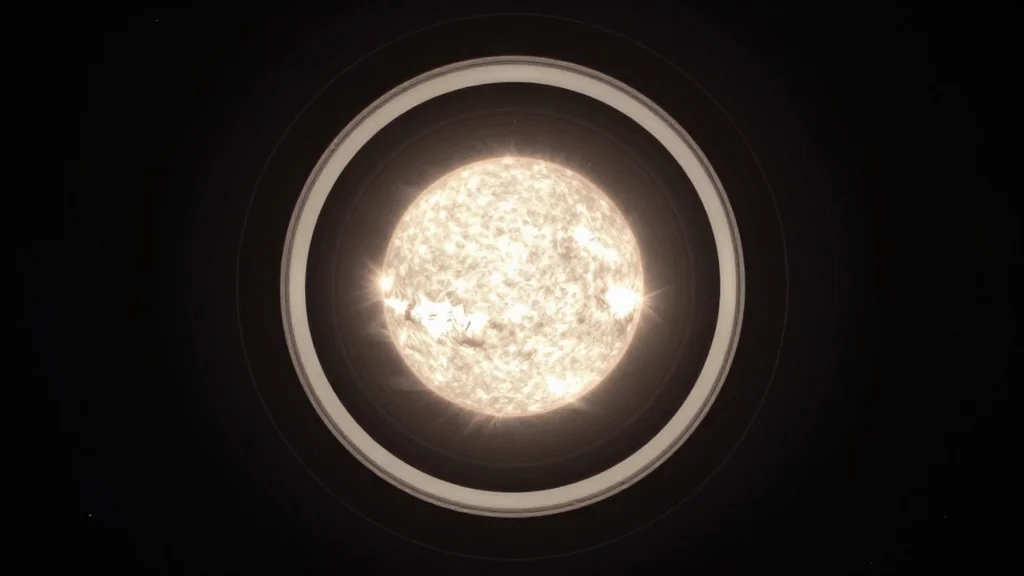
Scientists Use AI to Interpret the Sun's Acoustic Heartbeat
Why It Matters
Accurate forecasts of solar acoustic shifts give operators early warning of heightened solar storms that can disrupt satellites and power grids, strengthening resilience of critical infrastructure. The breakthrough positions AI‑enhanced helioseismology as a pivotal tool in the growing space‑weather market.
Key Takeaways
- •AI decodes solar p‑mode frequencies from 30 years of data
- •Predicts calm phase of solar cycle 25 acoustic heartbeat
- •Helioseismology gains machine‑learning tool for space‑weather forecasts
- •Improved solar activity alerts could protect satellites and power grids
Pulse Analysis
The Sun’s interior vibrates with pressure waves known as p‑modes, a phenomenon long studied by helioseismologists to map solar structure. By training a deep‑learning model on thirty years of these acoustic signatures, researchers have taught the AI to recognize subtle frequency shifts that correspond to the Sun’s magnetic cycle. This capability transforms raw oscillation data into actionable forecasts, akin to how medical imaging translates sound into diagnostic insight.
Space‑weather forecasting stands to benefit dramatically from this advance. Solar flares and coronal mass ejections, driven by magnetic turbulence beneath the surface, can cripple satellite communications, GPS navigation, and terrestrial power grids. An AI‑derived acoustic indicator provides an independent, early‑warning metric that complements traditional sunspot and solar‑wind observations. Operators of satellite constellations and grid managers can thus anticipate periods of heightened risk with greater lead time, reducing potential economic losses.
Looking ahead, the integration of AI‑enhanced helioseismology with magnetohydrodynamic simulations could refine predictive models of solar activity across multiple cycles. The methodology also opens avenues for cross‑disciplinary research, linking solar physics, data science, and atmospheric engineering. As the commercial space sector expands, reliable solar forecasts will become a cornerstone of operational planning, making this AI breakthrough a strategic asset for both scientific inquiry and industry resilience.
Scientists use AI to interpret the sun's acoustic heartbeat
Comments
Want to join the conversation?
Loading comments...