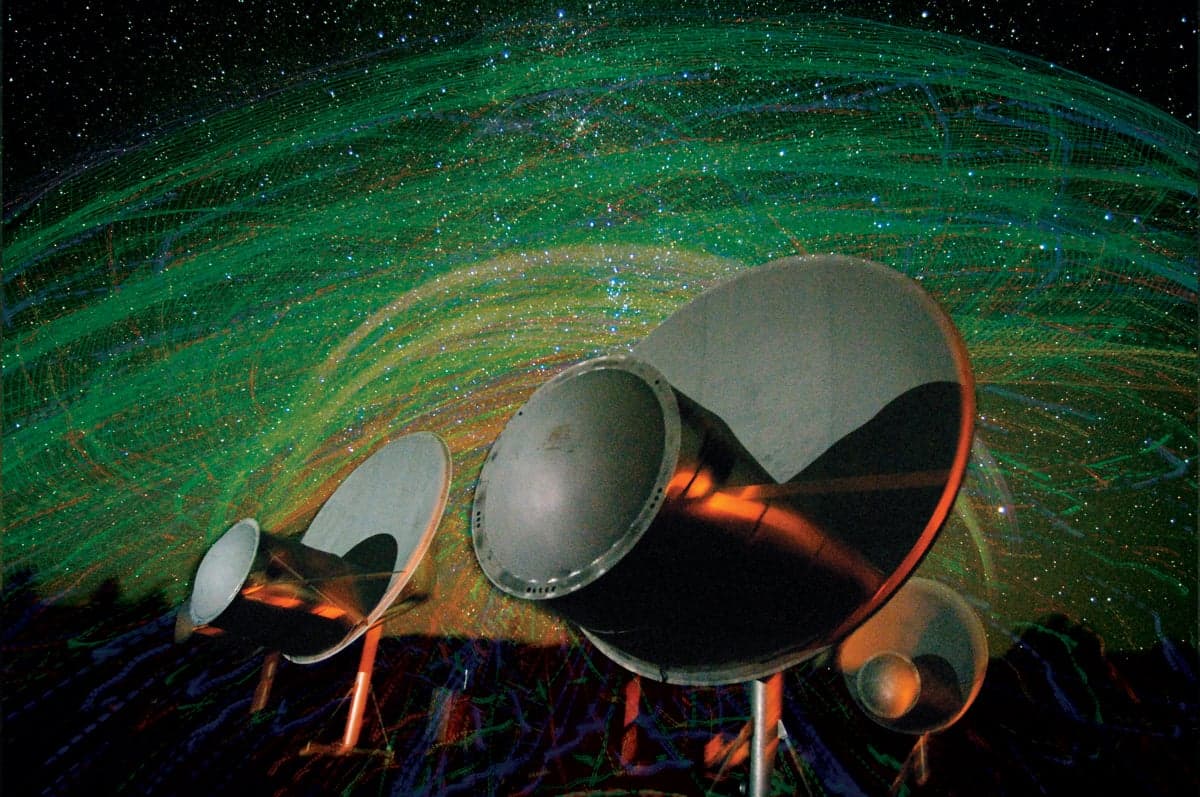
Search for Alien Technology on Interstellar Comet 3I/ATLAS Comes up Empty
Companies Mentioned

NASA
Why It Matters
Demonstrating a systematic search protocol strengthens readiness for potential artificial interstellar objects and validates SETI’s methodological rigor.
Key Takeaways
- •ATA scanned 3I/ATLAS across full frequency range, found no signals.
- •Comet’s speed 137,000 mi/h and methanol-rich coma indicate natural origin.
- •Null result reinforces importance of baseline data for future technosignature searches.
- •Study provides operational experience for SETI teams ahead of next interstellar visitor.
Pulse Analysis
The discovery of interstellar visitors has reshaped planetary science, with ‘Oumuamua in 2017 and comet 2I/Borisov in 2019 prompting intense speculation about extraterrestrial artifacts. Each new object offers a rare chance to test the limits of our observational infrastructure. For the SETI community, these fly‑bys are not just curiosities; they serve as natural experiments to refine technosignature detection strategies. By integrating radio astronomy with cometary science, researchers can quickly assess whether an object’s emissions deviate from known astrophysical processes, keeping the search for intelligent life grounded in empirical data.
3I/ATLAS entered the inner solar system in July 2025, hurtling at roughly 137,000 mi/h and displaying a coma rich in methanol and frozen carbon dioxide—signatures that point to a pristine, icy origin beyond our Sun. Leveraging the Allen Telescope Array’s wide‑band capability, a team led by SETI Institute scientist Sofia Sheikh recorded several hours of narrow‑band data across the array’s full frequency spectrum. The analysis revealed no artificial carrier waves, a result that, while unsurprising to the investigators, validates the array’s sensitivity and demonstrates a repeatable protocol for future interstellar alerts.
The absence of technosignatures is itself a data point, establishing a baseline against which anomalous signals can be measured. Practicing rapid response on a real object equips SETI teams with operational experience that will be crucial should an anomalous, potentially artificial interstellar body appear. Moreover, the study underscores the value of maintaining and upgrading radio facilities such as the ATA, which can be repurposed for both traditional astrophysics and the emerging field of technosignature hunting. As detection techniques mature, the scientific community moves closer to answering whether humanity is alone in the cosmos.
Search for alien technology on interstellar Comet 3I/ATLAS comes up empty
Comments
Want to join the conversation?
Loading comments...