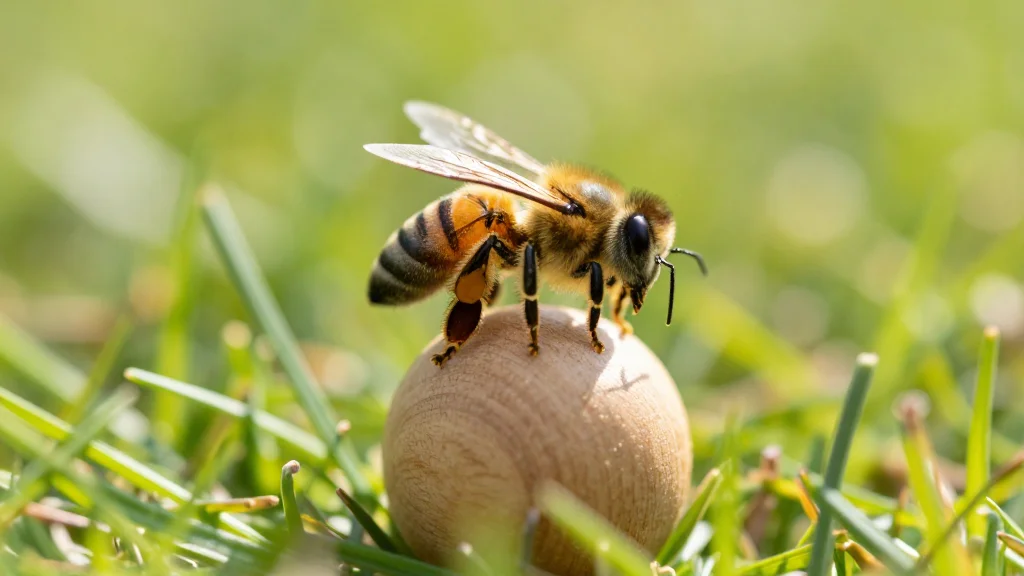
Secrets of the Bees: Revealing the Sneaky Genius of Nature’s Brightest Thinkers
Why It Matters
Bee intelligence directly influences pollination efficiency, which underpins billions of dollars in agricultural output and inspires bio‑inspired technologies. Understanding their cognition helps shape conservation policies and innovative robotics.
Key Takeaways
- •Bees solve puzzles, indicating advanced cognitive flexibility
- •Honeybees navigate miles using sunlight and memory
- •Bee dances communicate precise foraging locations
- •Pollination by bees supports multi‑trillion‑dollar global agriculture
Pulse Analysis
Bees are more than just pollinators; they are miniature problem‑solvers whose cognitive feats have measurable economic implications. Modern research shows honeybees can learn abstract concepts, manipulate objects, and make collective decisions that optimize resource collection. This intelligence translates into reliable pollination services valued at roughly $200 billion annually in the United States alone, reinforcing the direct link between bee health and agricultural profitability. As climate change and habitat loss threaten bee populations, the financial stakes for growers and food manufacturers rise sharply.
The scientific community is leveraging bee cognition to inspire next‑generation technologies. Engineers study bee navigation and swarm behavior to develop autonomous drones capable of efficient, decentralized routing. Likewise, roboticists mimic the bee’s ability to balance on moving objects, informing designs for micro‑robots used in precision agriculture and environmental monitoring. These bio‑inspired innovations promise cost reductions and performance gains across sectors ranging from logistics to precision farming, highlighting the commercial upside of investing in pollinator research.
Policy makers and investors are taking note of the intertwined nature of bee ecology and economic resilience. Initiatives that fund habitat restoration, reduce pesticide exposure, and support sustainable beekeeping can safeguard pollination services while opening new markets for pollinator‑friendly products. Companies that integrate bee‑centric sustainability metrics into their ESG frameworks not only mitigate supply‑chain risks but also appeal to increasingly eco‑conscious consumers. In sum, the emerging understanding of bee intelligence is reshaping agriculture, technology, and finance, making the protection of these insects a strategic priority for the broader economy.
Secrets of the Bees: Revealing the Sneaky Genius of Nature’s Brightest Thinkers
Comments
Want to join the conversation?
Loading comments...