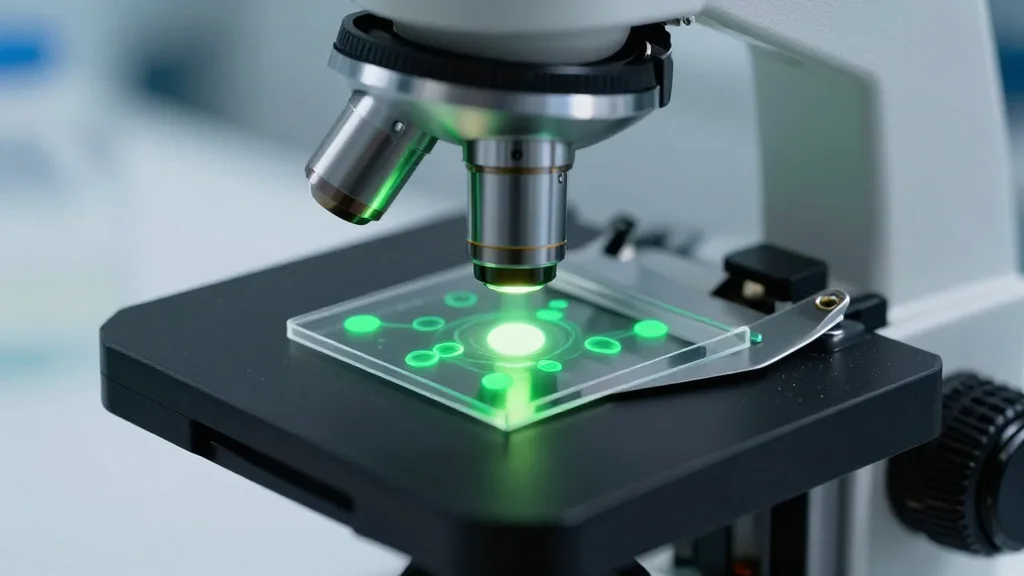
Seeing Is Believing: Smart Probes Reveal Proteins Inside Living Cells with Unprecedented Clarity
Why It Matters
The breakthrough provides researchers unprecedented clarity in live‑cell imaging, speeding studies of signaling, development, and disease mechanisms while enhancing high‑throughput drug‑discovery assays.
Key Takeaways
- •VIS‑Fb probes emit fluorescence only when bound to target proteins.
- •Background signal reduced up to 100‑fold, enabling sharper intracellular images.
- •Toolkit spans visible spectrum, supporting multicolor imaging in live cells.
- •Light‑controlled variants allow temporal tracking of protein dynamics.
- •Demonstrated in mice brain and zebrafish embryos for real‑time studies.
Pulse Analysis
Fluorescent labeling has become a cornerstone of modern biology, yet conventional probes suffer from persistent background glow that blurs fine cellular details. The newly reported VIS‑Fb (visible‑spectrum target‑stabilizable fluorescent nanobodies) tackles this problem by coupling fluorescence activation to target binding, causing unbound probes to degrade rapidly. This on‑demand illumination slashes nonspecific signal by as much as 100‑fold, delivering crystal‑clear views of protein location and movement inside living cells and organisms.
Beyond noise reduction, VIS‑Fb represents a versatile engineering platform. Researchers have fused more than 20 fluorescent proteins and biosensors to nanobody scaffolds, creating a palette that spans from blue to far‑red. The result is true multicolor imaging, where several proteins can be visualized concurrently without spectral overlap. Certain variants are photo‑switchable, granting precise temporal control, while integrated ion and metabolite sensors turn the probes into functional reporters that reveal not just where proteins reside but what they are doing in real time.
The implications for biomedical research are profound. High‑resolution, low‑background imaging accelerates investigations into cell signaling pathways, developmental processes, and disease progression, especially in complex tissues like the brain. Pharmaceutical pipelines stand to benefit from more reliable cellular assays, reducing false positives in early‑stage screening. As the technology moves toward broader adoption, it could become a standard tool for both academic labs and biotech firms seeking to decode the dynamic protein landscape within living systems.
Seeing is believing: Smart probes reveal proteins inside living cells with unprecedented clarity
Comments
Want to join the conversation?
Loading comments...