Key Takeaways
- •JWST GLIMPSE imaged Abell S1063 for ~12,000 hours, revealing faint sources.
- •Four caustic‑crossing stars detected, magnified up to ~5,000×.
- •Three sources match asymptotic giant branch (AGB) star signatures.
- •Fourth source likely a yellow supergiant, possibly a Cepheid variable.
- •Lensing lets us study normal stars 12 billion years ago, informing dust origins.
Pulse Analysis
Gravitational lensing has long been a natural telescope, but the James Webb Space Telescope (JWST) elevates the technique to unprecedented sensitivity. By targeting the massive cluster Abell S1063 for roughly 12,000 hours under the GLIMPSE program, JWST’s NIRCam captured ultra‑deep infrared images where the cluster’s gravity stretches and amplifies background light. Precise lens‑model maps pinpointed critical lines—regions where magnification theoretically diverges—allowing astronomers to hunt for caustic‑crossing events. The resulting data set provides the faintest, most highly magnified sources ever recorded, setting a new benchmark for extragalactic stellar detection.
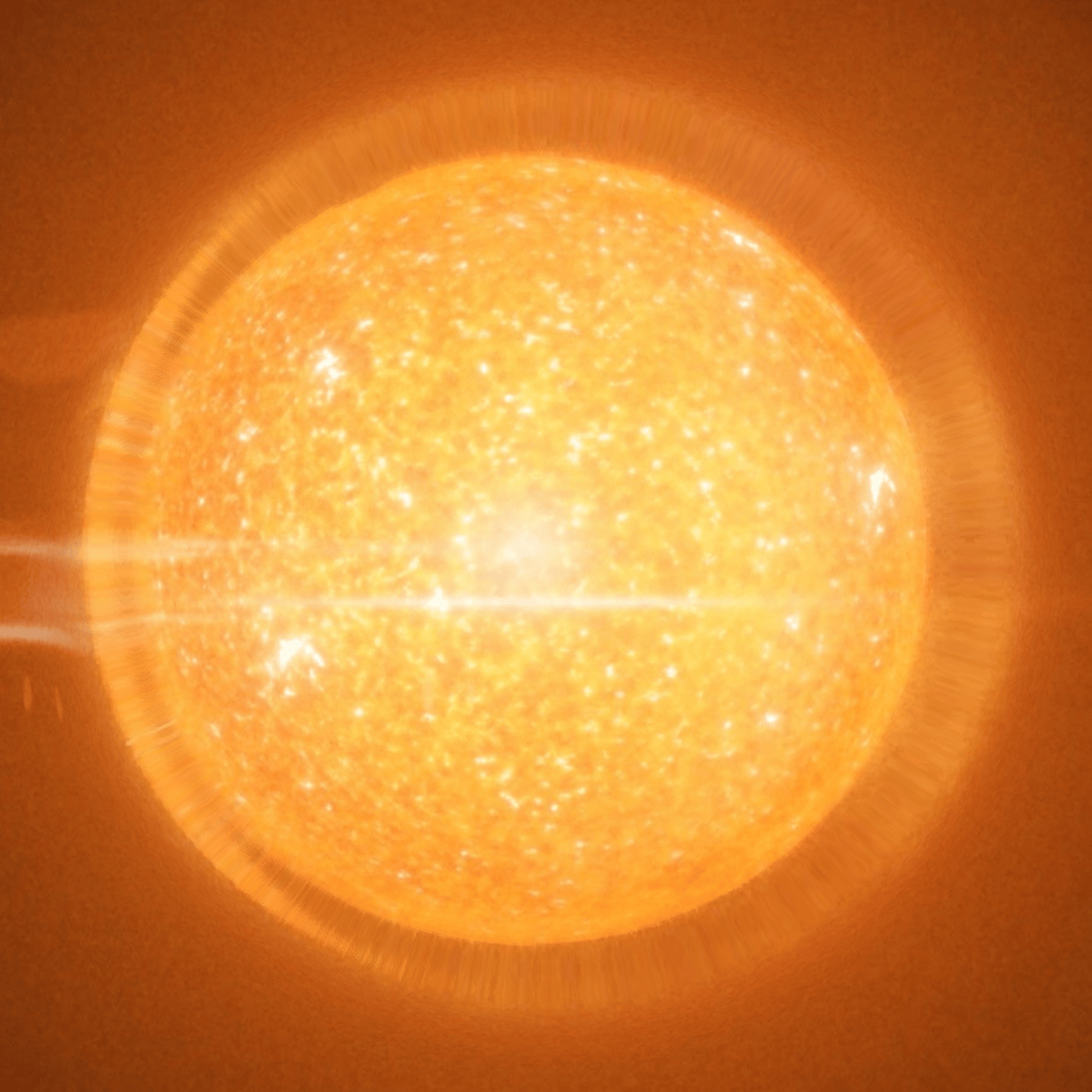
The authors identified four point‑like sources whose spectral energy distributions align with known stellar types. Three are best described as asymptotic giant branch (AGB) stars, a late evolutionary phase common to stars a few times the Sun’s mass. AGB stars are prolific factories of nitrogen and cosmic dust, ingredients that shape galaxy chemistry. Observing them at a redshift of 3.72 (12 billion‑year look‑back) offers a rare glimpse of these processes during the universe’s peak star‑formation era. The fourth object, dubbed *Hedorah*, appears to be a yellow supergiant; its modest 100× magnification suggests it could even be a Cepheid variable, a cornerstone for distance‑ladder calibrations.
Beyond the immediate astrophysical insights, the discovery signals a paradigm shift for observational cosmology. If normal stars can be resolved at such distances, future JWST campaigns—and upcoming observatories like the Nancy Grace Roman Space Telescope—can systematically map stellar populations across cosmic time. This will refine models of early‑universe dust enrichment, improve measurements of the Hubble constant via Cepheid lenses, and potentially uncover new classes of transient phenomena. For the broader scientific enterprise, the ability to turn galaxy clusters into ultra‑high‑resolution lenses transforms JWST from a powerful imager into a versatile probe of fundamental physics, promising commercial and academic collaborations that capitalize on high‑value data streams.
Seeing Stars: Juicing up JWST with 5000x Magnification
Comments
Want to join the conversation?