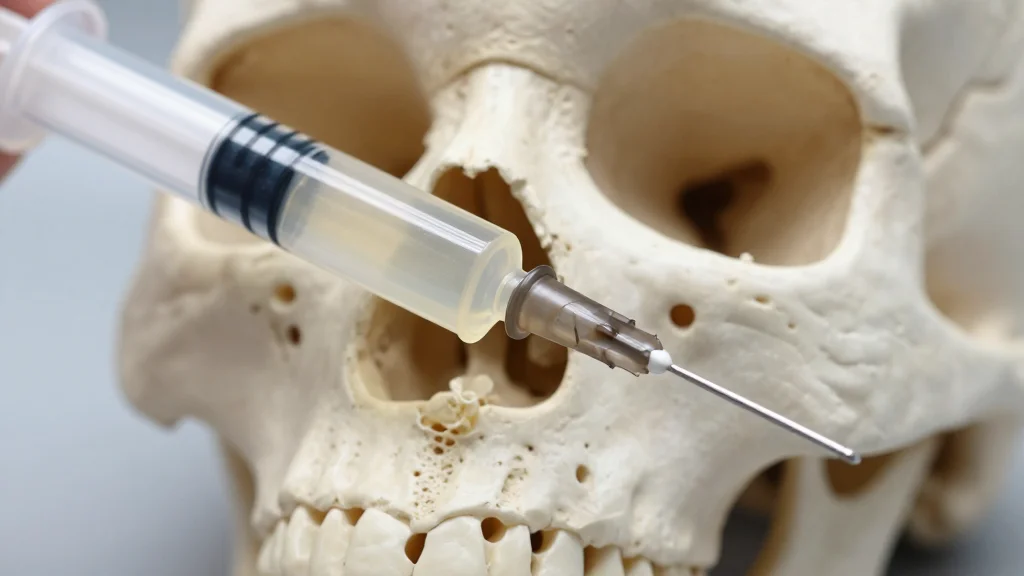
Shape‐Memory Collagen/Silk‐Fibroin Scaffold for Dura Sealing and Skull Base Regeneration
Why It Matters
The dual‑function scaffold could reduce postoperative CSF leaks and eliminate the need for multiple grafts, streamlining cranial‑base surgery and lowering infection risk. Its regenerative capability may shorten recovery times and improve long‑term outcomes for neurosurgical patients.
Key Takeaways
- •Layered design seals CSF and promotes bone regeneration
- •Shape‑memory enables minimally invasive deployment
- •Cryogelation process yields non‑porous barrier layer
- •In vitro tests show high cell adhesion and osteogenic markers
- •Animal models demonstrate stable integration without severe inflammation
Pulse Analysis
Skull‑base defects present a unique surgical challenge because the delicate anatomy requires both a watertight seal to prevent cerebrospinal fluid (CSF) leakage and a scaffold that supports bone regeneration. Traditional solutions—autologous grafts, vascularized flaps, or synthetic patches—often fall short, lacking either the biological cues needed for tissue integration or the mechanical strength to withstand intracranial pressure. This gap has driven research toward biomaterials that can simultaneously address sealing and regeneration, positioning the new collagen/silk‑fibroin (S‑F) composite as a promising candidate.
The innovative scaffold leverages a two‑layer architecture: an S‑F‑rich outer membrane forms a dense, non‑porous barrier that effectively blocks CSF egress, while a lower layer infused with α‑tricalcium phosphate (α‑TCP) provides osteoconductive support. Fabricated through a cryogelation‑inspired process, the material exhibits shape‑memory behavior, allowing it to be injected in a compact form and then expand to fill irregular defects. Laboratory assays confirm robust fibroblast adhesion, up‑regulation of extracellular matrix proteins, and activation of osteogenic pathways, indicating that the scaffold not only seals but also actively promotes bone healing.
In vivo experiments reinforce these findings, showing that the composite integrates seamlessly with surrounding tissue and elicits minimal inflammatory response. By delivering both sealing and regenerative functions in a single, minimally invasive package, the technology could streamline operative workflows, reduce reliance on multiple grafts, and lower the incidence of postoperative complications such as meningitis. As neurosurgeons seek solutions that improve patient outcomes while curbing procedural costs, this shape‑memory scaffold may soon transition from the lab to clinical trials, potentially reshaping the standard of care for cranial‑base reconstruction.
Shape‐Memory Collagen/Silk‐Fibroin Scaffold for Dura Sealing and Skull Base Regeneration
Comments
Want to join the conversation?
Loading comments...