Why It Matters
The research quantifies music’s power to synchronize emotions and brain activity, suggesting new avenues for social‑media platforms, live‑event design, and music‑based therapies that rely on shared experience.
Key Takeaways
- •Joint listening boosted moment‑to‑moment pleasure similarity among friends
- •Prefrontal cortex oxygenation rose more during shared listening
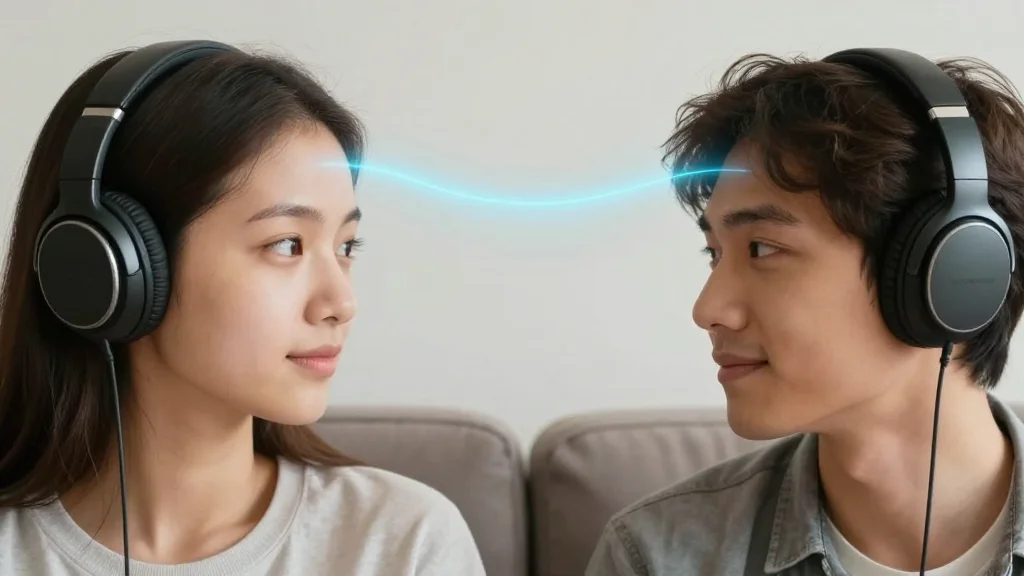
- •Neural synchrony only increased when participants sat face‑to‑face
- •Friends' favorite songs drove strongest pleasure alignment
- •fNIRS enabled natural movement while capturing brain activity
Pulse Analysis
The University of Pavia team leveraged functional near‑infrared spectroscopy (fNIRS) to capture real‑time brain activity while participants listened to 40‑second music clips. By pairing friends in a face‑to‑face setting, the experiment preserved ecological validity—allowing natural movement and spontaneous interaction—yet still delivered precise measurements of prefrontal oxygenation. The data revealed that shared listening not only heightened pleasure ratings but also produced tightly coupled neural patterns, a phenomenon previously hinted at in concert‑hall studies but now demonstrated in a controlled laboratory environment.
For the music industry, these insights underscore the value of social listening features. Streaming services that enable synchronized playback among friends could tap into the same neuro‑emotional alignment, potentially increasing user engagement and subscription retention. Live‑event organizers might design seating or interactive formats that maximize physical proximity, amplifying collective enjoyment and fostering stronger fan communities. Moreover, marketers can leverage the science of neural synchrony to craft campaigns that encourage co‑listening, turning music consumption into a shared, emotionally resonant experience.
Beyond entertainment, the study opens pathways for clinical applications. Music therapy programs could incorporate paired listening sessions to foster emotional attunement between patients and therapists, using neural synchrony as an objective marker of therapeutic progress. Future research may explore how neurochemicals like oxytocin mediate this alignment, or how synchrony varies with strangers versus close friends. As the field advances, tools like the open‑source fNIRS head‑coordinate estimator promise broader replication and deeper understanding of music’s role in social cohesion.
Shared music listening synchronizes brain activity
Comments
Want to join the conversation?
Loading comments...