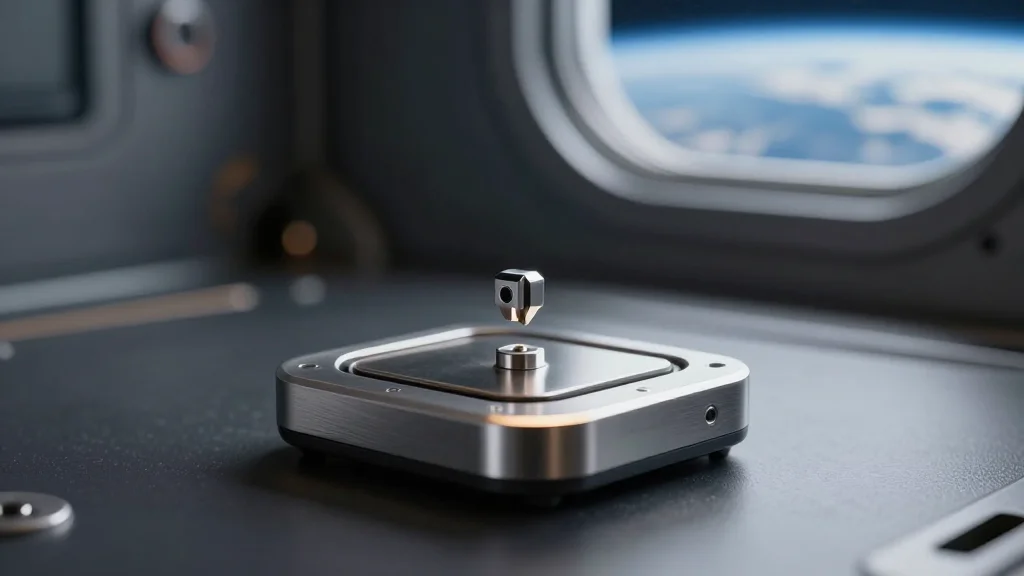
Shenyang Institute of Automation Proposes Carbon Fiber/PEEK 3D Printing and Welding for On-Orbit Structures
Why It Matters
Enabling automated, high‑performance composite construction in orbit reduces launch volume constraints and improves reliability, accelerating the development of next‑generation space infrastructure.
Key Takeaways
- •SIA CAS combines pultrusion and laser welding for carbon‑fiber PEEK tubes
- •Process optimizes temperature and speed for high specific strength and stiffness
- •3D‑printed PEEK joints enable non‑contact laser transmission welding in space
- •Prototype truss demonstrates automated on‑orbit assembly of large composite structures
Pulse Analysis
On‑orbit manufacturing has moved from concept to prototype as space agencies and commercial firms seek ways to bypass the size and mass limits imposed by launch vehicles. Traditional spacecraft components are folded or segmented, then assembled after reaching orbit, a process that adds weight, complexity, and risk. By fabricating structural elements directly in microgravity, manufacturers can create larger, more efficient assemblies, opening pathways for expansive solar power stations, high‑gain antennas, and habitats on the Moon or Mars.
The Shenyang Institute of Automation’s approach leverages the inherent advantages of carbon‑fiber reinforced PEEK—a polymer known for its high temperature tolerance, radiation resistance, and exceptional strength‑to‑weight ratio. By fine‑tuning pultrusion temperature and line speed, the team achieved tubes with superior specific strength and stiffness. Coupled with 3D‑printed, high‑transmittance PEEK joints, laser transmission welding provides a non‑contact, uniform‑stress bond that outperforms conventional adhesives, which can degrade over time in the harsh space environment. The integrated process—from raw material to welded assembly—demonstrates a repeatable workflow suitable for robotic automation.
The broader impact on the aerospace sector could be significant. Reliable, automated on‑orbit construction reduces the need for multiple launches, cutting costs and enabling modular expansion of space infrastructure. As satellite constellations grow and lunar exploration intensifies, demand for lightweight, durable composites will rise. SIA CAS’s breakthrough positions Chinese research at the forefront of space manufacturing, potentially spurring international collaborations and prompting investors to fund next‑generation orbital assembly platforms. The technology promises to reshape supply chains, making large‑scale space projects more economically viable and technically feasible.
Shenyang Institute of Automation proposes carbon fiber/PEEK 3D printing and welding for on-orbit structures
Comments
Want to join the conversation?
Loading comments...