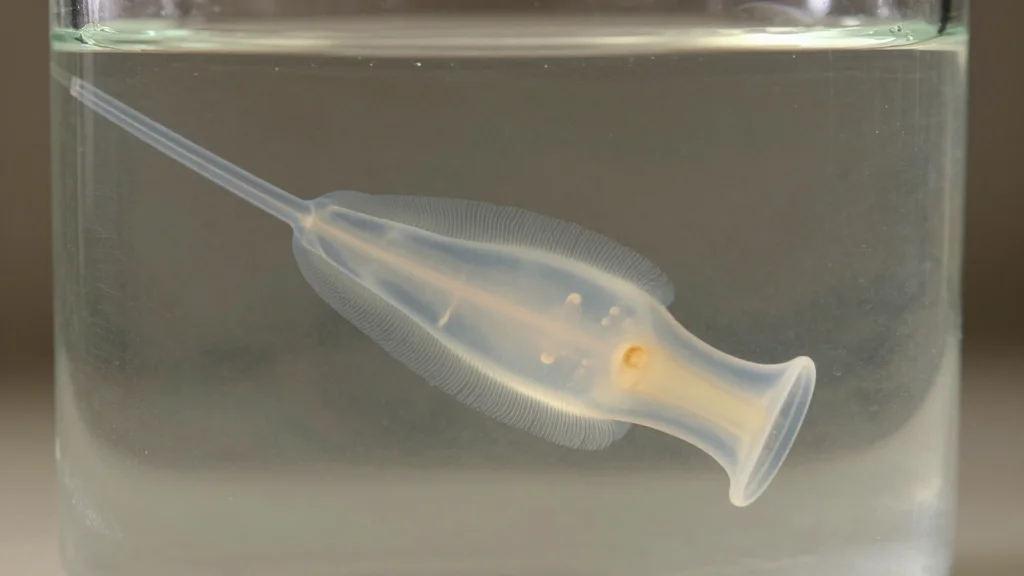
Single-Celled Blob Proves You Don't Need a Brain to Learn Stuff
Why It Matters
The discovery rewrites the evolutionary timeline of learning, implying that fundamental learning algorithms predate nervous systems and could inform both biology and artificial intelligence. It also prompts a reassessment of how simple cellular processes relate to complex brain functions.
Key Takeaways
- •Stentor coeruleus shows habituation to repeated taps
- •Pairing weak and strong taps triggers associative learning in single cells
- •Learning observed without nervous system suggests ancient evolutionary origin
- •Findings challenge assumption that associative learning requires multicellular brains
- •Study posted on BioRxiv, not yet peer‑reviewed
Pulse Analysis
The notion that learning requires a brain has been a cornerstone of neuroscience, yet isolated reports of rudimentary conditioning in unicellular organisms have lingered on the fringe of scientific discourse. *Stentor coeruleus*, a trumpet‑shaped ciliate measuring about one millimeter, provides a striking new data point. By subjecting dozens of these cells to controlled mechanical taps, researchers observed classic habituation—diminished responses to a repeated, non‑threatening stimulus—mirroring simple learning patterns seen in higher animals. This baseline behavior set the stage for probing deeper cognitive capacities in a system devoid of neurons.
The breakthrough emerged when the team introduced a pairing protocol: a weak tap followed a second later by a strong tap, repeated every 45 seconds. After just ten pairings, the organisms began to contract in response to the weak tap alone, a hallmark of associative learning. Such a response indicates that *Stentor* can integrate temporal information and modify its behavior based on experience, effectively implementing a non‑trivial learning algorithm. For neuroscientists, this suggests that the molecular machinery underlying synaptic plasticity may have roots in ancient cellular signaling pathways, offering a living laboratory to dissect the precursors of memory formation.
Beyond evolutionary intrigue, the study carries practical implications. If single cells can perform associative tasks, bio‑engineers might harness these mechanisms for novel biosensors or bio‑computing platforms that operate without complex hardware. Moreover, the findings invite a re‑examination of AI models that draw inspiration from neural processes, potentially integrating simpler, chemically‑based learning rules. While the research remains a preprint pending peer review, its provocative claims are already sparking interdisciplinary dialogue about the very definition of learning across life’s spectrum.
Single-celled blob proves you don't need a brain to learn stuff
Comments
Want to join the conversation?
Loading comments...