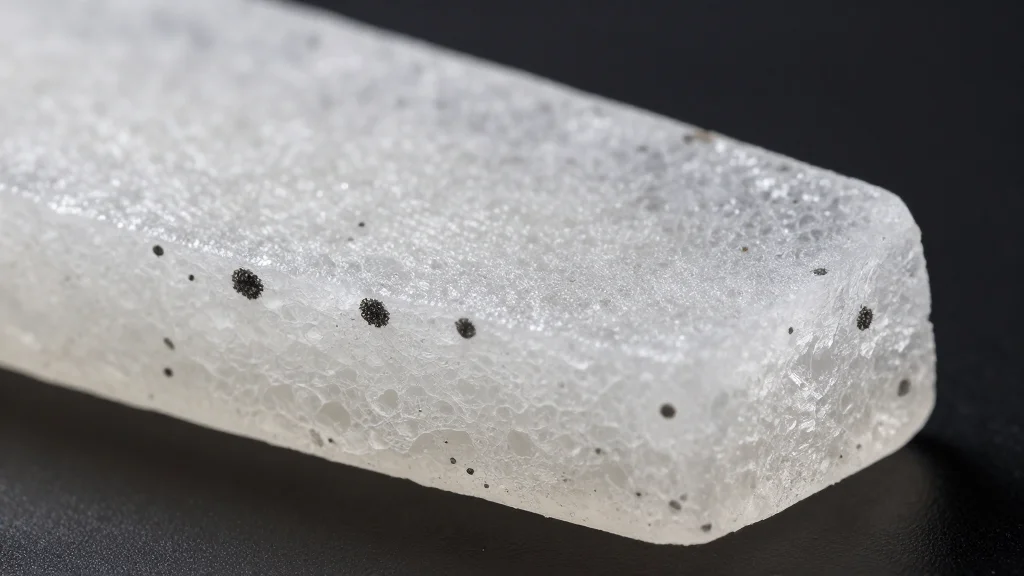
SiO2/SiC Composite Aerogels: Controlled Fabrication, Structure–Property Relationships, and Multifunctional Applications
Why It Matters
These hybrid aerogels enable lightweight, high‑temperature insulation and effective EM wave attenuation, opening new opportunities in aerospace, energy and defense sectors where performance‑to‑weight is critical.
Key Takeaways
- •Sol‑gel and carbothermal routes tailor SiC content and pore size
- •Composite aerogels keep low density while boosting compressive strength
- •Thermal conductivity stays below 0.1 W/m·K up to 1200 °C
- •Microwave absorption exceeds 30 dB across X‑band frequencies
- •Scaling production and durability remain key hurdles for commercialization
Pulse Analysis
SiO2 aerogels have long been prized for their ultra‑low density and thermal insulation, yet their practical use is hampered by fragility at temperatures above 600 °C. Introducing silicon carbide into the silica matrix creates a synergistic composite that retains the nanoporosity of silica while inheriting SiC’s refractory strength. This hybrid architecture not only prevents structural collapse under thermal shock but also provides a conductive network that can be tuned for electromagnetic interference (EMI) mitigation, a capability increasingly demanded in high‑performance electronics and aerospace platforms.
Recent advances in fabrication—particularly sol‑gel chemistry combined with controlled carbothermal reduction—allow precise adjustment of SiC particle size and distribution within the aerogel skeleton. Freeze‑casting and cryogenic techniques further refine pore alignment, delivering anisotropic thermal pathways that lower conductivity to sub‑0.1 W/m·K levels even at 1,200 °C. Parallel efforts in chemical vapor deposition and electrospinning introduce surface‑functionalized SiC nanofibers, boosting compressive strength to several MPa while preserving a bulk density under 0.2 g/cm³. These processing innovations translate directly into superior microwave absorption, with measured losses exceeding 30 dB across the X‑band, positioning the material as a lightweight alternative to traditional metal‑based absorbers.
The commercial promise of SiO2/SiC composite aerogels spans multiple high‑value markets. In aerospace, they can serve as thermal protection blankets that shave weight from spacecraft re‑entry shields. Energy‑intensive industries see potential for furnace linings that reduce heat loss without sacrificing structural integrity. Defense applications benefit from stealth‑enhancing EMI shielding that does not compromise maneuverability. However, scaling the multi‑step synthesis while ensuring long‑term durability under cyclic heating remains a critical barrier. Ongoing research into greener precursors, additive manufacturing, and in‑situ monitoring aims to bridge the gap between laboratory breakthroughs and reliable, large‑scale production, setting the stage for broader adoption in the next decade.
SiO2/SiC Composite Aerogels: Controlled Fabrication, Structure–Property Relationships, and Multifunctional Applications
Comments
Want to join the conversation?
Loading comments...