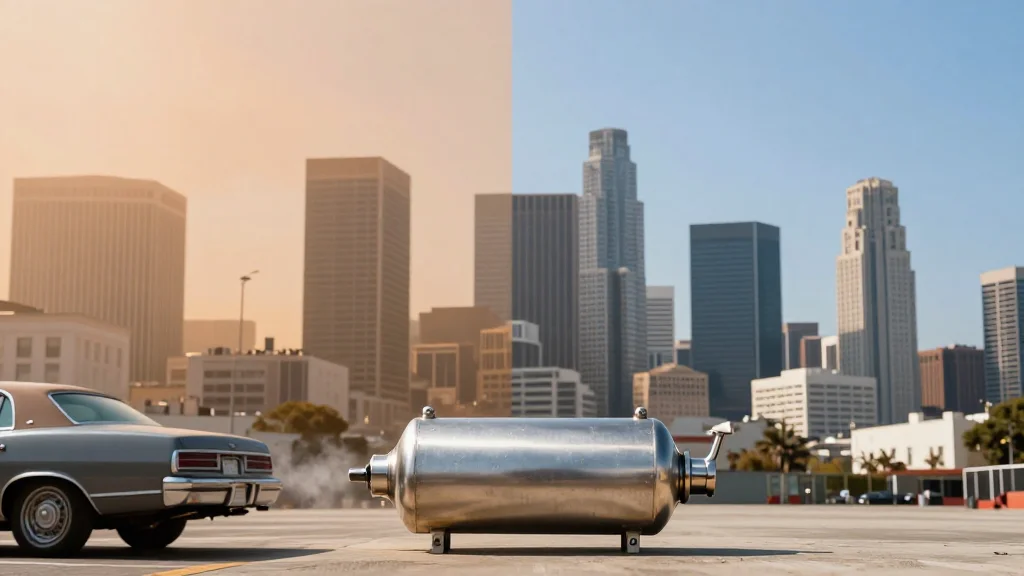
Smog, Lies and Pineapples: How LA Cleaned up Its Air and What’s Left to Do
Companies Mentioned
Why It Matters
The LA experience shows how technology, regulation, and community pressure can reverse severe air pollution, offering a blueprint for other megacities confronting ozone and particulate challenges. Ongoing compliance gaps underscore the need for continued policy and equity focus.
Key Takeaways
- •Catalytic converters cut LA vehicle emissions by over 90% since 1970s
- •Ozone violations persist mainly in Riverside and San Bernardino basins
- •Wilmington neighborhoods face combined port and refinery pollution impacts
- •Leaded gasoline caused children's blood lead levels 10× national average
- •Pineapple chemistry helped scientists replicate ozone formation under sunlight
Pulse Analysis
Los Angeles’ battle with smog began in the post‑World War II boom, when rapid car ownership and a basin surrounded by mountains trapped pollutants. Early studies linked high ozone and lead levels to vehicle exhaust, prompting the first federal air‑quality alerts in the 1970s. The city’s unique geography amplified the problem, making it a laboratory for policymakers and scientists seeking to understand urban atmospheric chemistry. This historical backdrop set the stage for a multi‑decade effort that combined federal standards, local ordinances, and community activism to curb emissions.
A turning point arrived with the introduction of catalytic converters in the late 1970s, a technology that transformed unburned hydrocarbons into far less toxic gases. Simultaneously, Caltech’s Arie Haagen‑Smit applied an unlikely source—pineapple particle analysis—to recreate ozone formation under controlled sunlight, confirming that photochemical reactions, not just raw emissions, drove smog. Despite these breakthroughs, oil and auto manufacturers mounted legal and public‑relations campaigns to delay regulation, illustrating how entrenched industry interests can stall environmental progress. The book underscores that scientific insight, when paired with decisive policy, can overcome even well‑funded opposition.
Today, Los Angeles enjoys dramatically cleaner skies, yet it remains the most out‑of‑compliance city for ozone in the United States, largely due to hotspots in Riverside, San Bernardino, and the port‑adjacent community of Wilmington. These areas bear disproportionate health burdens, highlighting the persistent environmental‑justice dimension of air quality. The LA story offers a template: invest in emission‑control technology, enforce stringent standards, and empower local advocates to hold polluters accountable. As other megacities grapple with rising temperatures and wildfire smoke, the lessons from Southern California’s turnaround become increasingly relevant for shaping resilient, equitable air‑quality strategies worldwide.
Smog, Lies and Pineapples: How LA Cleaned up Its Air and What’s Left to Do
Comments
Want to join the conversation?
Loading comments...