Why It Matters
The study shows that space‑based research can directly improve sports equipment design, boosting performance and safety. It also illustrates NASA’s growing focus on commercializing exploration technology for consumer markets.
Key Takeaways
- •ISS experiment examined soccer ball dynamics in microgravity
- •Internal mass distribution influences ball stability and trajectory
- •Sensor integration insights can refine match‑ball performance on Earth
- •NASA’s space‑derived tech offers commercial opportunities for sports industry
- •Findings support future sensor‑rich equipment for athletes and fans
Pulse Analysis
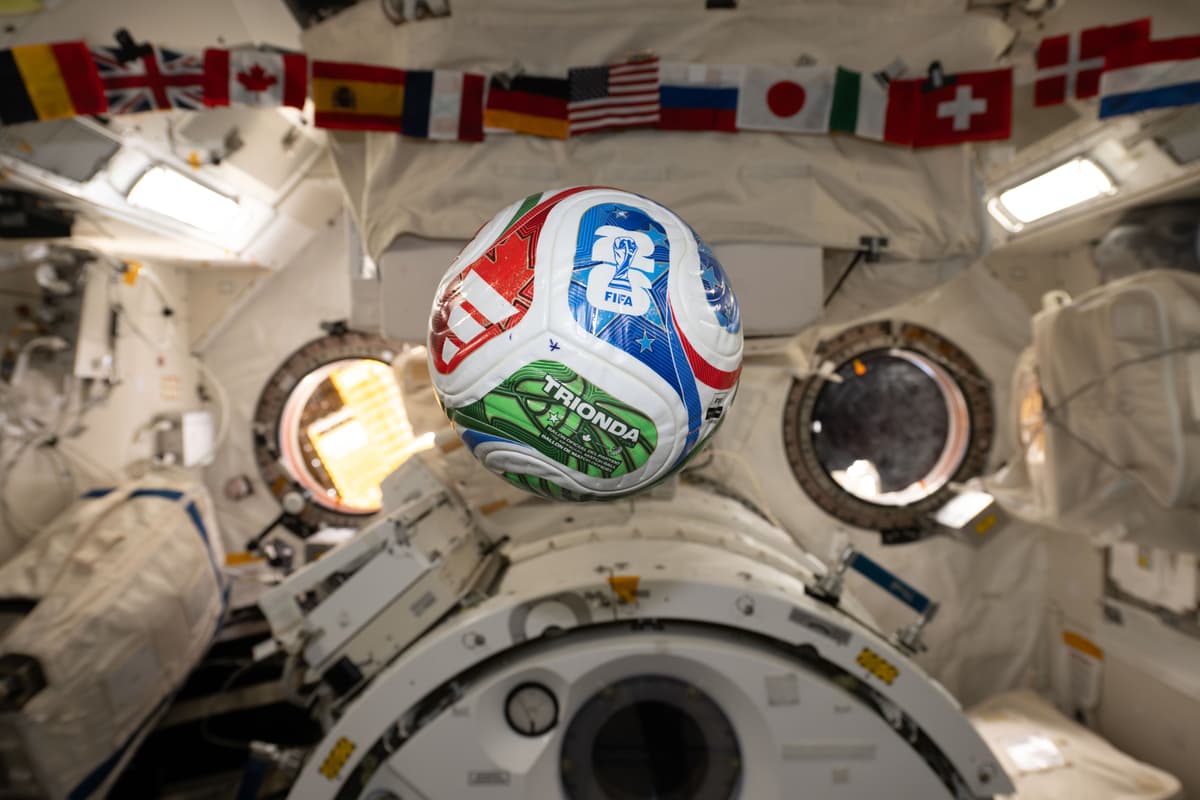
NASA’s decision to float a soccer ball aboard the International Space Station may seem whimsical, but it serves a rigorous scientific purpose. By placing a familiar object in microgravity, researchers can isolate the effects of internal mass distribution without Earth’s gravitational interference. The experiment builds on decades of fluid‑dynamics and material‑science studies conducted in orbit, offering a clean testbed to observe how subtle shifts in a ball’s core affect its spin, wobble, and flight path. This data is otherwise impossible to capture in terrestrial labs.
The findings have immediate relevance for the burgeoning market of sensor‑enabled sports equipment. Modern match balls increasingly embed accelerometers, gyroscopes, and pressure sensors to provide real‑time performance metrics for players, coaches, and broadcasters. Understanding how these components alter the ball’s mass balance helps engineers design sensors that are both lightweight and minimally disruptive. The ISS data revealed that even a few grams of added hardware can change a ball’s aerodynamic stability, prompting a redesign of sensor placement and calibration algorithms to preserve the ball’s intended behavior on the field.
Beyond the technical tweaks, the experiment signals a strategic shift in NASA’s outreach to commercial partners. By demonstrating tangible benefits for the world’s most popular sport, the agency opens doors for collaborations with manufacturers, leagues, and technology firms seeking to leverage space‑grade engineering. This cross‑pollination could accelerate the rollout of advanced, data‑rich equipment across sports, enhancing fan engagement and athlete performance while creating new revenue streams for both NASA and the sports industry.
Soccer Meets Space Science
Comments
Want to join the conversation?
Loading comments...