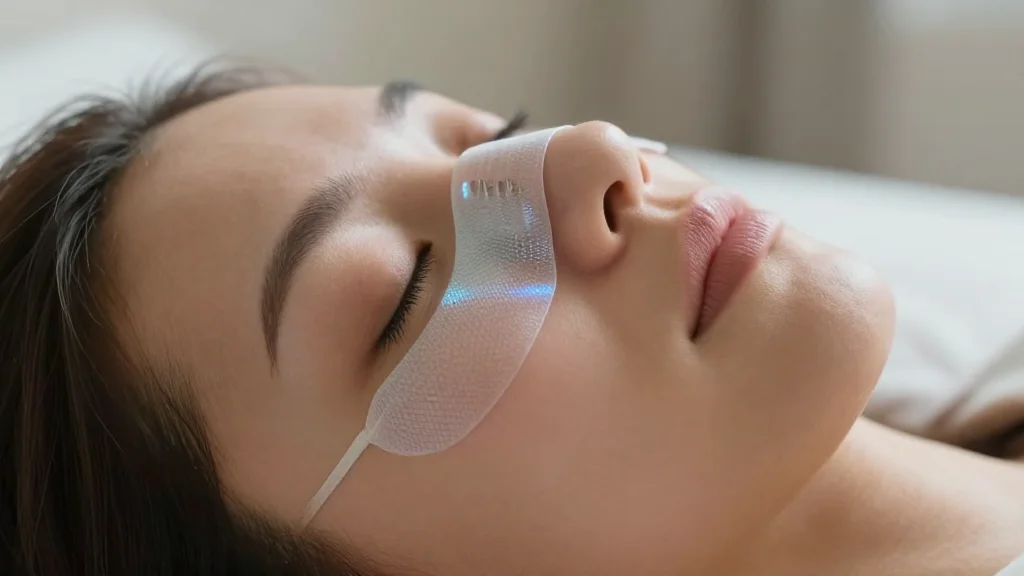
Soft, Skin-Interfaced Electronics Enable Cannula-Free Wireless Monitoring of Sleep Respiration
Why It Matters
By removing the uncomfortable cannula, the patch improves patient adherence and expands at‑home sleep‑disorder diagnostics, a growing market need. Its scalable, low‑cost design could accelerate deployment of continuous respiratory monitoring in both clinical and consumer settings.
Key Takeaways
- •Cannula‑free nasal patch eliminates airflow resistance and discomfort
- •Laser‑induced graphene sensor provides high‑resolution strain detection
- •Liquid‑metal interconnects enable stretchable, reliable wireless data transmission
- •Modular design separates disposable skin contact from reusable electronics
- •Clinical tests show accuracy comparable to gold‑standard nasal cannulas
Pulse Analysis
Sleep‑related breathing disorders, such as obstructive sleep apnea, affect millions yet remain underdiagnosed, largely because traditional monitoring relies on nasal cannulas that add airflow resistance and cause discomfort. Existing home‑based solutions often compromise signal fidelity or require cumbersome tubing, limiting long‑term adherence. The industry has been searching for a truly unobtrusive, accurate alternative that patients can wear throughout the night without disruption.
The newly reported nasal patch addresses these gaps through a convergence of soft‑material mechanics and advanced nanomaterials. An ultrathin elastomeric substrate conforms to the nasal contour, while a laser‑induced graphene strain sensor captures minute tissue deformations caused by breathing. Complementary liquid‑metal interconnects maintain electrical continuity under repeated stretching, enabling a fully wireless module that streams data to smartphones in real time. A modular construction lets clinicians replace the disposable skin‑contact layer while preserving the reusable electronics, reducing waste and cost. Bench tests confirmed low hysteresis and repeatable response; bedside comparisons showed the patch’s respiratory waveforms align closely with those from gold‑standard cannulas.
Beyond improved comfort, this technology could reshape the respiratory monitoring market. Its scalable manufacturing and low‑cost materials make it attractive for large‑scale deployment in home sleep studies, telehealth platforms, and even consumer wellness devices. Regulatory pathways may be streamlined given its non‑invasive nature, and the modular design supports rapid iteration for new biomarkers. As insurers and providers push for remote diagnostics, a cannula‑free, accurate, and affordable solution positions manufacturers to capture a significant share of the burgeoning digital health ecosystem.
Soft, skin-interfaced electronics enable cannula-free wireless monitoring of sleep respiration
Comments
Want to join the conversation?
Loading comments...