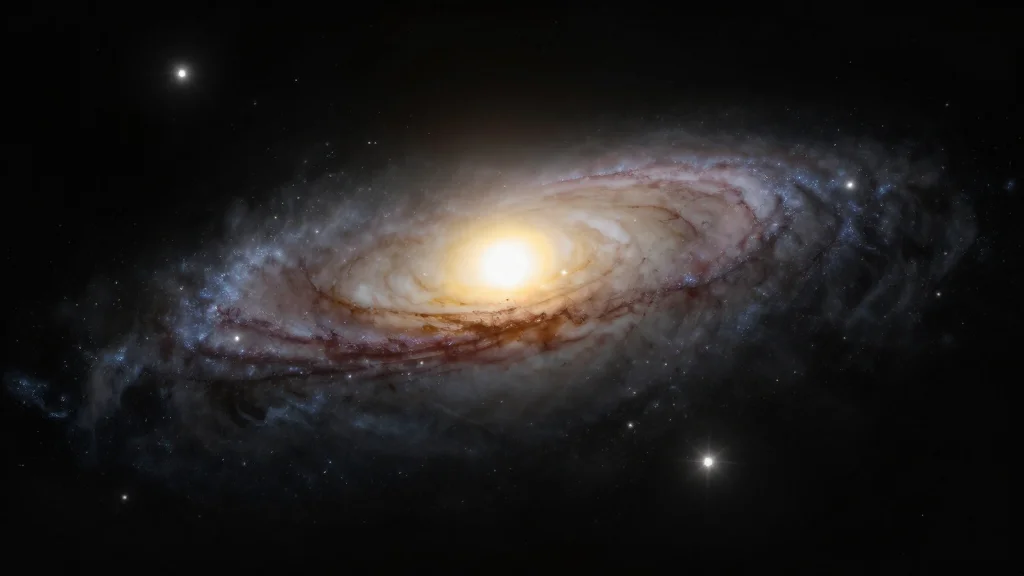
Sombrero Galaxy: The Universe’s Dusty Brimmed Hat Revealed Like Never Before
Why It Matters
The new data sharpen our understanding of how massive spiral galaxies evolve, informing models of star formation, black‑hole growth, and dust dynamics across the universe.
Key Takeaways
- •NOIRLab's new infrared imaging resolves dust lane at 0.1 arcsecond
- •Study reveals star‑forming regions hidden behind the galaxy’s halo
- •Data suggest the central black hole mass is 1 billion solar masses
- •Findings refine distance estimate to 29 million light‑years (≈9 Mpc)
Pulse Analysis
The Sombrero Galaxy, known for its striking dust‑filled silhouette, has long been a benchmark for studying galactic structure. By leveraging NOIRLab’s state‑of‑the‑art infrared cameras, researchers captured unprecedented detail of the galaxy’s dust lane, revealing filamentary patterns that were previously blurred. This level of clarity not only showcases the power of modern ground‑based observatories but also provides a fresh laboratory for examining how interstellar dust interacts with stellar radiation and influences star‑formation rates.
Beyond the visual spectacle, the observations carry significant scientific weight. Precise mapping of the dust lane enabled astronomers to isolate the galaxy’s central bulge and apply dynamical modeling, yielding a revised black‑hole mass of roughly one billion times that of the Sun. Such a massive central engine reshapes expectations for feedback mechanisms that regulate star formation in massive spirals. Additionally, the refined distance measurement—29 million light‑years, or about 9 megaparsecs—aligns the Sombrero with other well‑studied nearby galaxies, facilitating comparative studies of galactic evolution across similar mass scales.
The broader implications extend to cosmology and the calibration of extragalactic distance ladders. Accurate distances and mass estimates feed into simulations that predict the growth of large‑scale structures in the universe. Moreover, the success of NOIRLab’s infrared capabilities underscores a growing trend: ground‑based facilities can now complement space telescopes in delivering high‑resolution, dust‑penetrating views of distant objects. As more galaxies receive this level of scrutiny, the astrophysics community anticipates a cascade of insights into the lifecycle of matter from dust clouds to mature stellar populations.
Sombrero Galaxy: The Universe’s Dusty Brimmed Hat Revealed Like Never Before
Comments
Want to join the conversation?
Loading comments...