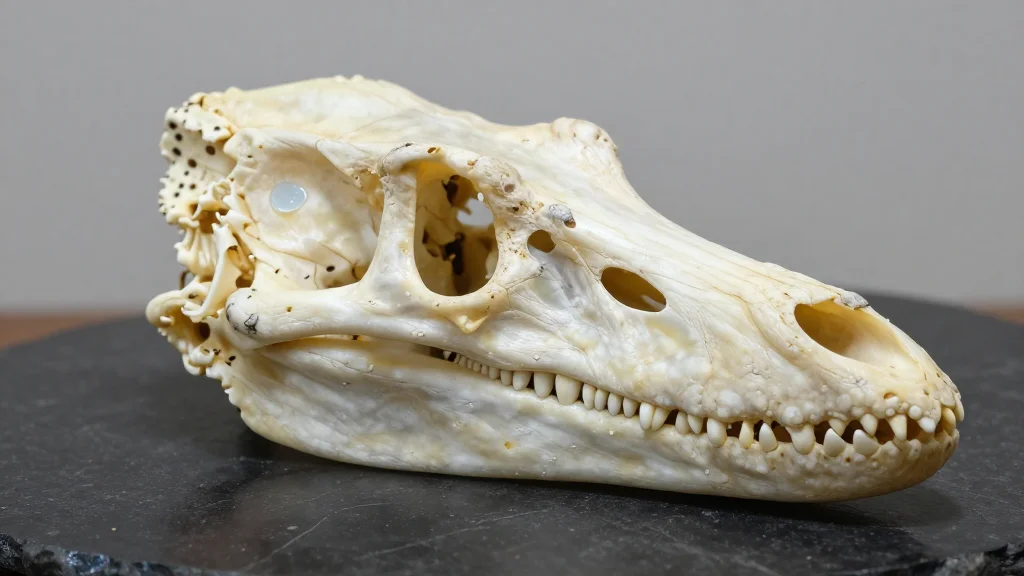
Some Spinosaurs Cried Salty Tears to Thrive in Brackish Waters
Why It Matters
If confirmed, the salt‑gland adaptation reshapes our understanding of spinosaur ecology, suggesting a more aquatic lifestyle and highlighting convergent evolution with modern marine vertebrates. This insight could refine models of dinosaur niche partitioning and paleo‑environmental reconstructions.
Key Takeaways
- •Fossil depressions above eyes suggest salt-excreting glands in some spinosaurs
- •Glands would have helped regulate blood salt in brackish estuaries
- •Evidence links gland presence to species found in ancient saltwater habitats
- •Debate continues as other specimens lack the gland feature
- •Findings highlight convergent evolution with modern marine birds and reptiles
Pulse Analysis
The spinosaur clade has long puzzled paleontologists, oscillating between fully terrestrial and semi‑aquatic interpretations. The latest study adds a physiological dimension by identifying a possible salt‑excreting gland, a structure that modern seabirds, crocodilians, and some reptiles use to cope with high salinity. By leveraging CT imaging and detailed morphological comparisons, the researchers pinpointed a consistent depression above the orbit in several specimens, arguing it housed a gland and associated vasculature. This anatomical clue aligns with isotopic data that places some spinosaurs in coastal estuaries, suggesting they could actively regulate internal salt loads while hunting fish in brackish waters.
Salt glands represent a classic case of convergent evolution, evolving independently in at least 40 bird lineages and various reptilian groups. Their presence in spinosaurs would indicate that these Cretaceous predators adopted a similar osmoregulatory strategy, expanding their ecological niche beyond freshwater rivers to saline lagoons and tidal marshes. Such an adaptation would have conferred a competitive edge, allowing spinosaurs to exploit prey unavailable to strictly freshwater hunters and to tolerate fluctuating salinity levels during seasonal sea‑level changes. The discovery also bridges a gap between skeletal adaptations—like paddle‑like limbs and crocodile‑shaped snouts—and physiological mechanisms required for prolonged marine exposure.
The broader implication for dinosaur science is the growing appreciation of complex soft‑tissue functions inferred from fossilized bone. While some scholars remain skeptical, citing inconsistent evidence across specimens, the debate underscores the need for more comprehensive imaging and comparative anatomy studies. Future work may target additional cranial material from under‑explored regions or employ geochemical proxies to corroborate the gland hypothesis. Ultimately, confirming a salt‑gland system would not only settle a long‑standing controversy but also enrich our picture of how dinosaurs interacted with ancient coastal ecosystems, informing both evolutionary biology and paleoenvironmental modeling.
Some spinosaurs cried salty tears to thrive in brackish waters
Comments
Want to join the conversation?
Loading comments...