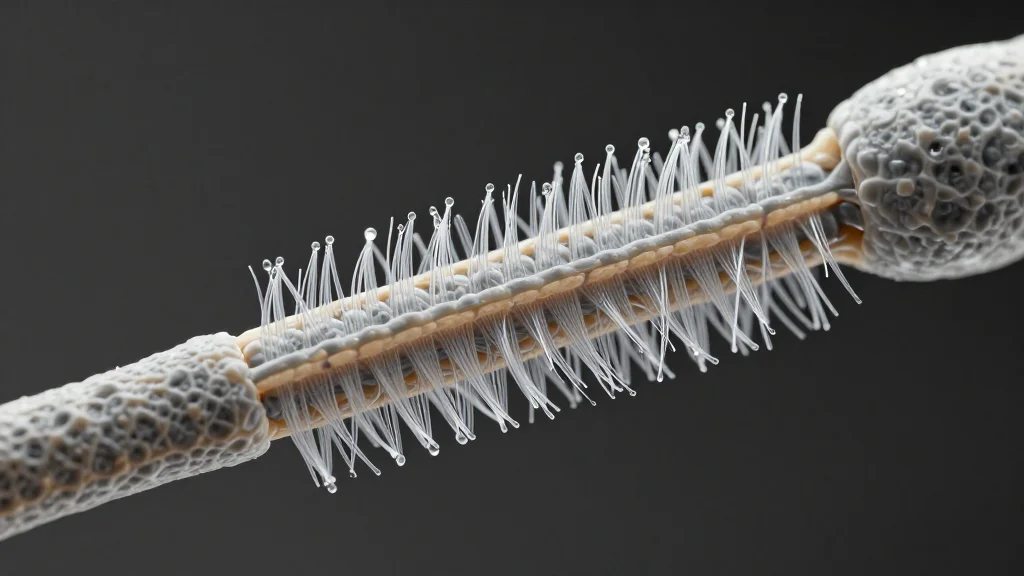
Sound-Sensing Hair Bundles in Our Ears Act as Tiny Thermodynamic Machines
Why It Matters
The discovery links nanoscale thermodynamics to auditory function, offering a mechanistic target for treating sensorineural hearing loss. It also provides a quantitative basis for differentiating inner and outer hair cell roles in the cochlea.
Key Takeaways
- •Hair bundles operate in four thermodynamic regimes, two biologically relevant
- •Amplification activates only for weak incoming sound signals
- •Model predicts exotic cooling and heat‑dissipation behaviors
- •Framework may explain functional differences between inner and outer hair cells
- •Insights could guide novel approaches to reverse hearing loss
Pulse Analysis
The inner ear’s hair cells have long fascinated biophysicists because they achieve extraordinary sensitivity, detecting vibrations far below the threshold of human perception. Recent work leverages high‑resolution microscopy and fluid‑filled chamber experiments to extract stiffness, friction and other mechanical parameters from bullfrog sacculus tissue. By feeding these data into a rigorously derived thermodynamic model, scientists can now map the energy flow between sound waves and cellular motion, moving beyond earlier static or purely stochastic descriptions.
Central to the new model is the identification of four thermodynamic regimes that a hair bundle can inhabit. In the sensing regime, external acoustic energy is absorbed and transduced into neural signals. Conversely, the amplification regime pumps energy back into the surrounding fluid, boosting weak sounds—a feature essential for the ear’s dynamic range. The remaining two regimes, involving heat dissipation and localized cooling, are unlikely to occur in vivo but reveal the breadth of physical possibilities at the nanoscale. This nuanced view reconciles previously conflicting observations about hair‑cell motility and frequency tuning.
Beyond basic science, the findings have practical implications for hearing‑loss research. By pinpointing the conditions under which hair bundles amplify or dampen signals, the model offers a blueprint for designing drugs or gene‑therapy vectors that restore or mimic these mechanical functions. Moreover, understanding the thermodynamic signatures of inner versus outer hair cells could accelerate the development of biomimetic cochlear implants that more faithfully reproduce natural hearing. As the global population ages, such advances promise to reduce the burden of sensorineural deafness and open new avenues in auditory biotechnology.
Sound-sensing hair bundles in our ears act as tiny thermodynamic machines
Comments
Want to join the conversation?
Loading comments...