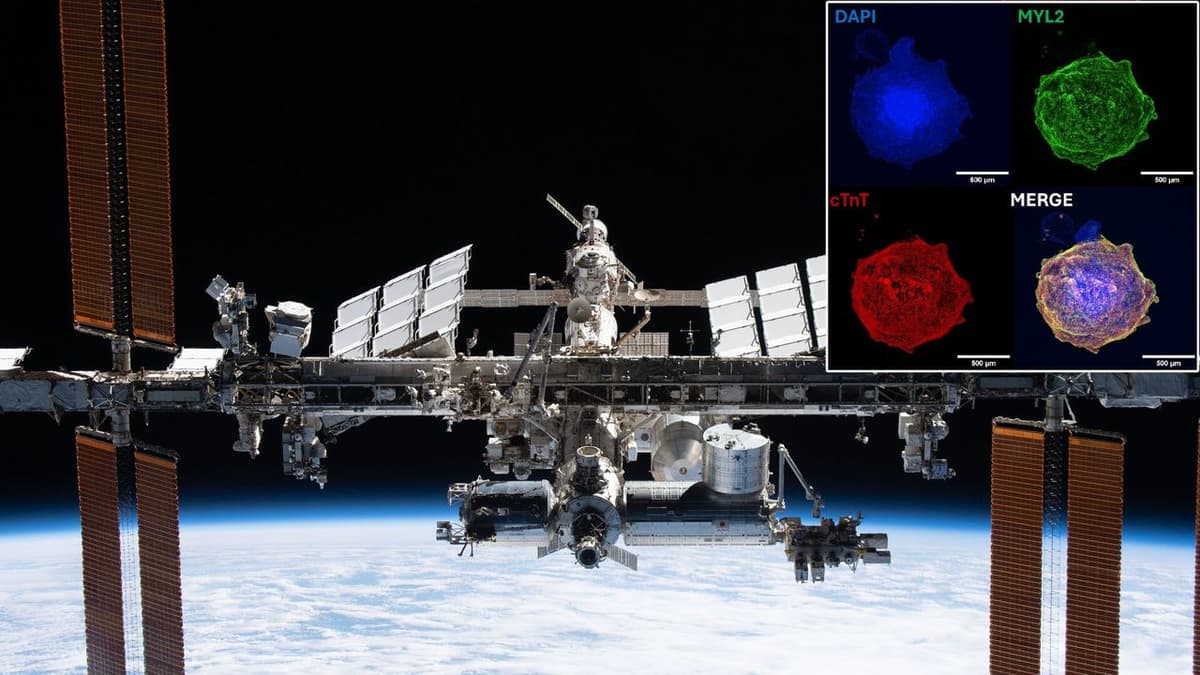
Spaceflight Is Hard on the Heart, yet Artificial Ones Grow Better in Space than on Earth
Companies Mentioned

Why It Matters
Microgravity‑enhanced organoid growth could accelerate heart‑disease drug discovery and improve the quality of bioengineered cardiac patches, reshaping regenerative‑medicine pipelines.
Key Takeaways
- •Space-grown heart organoids develop faster than Earth-based counterparts
- •Microgravity eliminates need for mechanical agitation in bioreactors
- •Researchers observed markedly higher organoid production on the ISS
- •Space-grown patches could be thicker and more robust for transplants
- •Future missions will use organoids for drug testing before human trials
Pulse Analysis
Heart disease remains the leading cause of premature death worldwide, driving intense research into regenerative therapies. Stem‑cell‑derived cardiac organoids have emerged as a promising platform for modeling disease and testing drugs, yet scaling production on Earth is hampered by the need for constant agitation in suspension bioreactors. In microgravity, cells float naturally, removing shear stress and allowing them to self‑assemble more efficiently. This environment not only speeds maturation but also yields tissue structures that more closely mimic native heart architecture.
Recent experiments aboard the International Space Station, led by Dr. Sharma’s team, revealed a pronounced increase in organoid yield compared with ground‑based controls. By leveraging the ISS’s near‑zero‑gravity conditions, researchers eliminated the mechanical stirring that can damage delicate cell clusters. Although exact production numbers remain unpublished, the team reported “impressive” scale‑up, suggesting that space‑grown patches could be thicker, more resilient, and less prone to collapse when returned to Earth’s gravity. Such attributes are critical for developing viable cardiac patches that can integrate with a patient’s myocardium.
The broader biotech implications are significant. Space‑manufactured organoids could serve as high‑fidelity test beds for novel cardiovascular drugs, shortening development cycles and reducing reliance on animal models. In the longer term, once regulatory pathways are clarified, these robust tissue constructs may augment or replace donor hearts for transplant candidates. Ongoing missions, including the upcoming SpaceX CRS‑35 launch, aim to refine production protocols and assess the reproducibility of results, positioning microgravity biomanufacturing as a frontier in precision medicine.
Spaceflight is hard on the heart, yet artificial ones grow better in space than on Earth
Comments
Want to join the conversation?
Loading comments...