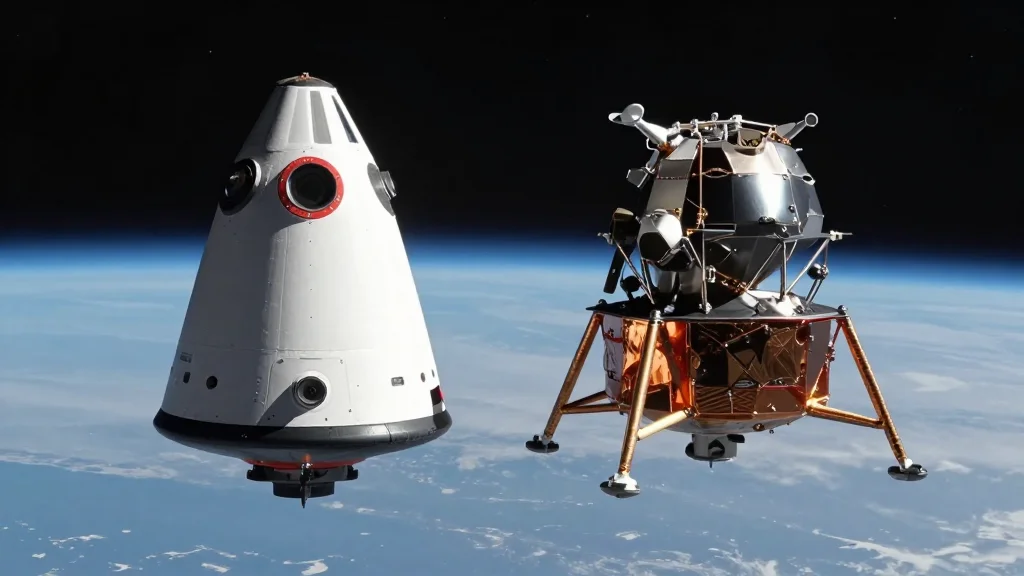
SpaceX, Blue Origin Compete For 'Artemis III' Mission

Companies Mentioned

Why It Matters
A proven commercial lander will de‑risk NASA’s return‑to‑the‑Moon timeline and unlock a multi‑billion‑dollar lunar economy. The competition accelerates technology maturation for future deep‑space missions.
Key Takeaways
- •SpaceX's Starship nearing test flight from Texas
- •Blue Origin's scaled Blue Moon targeting 2024 lunar landing
- •Artemis III will practice Earth‑orbit docking with lunar lander
- •NASA eyes south pole for $20‑30 B lunar base
- •Docking mechanism already installed at Kennedy Space Center
Pulse Analysis
NASA’s Artemis program has entered a critical phase, with Artemis III scheduled to demonstrate the Orion capsule’s ability to dock with a commercial lunar lander in low‑Earth orbit. This rehearsal is more than a technical checkpoint; it validates the integration of private‑sector hardware into NASA’s deep‑space architecture, reducing reliance on legacy systems and shortening development cycles. By conducting the docking test now, NASA aims to iron out any interface issues before committing to a full lunar descent, thereby safeguarding the ambitious timeline for a crewed landing.
The rivalry between SpaceX and Blue Origin is reshaping the commercial space landscape. SpaceX’s fully reusable Starship, currently preparing for a high‑altitude test in Texas, promises unprecedented payload capacity and rapid turnaround. Meanwhile, Blue Origin’s Blue Moon, a scaled‑down lunar lander, is slated for a robotic lunar touchdown later this year, demonstrating its ability to deliver cargo to the surface. Both firms have secured NASA contracts, but only one will earn the coveted Artemis IV contract for the 2028 moon landing, intensifying development pressure and fostering innovation across propulsion, guidance, and landing technologies.
Beyond the immediate mission, the outcome of Artemis III will influence the economics of a planned $20‑30 billion lunar base at the south pole, where water ice could be harvested for life‑support and propellant. A reliable commercial lander reduces launch costs and opens the door for private enterprises to participate in lunar resource extraction, habitat construction, and scientific research. As NASA leans on private partners, the success of this docking test could catalyze a new era of commercial lunar operations, setting a precedent for future Artemis missions and eventual Mars expeditions.
SpaceX, Blue Origin Compete For 'Artemis III' Mission
Comments
Want to join the conversation?
Loading comments...