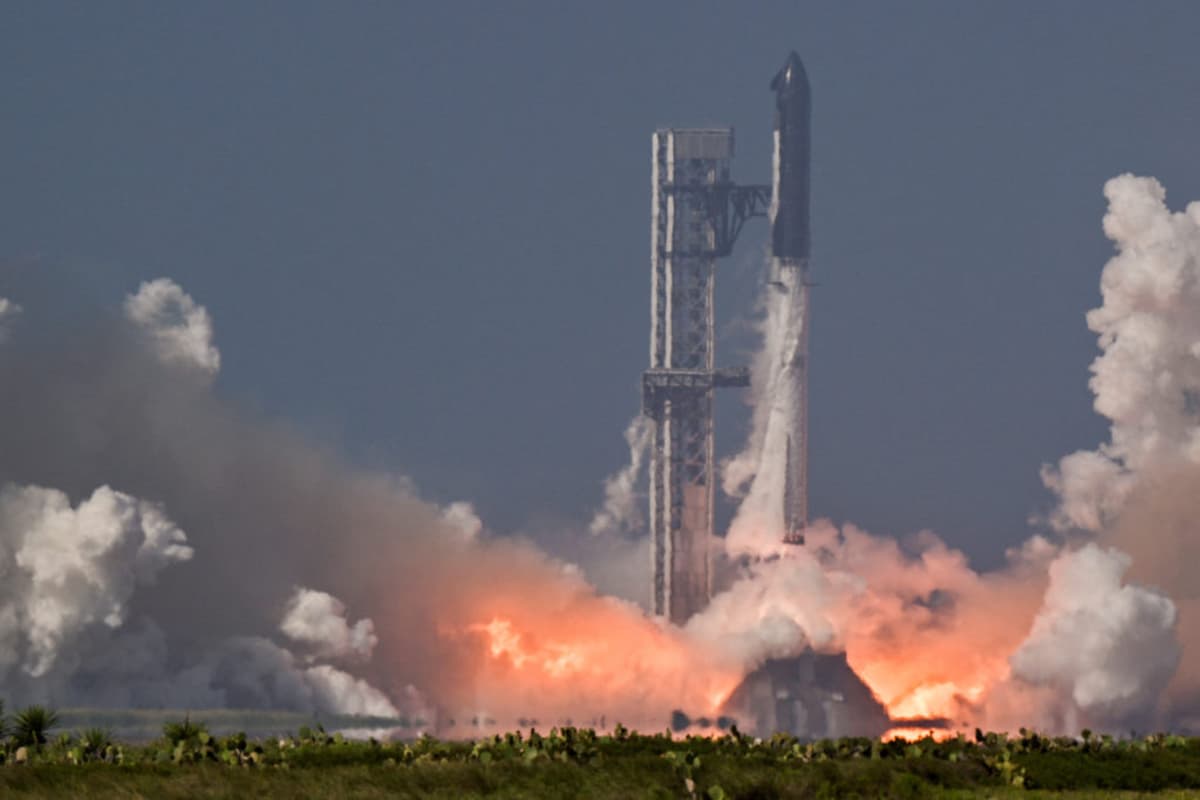
SpaceX Launches Its Biggest Starship Mega Rocket yet on Test Flight
Companies Mentioned

Why It Matters
The flight demonstrates SpaceX's progress toward a fully reusable launch system that could dominate NASA's Artemis program and private deep‑space tourism, reshaping the economics of lunar and Martian travel.
Key Takeaways
- •Starship V3 stands 407 ft tall, adding over a meter to previous models
- •Launch carried 20 mock Starlink satellites for global deployment testing
- •NASA contracts SpaceX billions for lunar lander, competing with Blue Origin
- •Starship aims for full reusability, but this test ended with ocean splashdowns
Pulse Analysis
SpaceX’s latest Starship V3 test flight signals a pivotal step toward a reusable spacecraft capable of ferrying astronauts to the Moon and beyond. At 407 feet, the vehicle surpasses its predecessors in height and thrust, thanks to larger grid fins and a fuel line comparable to a Falcon 9 first stage. These upgrades not only improve aerodynamic control and propellant flow to the 33 Raptor engines but also embed more cameras and navigation hardware, positioning Starship as the centerpiece of NASA’s Artemis III lunar landing architecture. The inclusion of docking cones and enhanced avionics further prepares the system for complex rendezvous operations with Orion, a capability that will be critical for the upcoming crewed missions.
Beyond government contracts, the test underscores SpaceX’s broader commercial ambitions. By releasing 20 mock Starlink satellites, the company validates its satellite deployment workflow while showcasing the vehicle’s payload versatility. The splashdown in the Gulf of Mexico and Indian Ocean, however, highlights that full-stage recovery—central to SpaceX’s cost‑reduction model—remains elusive. Mechanical catch‑down arms, successfully demonstrated on earlier Falcon launches, have yet to be integrated for Starship, meaning each test still incurs significant refurbishment expenses. This gap presents an opportunity for competitors like Blue Origin, whose Blue Moon system has yet to achieve a maiden flight, to capture market share if they can deliver reliable, reusable lunar landers.
The competitive landscape is intensifying as NASA allocates billions of dollars to both SpaceX and Blue Origin for Artemis lunar landers. While SpaceX races ahead with a proven launch cadence, Blue Origin’s delayed timeline could affect its eligibility for upcoming contracts. Simultaneously, private space tourism is gaining momentum, with high‑net‑worth individuals reserving lunar and Martian trips on Starship. These developments suggest that the next few years will define which company sets the standard for sustainable, reusable deep‑space travel, influencing everything from orbital logistics to the economics of a permanent lunar presence.
SpaceX launches its biggest Starship mega rocket yet on test flight
Comments
Want to join the conversation?
Loading comments...