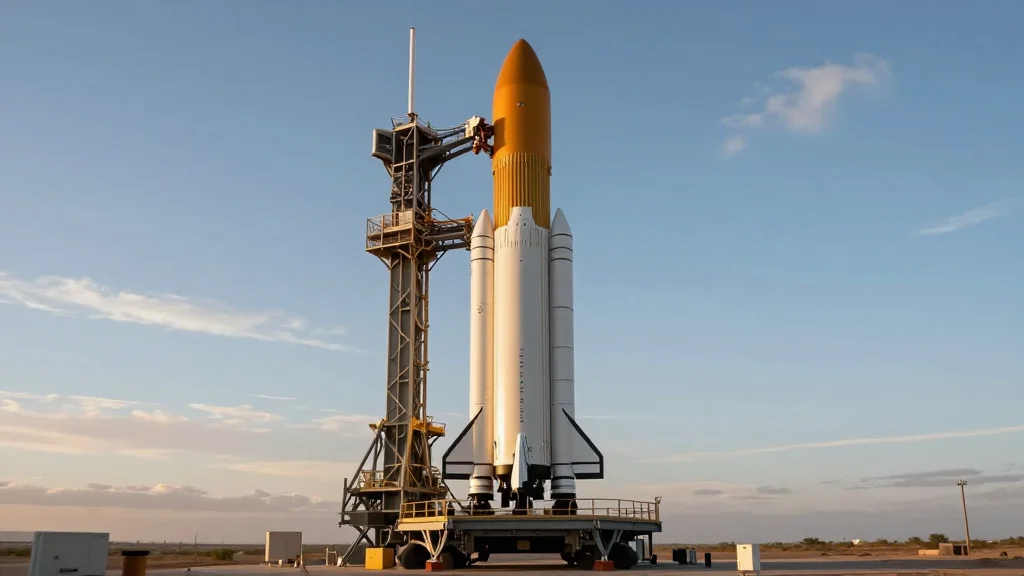
SpaceX's Upgraded Starship V3 Launches For First Time

Companies Mentioned
Why It Matters
The flight validates key design upgrades and the new launch infrastructure, accelerating SpaceX’s timeline for orbital Starship missions and large‑scale satellite deployment. Demonstrating resilience after an engine failure bolsters confidence among commercial and government customers seeking rapid, reusable launch capability.
Key Takeaways
- •Starship V3 launched from new Texas pad, 40‑story vehicle.
- •22 dummy Starlink satellites deployed; two instrumented satellites gathered heat‑shield data.
- •One of six upper‑stage Raptor engines failed, yet mission succeeded.
- •Super Heavy booster landed separately in Gulf of Mexico after six‑minute flight.
Pulse Analysis
SpaceX’s V3 Starship test represents a pivotal step in the company’s push toward fully reusable, high‑capacity launch systems. The new launch pad at Starbase was engineered to accommodate the increased thrust of the upgraded Super Heavy booster, featuring reinforced flame‑deflection structures and upgraded telemetry links. By successfully lifting off, separating, and completing a controlled splashdown, the vehicle proved that the structural and aerodynamic refinements—such as a reinforced heat‑shield and updated flight‑software algorithms—function as intended, even when an upper‑stage Raptor engine shut down prematurely.
The payload strategy underscored SpaceX’s dual focus on satellite constellations and data collection. While 22 mock Starlink units simulated a mass‑production deployment, two specially equipped satellites transmitted real‑time heat‑shield performance metrics back to engineers. This hybrid approach not only validates the mechanical release mechanisms but also enriches the data set needed to certify the vehicle for future orbital flights. The ability to continue the mission after an engine loss demonstrates robust fault‑tolerance, a critical attribute for commercial customers who demand high reliability for time‑critical payloads.
Looking ahead, the V3 test clears a major hurdle for SpaceX’s ambitious schedule of orbital Starship launches, which could reshape the launch market by offering payload capacities far beyond current heavy‑lift rockets. Successful re‑entry and splashdown also signal progress toward rapid turnaround and cost reductions, pressuring competitors and influencing satellite operators’ procurement strategies. As regulatory bodies monitor safety and environmental impacts, SpaceX’s demonstrated control over both stages may smooth the path for future licensing, positioning the company to dominate both low‑Earth‑orbit and deep‑space missions.
SpaceX's Upgraded Starship V3 Launches For First Time
Comments
Want to join the conversation?
Loading comments...