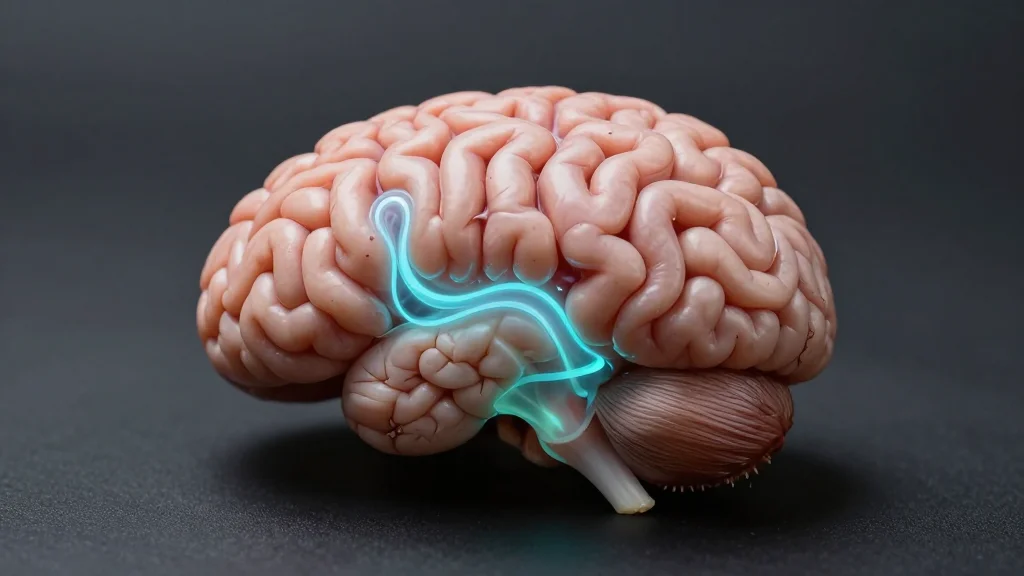
Speedy, Spiraling Electrical Waves May Be Key to Brain’s Information Flow
Why It Matters
By revealing a large‑scale, anatomy‑driven coordination signal, the study reshapes how scientists model cognition and opens new avenues for brain‑computer interfaces and therapeutic interventions.
Key Takeaways
- •Spiral waves span cortex and deep brain simultaneously.
- •Waves travel along pre‑existing axonal circular pathways.
- •Disrupting axon routes impairs wave propagation.
- •Wave presence predicts success in visual decision tasks.
- •Potential to translate wave patterns into brain‑computer interface commands.
Pulse Analysis
Traveling waves have long fascinated neuroscientists as a means of synchronizing activity across distant brain regions. Early recordings in humans and animals identified simple planar waves, but recent high‑resolution imaging revealed that these signals can adopt more intricate geometries, including rotating spirals that emerge during sleep, memory recall, and attention shifts. The notion that such patterns might simply be epiphenomena has been challenged by growing evidence that they carry functional weight, acting as a dynamic scaffold for information flow beyond the confines of localized circuits.
The new mouse study pushes this concept to a whole‑brain scale. By pairing wide‑field calcium imaging—capable of visualizing activity across the cortical mantle in milliseconds—with Neuropixels probes that reach deep nuclei, researchers mapped spiral waves that ignite in sensory cortex and instantly mirror across hemispheres, thalamus, and striatum. Crucially, the spirals follow pre‑existing circular axon bundles; severing these bundles disrupts wave continuity, confirming that the brain’s wiring predetermines the wave’s trajectory. Behavioral trials further linked robust spirals to successful visual discrimination, implying that the waves are not merely background noise but actively support decision‑making processes.
If rotating waves serve as a universal language for coordinating disparate neural modules, they become attractive targets for next‑generation neurotechnologies. Brain‑computer interfaces could decode spiral phase and amplitude to infer intent, while therapeutic strategies might aim to restore or modulate wave dynamics in disorders where large‑scale coordination breaks down, such as epilepsy or schizophrenia. Future research will likely explore how these patterns scale to human cognition, how they interact with other oscillatory phenomena, and whether engineered stimulation can harness spirals to enhance cognitive performance or restore lost functions.
Speedy, spiraling electrical waves may be key to brain’s information flow
Comments
Want to join the conversation?
Loading comments...