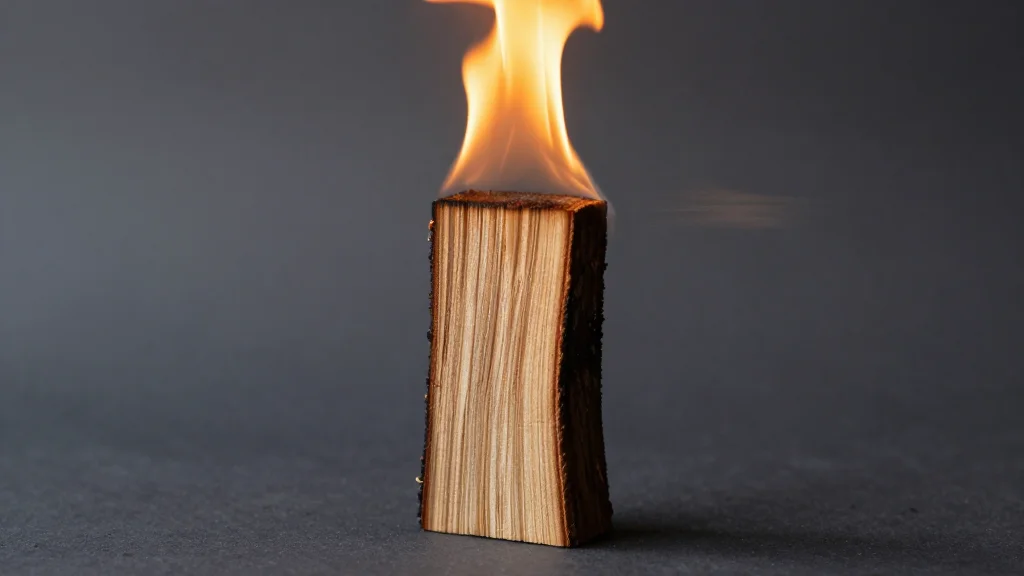
Spontaneous Ignition of Vertically Oriented Wood Exposed to Convection and Time-Dependent Thermal Radiation: Experimental and Analytical Prediction
Why It Matters
Accurate ignition‑time predictions enable engineers to design safer timber structures and refine fire‑code requirements, reducing fire‑related risk in buildings.
Key Takeaways
- •Higher heat‑flux rise rates cut ignition time by ~17%
- •Cross‑wind speeds modestly extend ignition time (~4% increase)
- •Critical mass‑loss rate of 13 g m⁻² s⁻¹ predicts ignition onset
- •Analytical surface‑temperature model stays within 20% prediction error
- •Radiation dominates surface temperature and mass‑loss behavior
Pulse Analysis
Timber remains a popular construction material, yet its fire behavior—especially when oriented vertically—poses unique challenges for fire safety engineers. Traditional fire‑risk assessments often assume steady‑state heat exposure, overlooking the reality of transient radiation from flames and the influence of ambient wind. By replicating these dynamic conditions in a controlled laboratory, the new study fills a critical knowledge gap, offering data that reflect real‑world fire scenarios such as flashover or external fire exposure on façade panels.
The experimental matrix combined five heat‑flux increase rates (0.10 to 0.40 W m⁻² s⁻²) with five cross‑wind velocities (0 to 1.2 m s⁻¹), capturing how both radiation intensity and convection shape ignition dynamics. Results confirmed that surface temperature and mass‑loss rate are primarily driven by radiation, while wind modestly delays ignition by dispersing heat. The derived analytical solution for transient surface temperature outperformed asymptotic approximations, delivering predictions within a 20% error band when accounting for surface heat loss. This level of accuracy is sufficient for integrating into fire‑modelling software used by architects and engineers.
For the industry, the findings translate into more reliable design tools and updated fire‑code provisions that consider time‑dependent heat fluxes and wind effects. Practitioners can now apply the critical mass‑loss rate criterion to assess ignition risk in timber assemblies, leading to targeted fire‑retardant treatments or protective barriers. Moreover, the methodology sets a benchmark for future research on other combustible building materials, encouraging the development of comprehensive, physics‑based fire safety standards that protect both property and lives.
Spontaneous ignition of vertically oriented wood exposed to convection and time-dependent thermal radiation: experimental and analytical prediction
Comments
Want to join the conversation?
Loading comments...