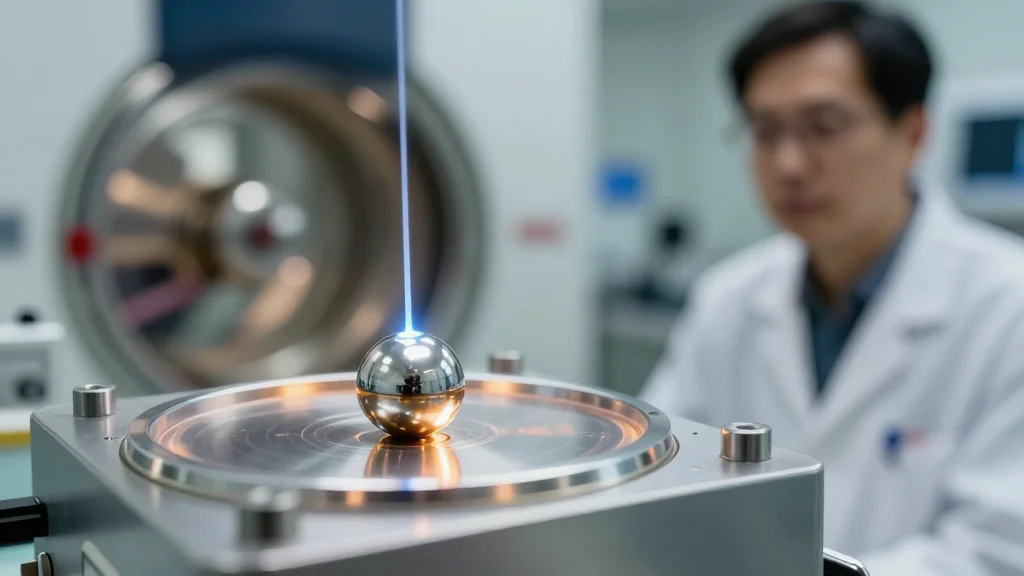
SSRL BL 10-2: Quick-Scanning XAS For Operando Catalysis
Why It Matters
Rapid, real‑time insight into catalyst behavior shortens development cycles and lowers R&D costs for energy and chemical industries. The capability positions SSRL as a critical hub for next‑generation catalytic research.
Key Takeaways
- •SSRL BL 10-2 enables sub‑second XAS scans for catalysts
- •Quick‑scanning reduces data acquisition time by up to 100×
- •Operando measurements capture real‑time catalyst behavior under reaction conditions
- •New detector array improves signal‑to‑noise for dilute samples
- •Facility open to academic and industrial users via proposal system
Pulse Analysis
Quick‑scanning XAS represents a paradigm shift for catalysis research, allowing scientists to monitor electronic and structural changes as reactions proceed. Traditional XAS experiments often required minutes to hours per spectrum, limiting the ability to track transient intermediates. By compressing scan times to fractions of a second, SSRL’s BL 10‑2 makes it feasible to follow catalyst activation, deactivation, and poisoning events in real time, delivering data that were previously inaccessible.
The technical backbone of the beamline combines a high‑speed monochromator with a fast, low‑noise detector array. This configuration maintains spectral fidelity while handling the reduced photon flux inherent to rapid scans. Researchers can now study dilute catalytic sites, such as single‑atom catalysts, without sacrificing data quality. The system also integrates with in‑situ reaction cells that replicate industrial temperature and pressure conditions, bridging the gap between laboratory experiments and real‑world processes.
Beyond academia, the rapid XAS capability has immediate commercial implications. Chemical manufacturers can accelerate catalyst screening, reducing time‑to‑market for greener processes. Energy firms can evaluate electrocatalysts for fuel cells and electrolyzers under operating conditions, informing scale‑up decisions. By offering open access through a competitive proposal framework, SSRL positions itself as a shared resource that democratizes cutting‑edge spectroscopy, fostering collaboration across the global catalysis community.
SSRL BL 10-2: Quick-Scanning XAS For Operando Catalysis
Comments
Want to join the conversation?
Loading comments...