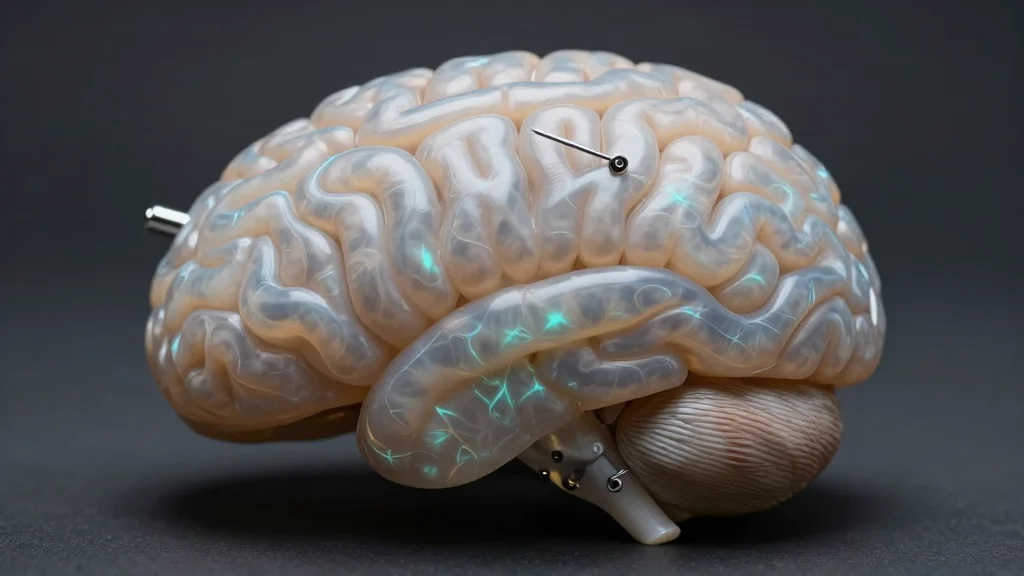
Stabilizing Fractional Dynamics Suppress Epileptic Seizures
Why It Matters
Fractional‑dynamic stabilization provides a novel, less invasive strategy to control seizures, addressing a major unmet need in epilepsy care. Its translational potential could reshape neuromodulation markets and spur cross‑disciplinary innovation.
Key Takeaways
- •Fractional dynamics stabilization reduces seizure hyper‑synchronization in simulations
- •Higher fractional orders increase network resilience without impairing cognition
- •Approach suggests new neuromodulation protocols targeting fractional‑order control
- •Framework could extend to Parkinson’s, depression, and AI neural networks
- •Advances fractional calculus tools for large‑scale brain network modeling
Pulse Analysis
Epilepsy remains a costly public‑health challenge, with roughly 3.4 million Americans affected and many patients experiencing drug‑resistant seizures. Conventional treatments—pharmacological agents, surgical resections, and vagus‑nerve stimulation—often deliver incomplete control and carry side‑effect burdens. The recent study by Wang and colleagues introduces a fundamentally different paradigm: leveraging fractional calculus to capture the brain’s memory‑rich, non‑local interactions. By modeling neuronal ensembles as fractional dynamical networks, the researchers expose how subtle tweaks to the fractional order can shift the system from a hyper‑synchronizing regime to a more stable, resilient state, effectively raising the seizure threshold.
The team employed high‑fidelity computational models calibrated with electroencephalographic and diffusion‑MRI data from epilepsy patients. Simulations revealed that imposing constraints that stabilize fractional‑order dynamics curtails pathological synchrony without dampening normal cognitive activity. Crucially, higher fractional orders—reflecting stronger memory effects—enhanced network adaptability, suggesting that neuromodulation devices could be programmed to deliver targeted stimulation that modulates fractional parameters in real time. This approach promises a precision‑medicine route, potentially reducing reliance on broad‑spectrum anticonvulsants and minimizing adverse effects.
Beyond immediate clinical implications, the research opens avenues for broader technological innovation. Fractional‑dynamic principles could inform next‑generation brain‑computer interfaces, adaptive AI architectures, and treatments for other disorders rooted in network instability, such as Parkinson's disease and major depression. For investors and biotech firms, the convergence of advanced mathematics, neuroimaging, and neuromodulation signals a fertile market for novel therapeutic platforms. As the field moves toward human trials, the ability to translate fractional calculus into actionable medical devices may redefine how we manage complex neurological conditions.
Stabilizing Fractional Dynamics Suppress Epileptic Seizures
Comments
Want to join the conversation?
Loading comments...