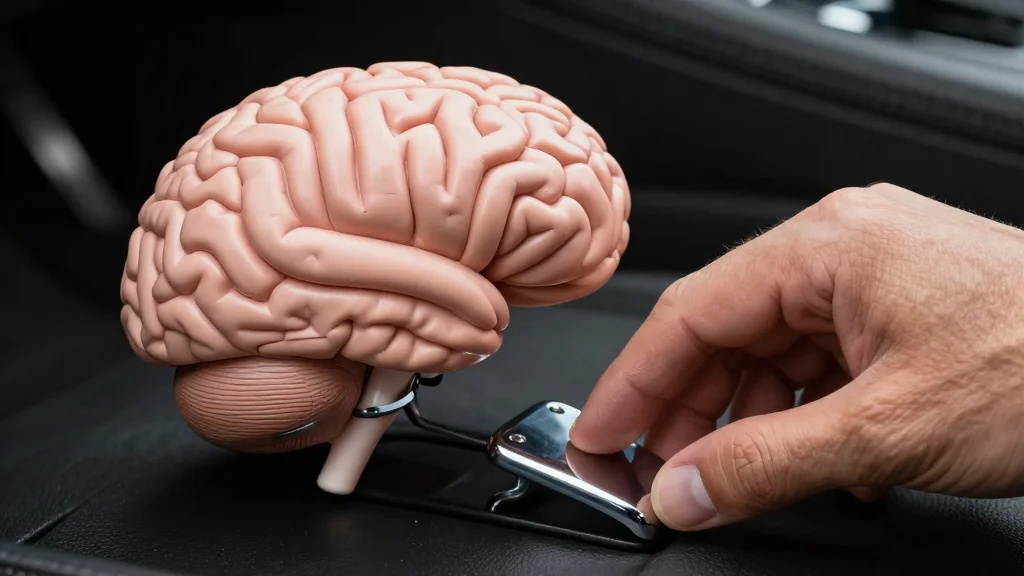
Starting Hard Tasks Isn't Laziness – It's Your Brain Pumping the Brakes
Why It Matters
Understanding the VS‑VP motivation brake reframes procrastination as a neurochemical issue, opening pathways for therapeutic interventions that could improve productivity and mental‑health outcomes.
Key Takeaways
- •VS‑VP pathway acts as a motivation brake for aversive tasks
- •Disabling the brake dramatically lowers monkeys' resistance to high‑effort tasks
- •Activation spikes when effort cost rises, independent of reward valuation
- •Research connects procrastination to distinct neural circuitry, aiding ADHD studies
- •Targeting the brake could treat motivation deficits, but may increase risk‑taking
Pulse Analysis
The Kyoto University team’s discovery of a "motivation brake" in the ventral striatum‑ventral pallidum (VS‑VP) circuit provides a concrete neural explanation for the everyday experience of procrastination. By showing that monkeys hesitate to start tasks that require extra effort—even when the reward is identical—the researchers demonstrated that the brain can suppress action independently of how valuable the outcome appears. This challenges classic reinforcement‑learning models that tie motivation solely to expected reward, and aligns with newer computational frameworks that separate initiation mechanisms from valuation processes.
For clinicians and neuroscientists, the study offers a fresh lens on disorders marked by motivation deficits, such as ADHD, depression, and broader neurodivergence. The VS‑VP pathway’s sensitivity to recent error history and aversive context suggests that chronic procrastination may stem from an overactive brake rather than a lack of willpower. By mapping the specific neurons involved, the research paves the way for targeted therapies—ranging from non‑invasive brain stimulation to pharmacological agents—that could recalibrate effort‑cost calculations without dampening overall reward processing.
However, the authors caution against bluntly disabling the brake. An under‑regulated motivation system could foster reckless risk‑taking or burnout, as the brain’s natural energy‑allocation safeguards would be compromised. Future work must balance enhancing task initiation with preserving adaptive caution, likely through personalized modulation strategies. As businesses grapple with productivity losses linked to task avoidance, these insights could inform workplace design, employee wellness programs, and technology tools aimed at reducing the cognitive load of starting difficult work.
Starting hard tasks isn't laziness – it's your brain pumping the brakes
Comments
Want to join the conversation?
Loading comments...