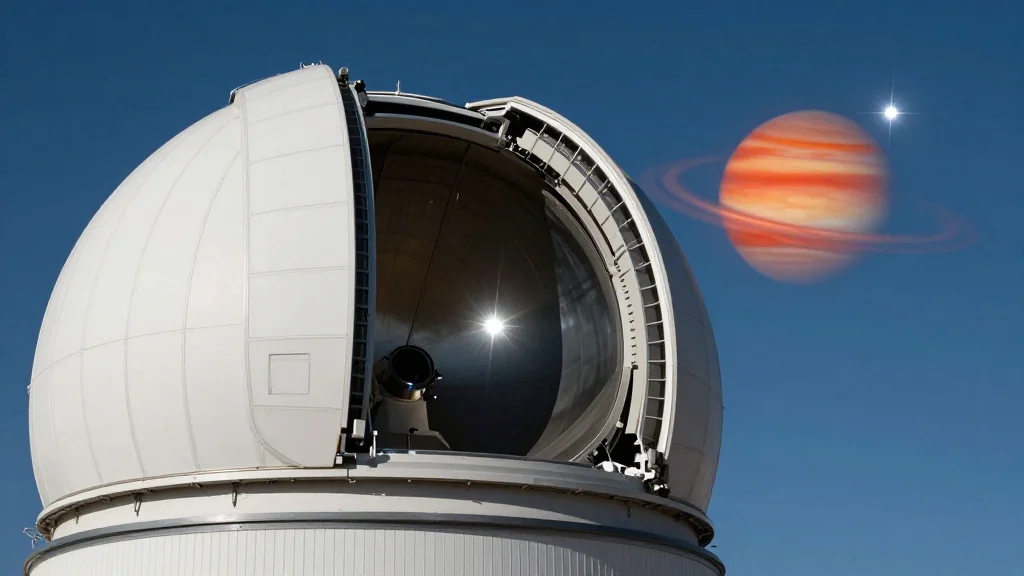
Strange Winds on Seven Hot Jupiters Reveal Strongest Signs yet of Exoplanet Magnetic Activity
Why It Matters
Magnetic fields shape atmospheric loss and surface conditions, so detecting them on exoplanets is crucial for evaluating long‑term habitability and planetary evolution. The breakthrough provides a tangible metric for comparing distant worlds to Earth’s protective magnetosphere.
Key Takeaways
- •Winds on seven hot Jupiters measured up to 25,000 km/h
- •Hotter planets show slower winds, indicating magnetic braking
- •Inferred magnetic fields ~4× Saturn’s, ~0.5× Jupiter’s
- •Findings enable comparative study of exoplanet magnetospheres
- •ELT may detect aurorae on distant worlds
Pulse Analysis
The detection of magnetic activity on hot Jupiters reshapes how scientists view atmospheric dynamics beyond the Solar System. By leveraging high‑resolution spectroscopy from the ESPRESSO instrument on the VLT and a comparable setup on Gemini North, researchers captured Doppler‑shifted signatures of extreme winds. The unexpected inverse relationship between temperature and wind speed pointed to magnetic drag, allowing the team to estimate field strengths that rival those of our gas giants. This methodological leap demonstrates that ground‑based observatories can now probe planetary magnetism, a domain previously reserved for theoretical models.
Understanding exoplanet magnetic fields has profound implications for planetary science and the search for life. Magnetic fields shield atmospheres from stellar wind erosion, a process that stripped Mars of much of its air. By establishing that hot Jupiters possess fields comparable to Saturn and Jupiter, the study suggests that magnetic shielding may be common among gas giants, influencing their thermal evolution and potential satellite habitability. Moreover, strong magnetospheres could generate spectacular aurorae, offering a novel observational target for future telescopes.
The upcoming Extremely Large Telescope (ELT) will extend these insights to smaller, potentially rocky worlds. Its unprecedented light‑gathering power could detect faint auroral emissions or trace ionized species shaped by magnetic interactions, bringing us closer to assessing whether exoplanets can retain water and support life. As the field moves from detection to characterization, magnetic field measurements will become a cornerstone of exoplanet habitability assessments, guiding target selection for missions like the James Webb Space Telescope successors and informing models of planetary system development.
Strange winds on seven hot Jupiters reveal strongest signs yet of exoplanet magnetic activity
Comments
Want to join the conversation?
Loading comments...