Structural Engineering of Biomass‐Derived Hard Carbon With Architectured Closed Pores for Fast Sodium Storage
Why It Matters
The breakthrough addresses the rate‑limiting kinetics of hard‑carbon anodes, making fast‑charging sodium‑ion batteries viable for grid and transportation applications. Its low‑cost, scalable feedstock could accelerate commercial adoption of SIB technology.
Key Takeaways
- •Biomass-derived hard carbon achieves 108 mAh g⁻¹ at 10 A g⁻¹.
- •Interlayer spacing expanded to 0.43 nm for faster Na⁺ diffusion.
- •Closed‑pore architecture reduces ion diffusion resistance.
- •Full cell retains 70% capacity after 1,000 cycles at 300 mA g⁻¹.
- •Acid‑assisted hydrothermal method uses abundant sphagnum moss.
Pulse Analysis
Sodium‑ion batteries (SIBs) are gaining traction as a lower‑cost alternative to lithium‑ion systems, especially for grid‑scale storage where material abundance matters. Hard carbon has emerged as the leading anode material because it can intercalate sodium despite the larger ionic radius. However, conventional hard carbons suffer from sluggish charge transfer and limited rate capability, which hampers fast‑charging applications. Researchers have therefore focused on tailoring the carbon’s microstructure—pore size, interlayer distance, and morphology—to accelerate Na⁺ transport while preserving cycle life.
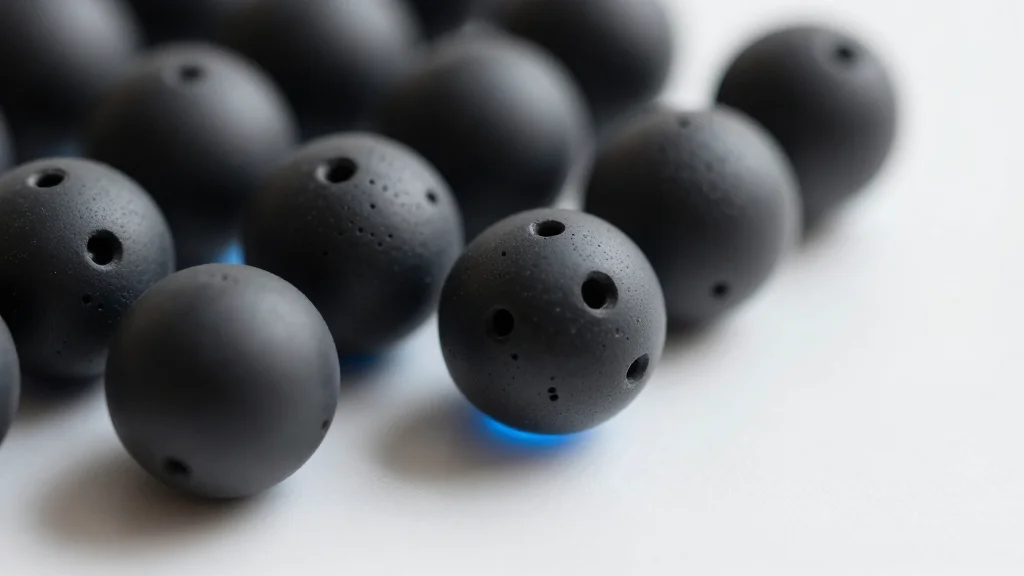
In the latest study, a team transformed sphagnum moss, an abundant wetland biomass, into spherical hard carbon through an acid‑assisted hydrothermal pre‑carbonization followed by high‑temperature annealing. This route creates a network of interconnected closed pores and expands the graphitic interlayer spacing to 0.43 nm, markedly reducing diffusion pathways. Electrochemical testing shows a reversible capacity of 108 mAh g⁻¹ at an extreme current density of 10 A g⁻¹, and when paired with a NaNi₁/₃Fe₁/₃Mn₁/₃O₂ cathode, the full cell retains 70 % of its capacity after 1,000 cycles at 300 mA g⁻¹.
The demonstrated architecture offers a practical pathway for scaling fast‑charging SIBs without relying on exotic precursors or complex templating. Because the feedstock—sphagnum moss—is widely available and the synthesis uses standard hydrothermal reactors, the process could be integrated into existing carbon‑production lines. Faster Na⁺ kinetics open doors for renewable‑energy storage, electric‑bus fleets, and portable devices that demand rapid recharge. Future work will likely explore further pore‑engineering, electrolyte optimization, and pairing with high‑voltage cathodes to push energy density toward parity with lithium‑ion technologies.
Structural Engineering of Biomass‐Derived Hard Carbon With Architectured Closed Pores for Fast Sodium Storage
Comments
Want to join the conversation?
Loading comments...