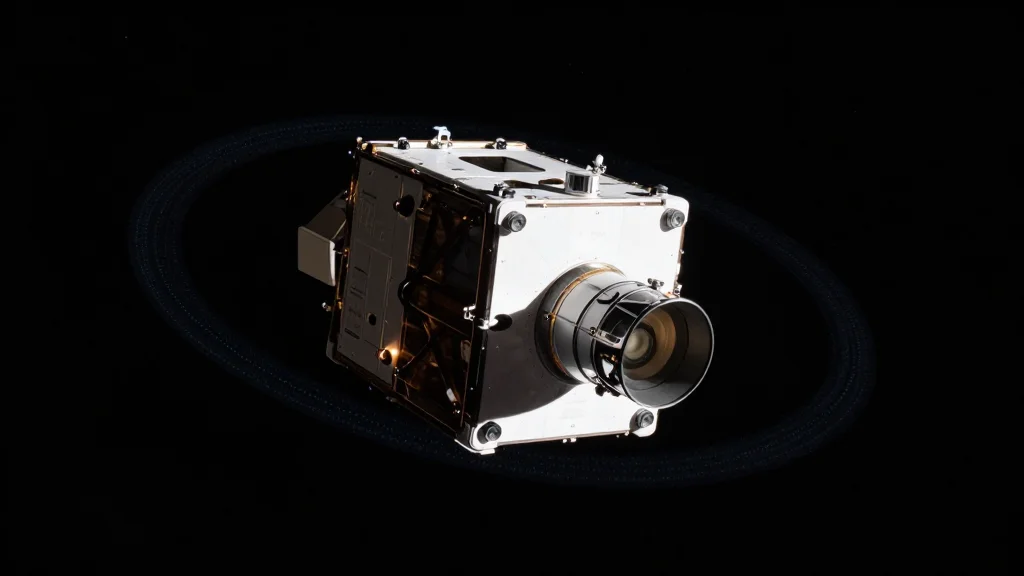
STScI Launches Roman Research Nexus Cloud Platform for Upcoming Telescope

Companies Mentioned


Why It Matters
The launch of the Roman Research Nexus addresses a critical bottleneck in modern astronomy: the ability to process and analyze data volumes that outstrip local computing resources. By providing a cloud‑native environment, the platform democratizes access to cutting‑edge observations, enabling smaller institutions and international partners to contribute meaningfully to discoveries that could reshape our understanding of dark energy, exoplanets, and the early universe. Beyond the immediate mission, the Nexus serves as a prototype for future large‑scale space observatories. Its success could influence how data pipelines are designed for upcoming projects, encouraging a shift toward shared, scalable infrastructures that prioritize openness and collaborative science.
Key Takeaways
- •STScI releases the Roman Research Nexus, a cloud platform for Roman Telescope data.
- •Platform streams, manipulates, and analyzes simulated data with built‑in tools and tutorials.
- •Designed for the petabyte‑scale data volume expected from the telescope starting 2027.
- •Collaboration involves NASA, Caltech/IPAC, and the global astronomy community.
- •Sets a precedent for open, cloud‑first data access in future space missions.
Pulse Analysis
The Roman Research Nexus arrives at a moment when the astronomy community is grappling with data deluge from next‑generation surveys. Historically, missions like Hubble and Spitzer produced datasets that could be comfortably handled on institutional clusters. Roman, however, promises an order‑of‑magnitude increase in raw data, forcing a reevaluation of traditional workflows. By moving the analysis environment to the cloud, STScI not only solves a logistical problem but also reshapes the competitive landscape: institutions that can quickly adapt to cloud‑centric pipelines will likely dominate early discovery credit.
From a market perspective, the Nexus could stimulate growth in cloud service providers specializing in scientific workloads. Companies offering GPU‑accelerated instances, high‑throughput storage, and collaborative notebooks may see increased demand as astronomers migrate their pipelines. Moreover, the platform’s open‑access model may pressure other space agencies to adopt similar strategies, potentially leading to a more unified, interoperable data ecosystem across missions.
Looking forward, the true test will be how the community leverages the Nexus once real Roman data flow begins. If the platform delivers on its promise of rapid, collaborative analysis, it could accelerate the timeline for breakthroughs in dark energy research and exoplanet characterization. Conversely, any friction in scaling the service or integrating user‑generated tools could expose gaps in the current cloud‑first approach, prompting a second wave of platform refinements. Either outcome will provide valuable lessons for the next generation of astrophysical observatories.
STScI Launches Roman Research Nexus Cloud Platform for Upcoming Telescope
Comments
Want to join the conversation?
Loading comments...