Study: Butterflies and Moths Have Reused Same Genetic Toolkit for 120 Million Years
Why It Matters
The finding that distant lepidopterans reuse identical genetic mechanisms makes evolution more predictable, offering a new lens for forecasting how species may adapt to rapid environmental change. It also provides a molecular target for conservation strategies aimed at preserving mimicry complexes.
Key Takeaways
- •Butterflies and a moth reused *ivory* and *optix* genes.
- •Genetic switches, not gene sequences, drove color pattern convergence.
- •Inversion mechanism found in both moth and butterfly lineages.
- •Convergent mimicry persisted for 120 million years.
- •Predictable genetic pathways aid climate‑change adaptation forecasts.
Pulse Analysis
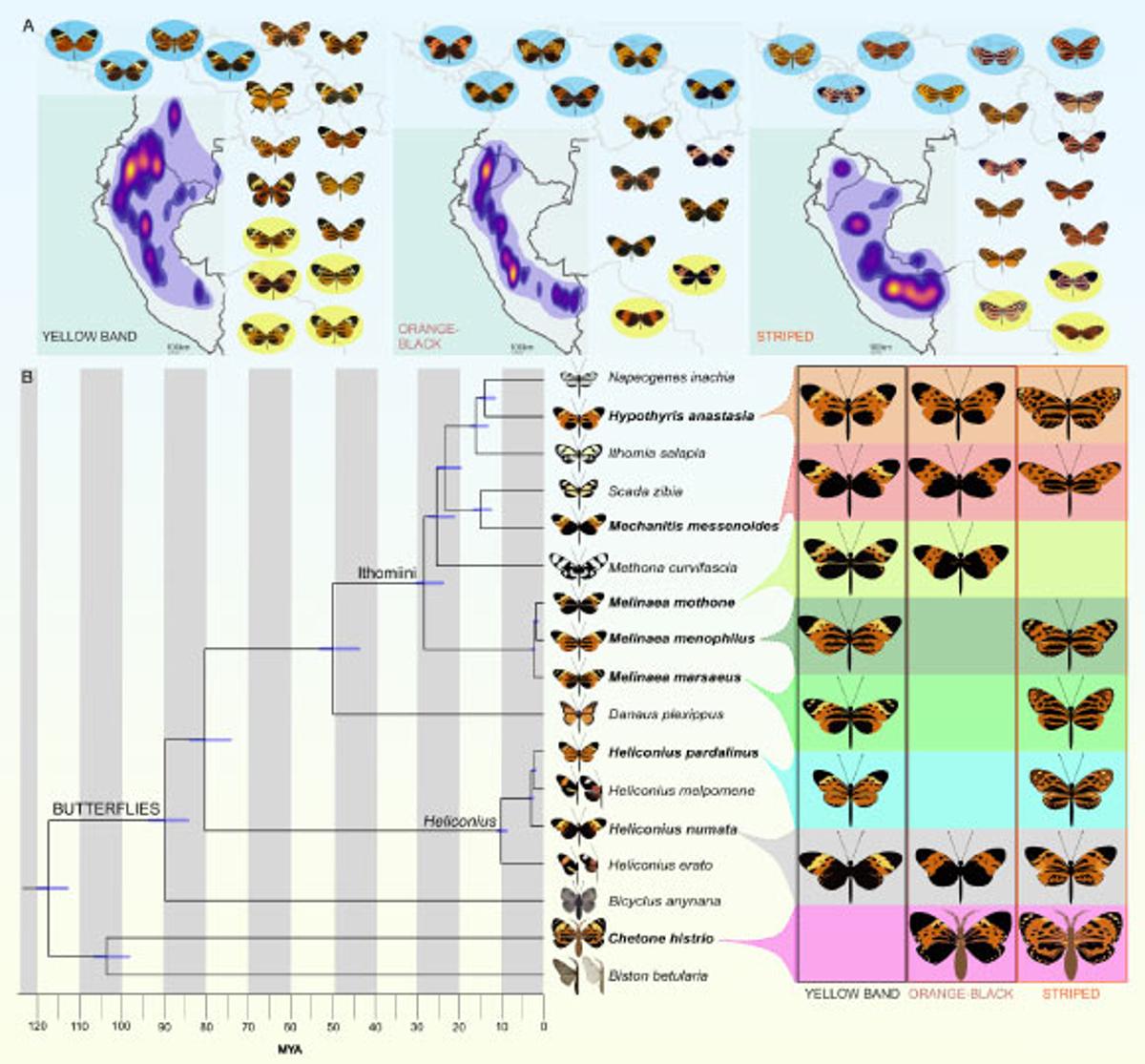
The research team examined seven divergent butterfly lineages and a single moth species that share strikingly similar aposematic wing patterns. By sequencing genomes and mapping regulatory regions, they identified that the same two developmental genes—ivory and optix—were repeatedly toggled on or off to generate the shared coloration. Notably, the moth employed a large‑scale DNA inversion, a genetic trick previously documented only in one butterfly, underscoring how evolution can repurpose the same molecular switches across vastly different taxa.
Beyond the novelty of a shared genetic script, the study reshapes our understanding of evolutionary predictability. If distant species converge on identical genetic solutions, scientists can better anticipate how organisms might respond to novel pressures such as rising temperatures or novel predators. The conserved nature of these pathways suggests that climate‑change‑driven shifts in habitat could be met with predictable genetic responses, allowing conservationists to model future phenotypic changes with greater confidence.
The broader implications extend to evolutionary biology and biodiversity management. Recognizing that a limited set of genes underlies key adaptive traits opens avenues for monitoring genetic health in threatened populations and for designing interventions that preserve essential mimicry complexes. Future work will likely explore whether similar genetic reuse occurs in other taxa, potentially establishing a universal framework for predicting evolutionary outcomes across the tree of life.
Study: Butterflies and Moths Have Reused Same Genetic Toolkit for 120 Million Years
Comments
Want to join the conversation?
Loading comments...