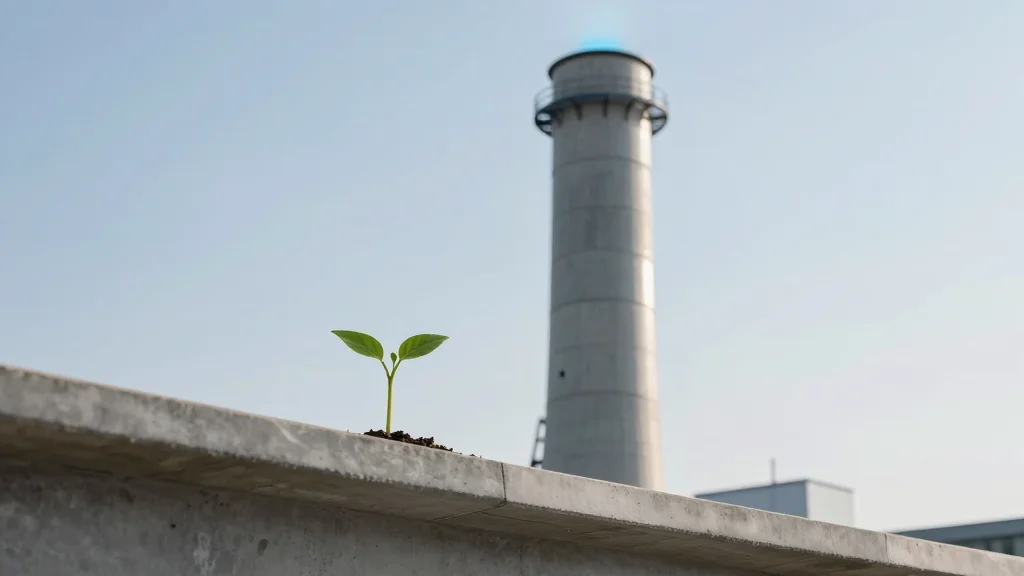
Study: Carbon Capture Could Cut Cement Emissions by 75 per Cent by 2035
Why It Matters
The findings highlight CCUS as the most practical route to deep decarbonisation of cement, a major emissions source, and signal urgent policy and investment action to keep green construction on schedule.
Key Takeaways
- •CCUS could slash cement CO2 emissions by 75% by 2035.
- •Adoption hinges on policy support and financing for capture infrastructure.
- •Faster decarbonisation enables low‑carbon housing and infrastructure projects.
- •Delays in sequestration projects risk slowing green construction targets.
- •Study calls for coordinated industry‑government action to scale CCUS.
Pulse Analysis
Cement production accounts for roughly 8 percent of global carbon dioxide emissions, making it one of the most carbon‑intensive industrial sectors. The process releases CO₂ both from the calcination of limestone and from the combustion of fossil fuels, creating a double‑handed emissions profile that is difficult to mitigate with conventional energy efficiency measures alone. As governments tighten net‑zero mandates, the industry faces mounting pressure to decarbonise without compromising the supply of essential building materials. Carbon capture, utilisation, and storage (CCUS) has emerged as the most viable pathway to achieve deep cuts while preserving output.
A new study commissioned by the Global Cement Initiative models a scenario where widespread CCUS deployment trims sectoral emissions by 75 percent by 2035. The model assumes capture rates of 90 percent at large‑scale plants, supported by a mix of government subsidies, carbon pricing, and private‑sector financing of roughly $150 billion over the next decade. Under this pathway, the carbon intensity of cement could fall from 0.9 kg CO₂ per kilogram of clinker to 0.2 kg, unlocking low‑carbon housing projects and accelerating the rollout of energy‑efficient infrastructure that the UK government has earmarked for delivery.
For investors and construction firms, the study signals a shifting risk landscape. Early adopters of CCUS technology stand to gain competitive advantage through lower regulatory exposure and access to green financing, while laggards may confront stranded‑asset costs as carbon‑pricing schemes tighten. However, the analysis warns that project delays—stemming from permitting bottlenecks or insufficient pipeline capacity—could stall the anticipated emissions trajectory, jeopardising national housing targets. Stakeholders are therefore urged to coordinate on standards, invest in transport and storage networks, and embed CCUS milestones into corporate decarbonisation roadmaps.
Study: Carbon capture could cut cement emissions by 75 per cent by 2035
Comments
Want to join the conversation?
Loading comments...