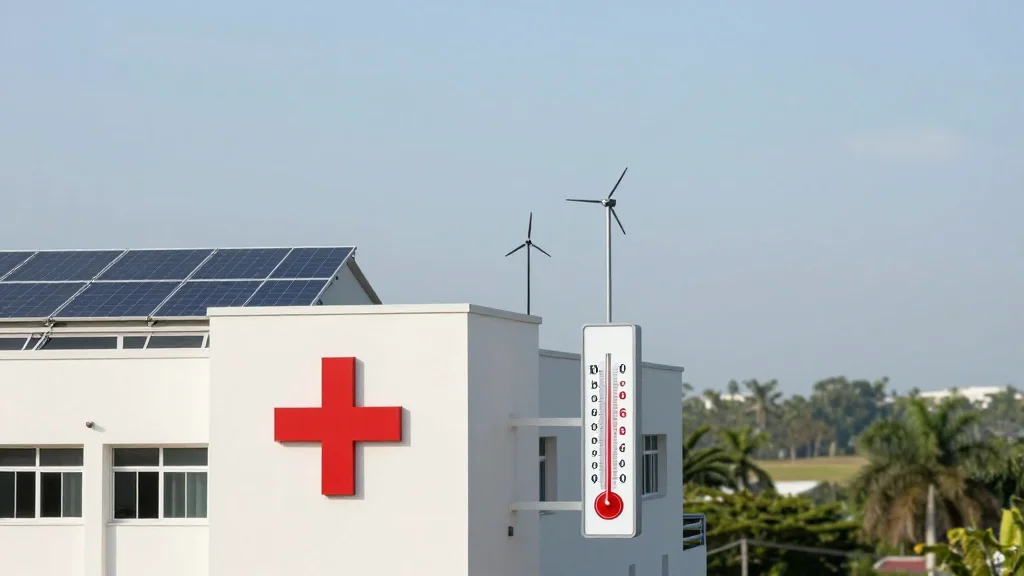
Study: Developing Nations Face $20tr in Losses From Climate-Related Health Impacts by 2050
Why It Matters
The projected $20 trillion health burden threatens to deepen poverty and destabilize economies in the world’s most vulnerable regions, making climate‑health investment a critical priority for global stability.
Key Takeaways
- •$20 trillion projected health cost for developing nations by 2050.
- •Climate‑related diseases could outpace health system capacity in low‑income regions.
- •Every $1 spent on adaptation tools yields significant mortality reduction.
- •Investment gaps risk widening global health inequities and economic losses.
- •Urgent financing needed to protect vulnerable populations from climate shocks.
Pulse Analysis
The study, commissioned by an international climate‑health consortium, aggregates data from the World Health Organization, the Lancet, and regional health ministries to model climate‑driven disease incidence, heat‑related mortality, and disaster‑related injuries through 2050. By translating projected health impacts into economic terms, the report quantifies a $20 trillion loss for low‑ and middle‑income countries, a figure that dwarfs current climate‑adaptation budgets and underscores the urgency of scaling up investment.
Health systems in the affected regions are already strained by chronic under‑funding, and the added climate burden threatens to overwhelm hospitals, emergency services, and public health surveillance. Heatwaves increase cardiovascular events, while shifting vector habitats expand malaria and dengue transmission. The study’s cost‑benefit analysis shows that a modest $1 investment in early‑warning systems, resilient infrastructure, and community training can avert thousands of deaths and reduce long‑term treatment expenses, delivering a high return on public‑health spending.
Policymakers and donors must act now to bridge the financing gap. Options include green bonds earmarked for health resilience, multilateral climate funds that integrate health metrics, and public‑private partnerships that leverage technology for real‑time monitoring. Prioritizing vulnerable populations not only aligns with equity goals but also protects global economic stability, as health crises can trigger migration, labor shortages, and reduced productivity. The study’s findings make a compelling case for embedding health considerations into every climate‑finance strategy moving forward.
Study: Developing nations face $20tr in losses from climate-related health impacts by 2050
Comments
Want to join the conversation?
Loading comments...