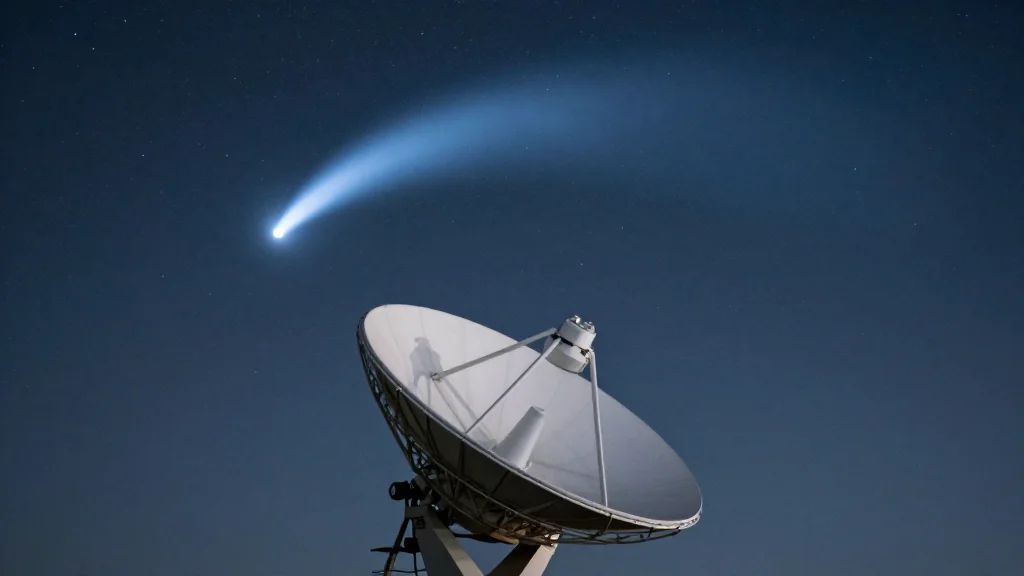
Study Finds Interstellar Comet 3I/ATLAS Formed in Ultra‑Cold Planetary System

Why It Matters
Understanding the birth environment of 3I/ATLAS reshapes our picture of planetary system formation by demonstrating that ultra‑cold, low‑radiation clouds can produce cometary bodies with dramatically different isotopic fingerprints. This insight informs models of water delivery to planets, a key factor in assessing the potential for life elsewhere. Moreover, the ability to measure D/H ratios in real time with ALMA opens a new observational window into the early chemistry of distant star‑forming regions, bridging the gap between laboratory astrochemistry and astronomical observation. The discovery also underscores the importance of rapid response capabilities in astronomy. Capturing 3I/ATLAS within days of its perihelion required coordinated scheduling across multiple facilities, a model that can be replicated for future interstellar interlopers. As detection rates rise, the cumulative data will refine our understanding of the diversity of planetary system architectures and the prevalence of environments that could foster habitable worlds.
Key Takeaways
- •3I/ATLAS’s water D/H ratio is >30× higher than that of Solar System comets
- •ALMA observations captured the comet within days of perihelion, enabling precise isotopic measurement
- •Study funded by NASA, NSF, and Chile’s ANID, highlighting international collaboration
- •Findings indicate formation in a cloud colder than ~30 K, far colder than the Solar System’s birth environment
- •Results suggest planetary system formation conditions vary widely across the galaxy
Pulse Analysis
The 3I/ATLAS discovery arrives at a moment when the astronomy community is finally able to treat interstellar objects as laboratories rather than curiosities. Historically, the first interstellar visitor, ‘Oumuamua, offered limited compositional data, leaving scientists to speculate about its origin. By contrast, the rapid mobilization of ALMA and ground‑based assets for 3I/ATLAS demonstrates a matured infrastructure capable of extracting high‑precision chemistry from fleeting targets. This operational readiness will likely accelerate the pace at which we can test competing models of planet formation, especially those that predict a spectrum of temperature regimes in protoplanetary disks.
From a theoretical standpoint, the extreme deuterium enrichment forces a reevaluation of the temperature thresholds used in astrochemical models. Existing simulations often assume a narrow band of conditions for water ice formation; the new data suggest that colder, perhaps more isolated, molecular clouds can produce water with markedly higher D/H ratios. This could have downstream implications for the isotopic composition of exoplanetary atmospheres, especially for worlds that acquire their volatiles from cometary bombardment.
Looking ahead, the synergy between wide‑field survey telescopes like the Rubin Observatory and high‑resolution facilities such as ALMA will create a feedback loop: more detections lead to more targeted follow‑ups, which in turn refine the criteria for identifying promising interstellar candidates. If the trend of diverse formation environments holds, the next decade may reveal a taxonomy of interstellar bodies, each encoding the chemical fingerprint of a distinct galactic nursery. Such a taxonomy would be a powerful tool for astronomers seeking to map the galactic distribution of planetary system architectures and, ultimately, the potential habitats for life beyond Earth.
Study Finds Interstellar Comet 3I/ATLAS Formed in Ultra‑Cold Planetary System
Comments
Want to join the conversation?
Loading comments...