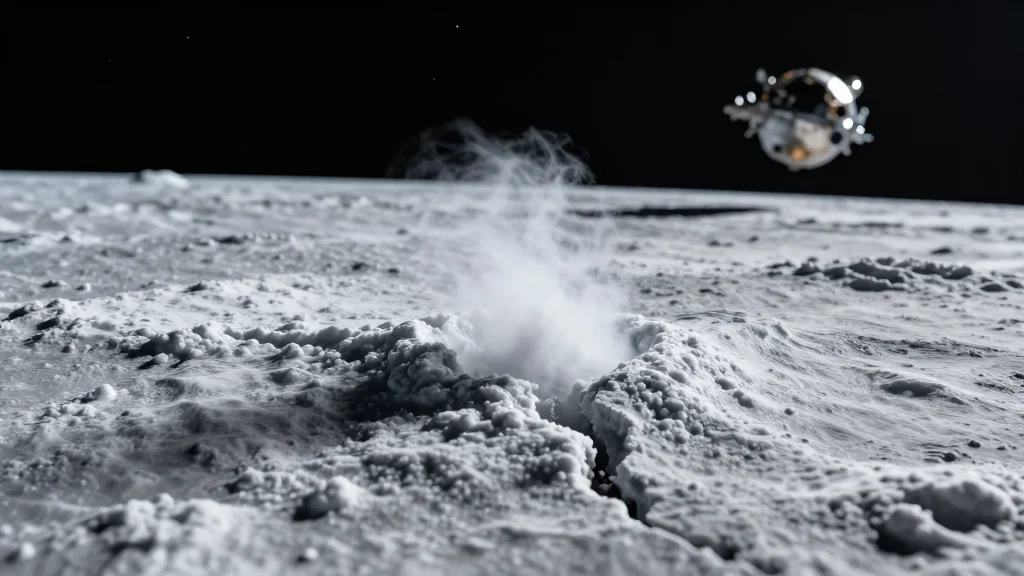
Study Identifies Candidate Cryovolcanic Regions on Ganymede for ESA’s JUICE Mission
Why It Matters
Identifying active or recent cryovolcanic zones sharpens JUICE’s science targets, improving our understanding of subsurface oceans and habitability potential across the Jovian system. The study also informs future exploration strategies for icy worlds beyond Ganymede.
Key Takeaways
- •Study maps 12 potential cryovolcanic sites on Ganymede's surface.
- •Regions align with JUICE's planned flyby corridors for detailed observation.
- •Findings suggest active interior heating could reshape Ganymede's geology.
- •Data supports hypothesis that icy moons host volcanism similar to Earth.
Pulse Analysis
The European Space Agency’s Jupiter Icy Moons Explorer (JUICE) is set to become the first spacecraft to orbit Ganymede, and its success hinges on selecting scientifically rich observation points. Recent research from the Hellenic Space Center leverages legacy Galileo imagery and thermal inertia models to isolate twelve locations where surface morphology and temperature anomalies hint at cryovolcanic processes. By focusing on pits, domes, and smooth plains that contrast with the surrounding terrain, the study provides a roadmap for JUICE’s suite of spectrometers and radar to probe beneath the icy crust.
Cryovolcanism—volcanic activity that erupts water, ammonia, or other volatiles instead of molten rock—has been theorized for several icy bodies, but direct evidence remains sparse. The identified regions on Ganymede exhibit features such as concentric fractures and low‑albedo deposits that align with models of subsurface liquid reservoirs venting to the surface. Thermal simulations suggest that tidal flexing from Jupiter’s gravity could generate enough heat to sustain these eruptions over geological timescales. By targeting these hotspots, JUICE can test whether Ganymede’s internal ocean is actively communicating with its surface, a key factor in assessing habitability.
Beyond the immediate scientific payoff, the study’s methodology sets a precedent for future missions to Europa, Callisto, and even Saturn’s moon Enceladus. Pinpointing cryovolcanic activity informs where to look for biosignatures, guides lander site selection, and helps private enterprises evaluate resource extraction prospects such as water ice harvesting. As the space industry pivots toward sustained exploration of the outer Solar System, data‑driven target selection like this will be essential for maximizing mission return on investment.
Study Identifies Candidate Cryovolcanic Regions on Ganymede for ESA’s JUICE Mission
Comments
Want to join the conversation?
Loading comments...