
Why It Matters
Understanding any external factor that can influence earthquake timing is critical for societies living in seismically active zones. A credible link between solar storms and seismic events would add a new dimension to hazard assessment, potentially improving early‑warning strategies and informing infrastructure resilience planning. Moreover, the hypothesis underscores the need for integrated monitoring of space‑weather and terrestrial processes, encouraging data sharing across traditionally separate scientific domains. Beyond practical applications, the research challenges long‑standing assumptions about the isolation of Earth's geophysical systems. Demonstrating a causal pathway from solar activity to crustal stress would prompt a reevaluation of how energy flows through the planet‑space system, possibly inspiring novel approaches to studying other cross‑disciplinary phenomena.
Key Takeaways
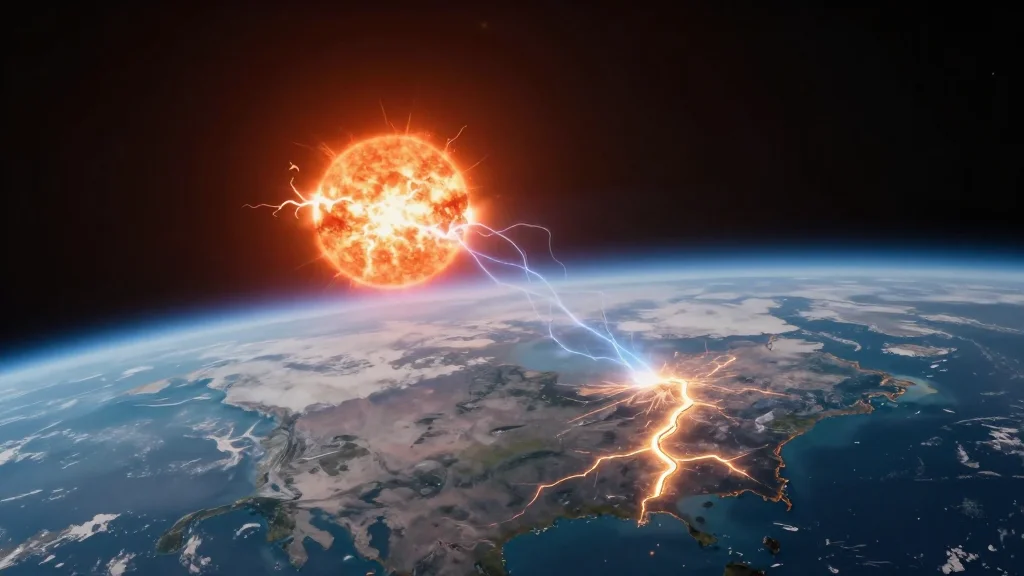
- •Scientists propose that ionospheric disturbances from solar storms generate electric fields that can reach fault zones.
- •The mechanism suggests electric fields may act as a trigger for earthquakes already near failure.
- •Laboratory evidence shows electric fields can weaken rock cohesion, supporting the theoretical model.
- •Researchers call for joint space‑weather and seismic observations to test the hypothesis.
- •If validated, the link could integrate solar‑storm data into probabilistic earthquake forecasting.
Pulse Analysis
The proposed solar‑storm‑earthquake connection arrives at a time when the scientific community is increasingly focused on interdisciplinary risk models. Historically, attempts to link external cosmic events to terrestrial disasters have been met with skepticism, often because of limited data and the difficulty of establishing causality. This study distinguishes itself by grounding its hypothesis in measurable electric‑field physics and by outlining a clear experimental pathway.
From a market perspective, the hypothesis could stimulate demand for integrated monitoring platforms that combine satellite‑based solar observations with ground‑based seismic sensors. Companies that provide real‑time space‑weather analytics may find new customers among earthquake‑risk managers and insurance firms seeking to refine their models. At the same time, the geoscience sector may invest in upgraded instrumentation capable of detecting subtle electric variations in the crust, potentially opening a niche for specialized sensor manufacturers.
Looking ahead, the key test will be whether statistical analyses of past solar storms and earthquake catalogs reveal a reproducible pattern. A positive result would likely trigger a cascade of follow‑up studies, ranging from detailed numerical simulations to field experiments that deliberately inject electric currents into fault zones. Conversely, a null result would reinforce the view that earthquakes are predominantly driven by internal tectonic forces. Either outcome will sharpen our understanding of Earth’s complex system and may set a precedent for exploring other subtle extraterrestrial influences on planetary processes.
Study Links Intense Solar Storms to Triggered Earthquakes
Comments
Want to join the conversation?
Loading comments...