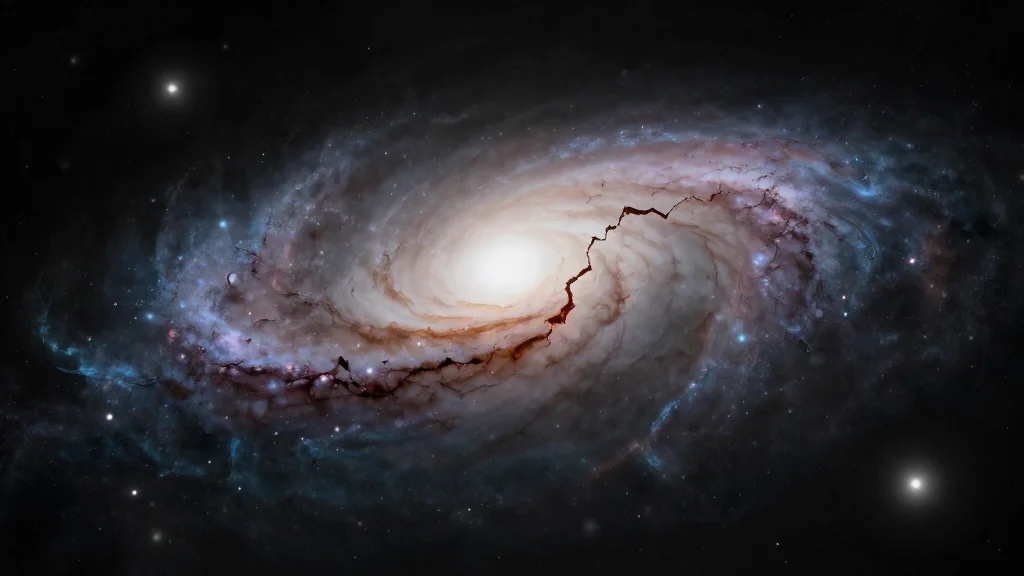
Study Predicts Universe Could End in ‘Big Rip’ as Expansion Accelerates

Why It Matters
Understanding whether the universe will end in a violent Big Rip or a gradual heat death reshapes fundamental questions about the nature of space‑time, the limits of physical law, and humanity’s place in the cosmos. By linking quantum‑gravity concepts to cosmological expansion, the study pushes the frontier of theoretical physics, encouraging interdisciplinary collaboration between particle physicists, astronomers, and philosophers of science. If dark energy indeed strengthens over time, it could demand new physics beyond the Standard Model, influencing future research funding, telescope design, and even the way educators frame the story of the universe for students. Beyond academic circles, the prospect of a cosmic tear‑apart captures public imagination, offering a stark reminder that the universe is dynamic and its fate is not predetermined. Communicating these findings responsibly can inspire interest in STEM fields while emphasizing the provisional nature of scientific predictions, reinforcing the importance of continued observation and theory development.
Key Takeaways
- •Chile‑based researchers used a two‑region cosmological model with the Generalized Uncertainty Principle.
- •The model predicts a "Big Rip" where accelerating dark energy eventually tears apart all structures.
- •Dark energy’s equation‑of‑state parameter w is central to whether the scenario unfolds.
- •Upcoming surveys (DESI, Euclid, JWST) will test the model’s assumptions about expansion rates.
- •Study bridges quantum‑gravity theory and large‑scale cosmology, opening new research pathways.
Pulse Analysis
The Castillo‑Méndez paper arrives at a moment when the cosmology community is grappling with tensions in dark‑energy measurements. Recent data from the Hubble Space Telescope and Planck satellite have hinted at a modest discrepancy in the Hubble constant, suggesting that our standard ΛCDM framework may be incomplete. By introducing the Generalized Uncertainty Principle into a macroscopic model, the authors provide a concrete mechanism that could amplify dark‑energy effects, offering a testable hypothesis that goes beyond phenomenological tweaks.
Historically, Big Rip scenarios have been speculative, often dismissed as fringe because they rely on a dark‑energy equation of state w < –1, a condition not yet observed. This study revitalizes the conversation by showing that quantum‑gravity corrections can naturally drive w into the phantom regime under certain conditions. If future observations confirm a phantom‑like dark energy, the theoretical groundwork laid here could become a cornerstone for a new generation of cosmological models that integrate quantum mechanics and general relativity.
Looking ahead, the real litmus test will be empirical. The next decade’s high‑precision surveys will either tighten constraints around w = –1, effectively ruling out the catastrophic rip, or reveal subtle deviations that lend credence to the model. Either outcome will have profound implications: a confirmation would demand a radical overhaul of fundamental physics, while a refutation would reinforce the robustness of the ΛCDM paradigm. In both cases, the study exemplifies how bold theoretical work can steer observational priorities, ensuring that the quest to understand the universe’s fate remains a dynamic, data‑driven enterprise.
Study Predicts Universe Could End in ‘Big Rip’ as Expansion Accelerates
Comments
Want to join the conversation?
Loading comments...