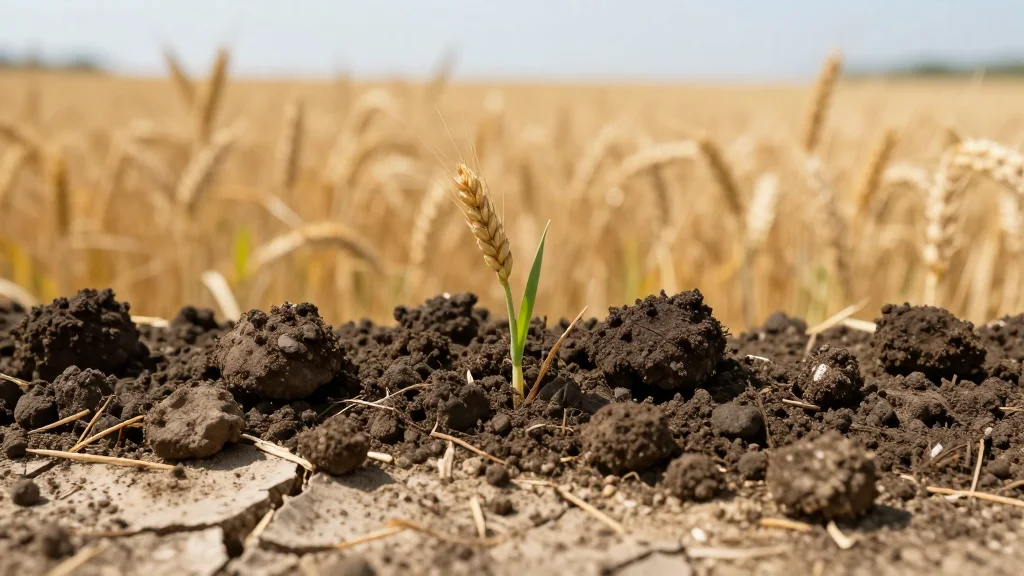
Study: Regenerative Farming Strengthens Drought Resilience for Cereal Crops
Why It Matters
By cutting drought‑related losses, regenerative farming can safeguard European grain supplies and protect billions of euros in revenue, directly addressing the region’s top agricultural climate risk. The study provides evidence that policy incentives for soil health could yield measurable economic benefits.
Key Takeaways
- •Regenerative practices cut drought‑related cereal yield loss by ~10%
- •Soil carbon and organic matter improvements boost water‑holding capacity
- •Cover crops and reduced tillage increase farm resilience to dry spells
- •EU climate‑risk reports now highlight regenerative farming as mitigation
- •Widespread adoption could protect billions of euros in grain revenue
Pulse Analysis
Regenerative agriculture is gaining traction as a climate‑smart solution, and the latest Soil Capital study adds quantitative weight to the narrative. By surveying a representative sample of European cereal farms, researchers documented a 10 percent reduction in yield loss during drought years when farmers employed practices such as cover cropping, diversified rotations, and minimal soil disturbance. These techniques enrich soil organic carbon, which in turn enhances the soil’s ability to retain moisture and buffer crops against erratic precipitation patterns. The study’s methodology—combining on‑the‑ground yield data with satellite‑derived soil health metrics—offers a robust template for future impact assessments.
The implications for the European agri‑food sector are substantial. Drought already accounts for the largest share of climate‑related financial damage to agriculture in the EU, threatening food security and export competitiveness. By integrating regenerative practices into standard farm management, producers can reduce their exposure to volatile weather, potentially stabilizing grain markets and lowering insurance premiums. Policymakers are taking note; recent EU climate‑risk frameworks now list regenerative farming alongside precision irrigation and drought‑resilient crop varieties as priority mitigation strategies. Incentive schemes, such as the Common Agricultural Policy’s eco‑scheme, could accelerate adoption by offsetting transition costs.
Beyond immediate yield benefits, the broader environmental payoff includes carbon sequestration, biodiversity gains, and reduced reliance on synthetic inputs. However, scaling regenerative methods faces hurdles: knowledge gaps, labor intensity, and short‑term yield uncertainty can deter risk‑averse farmers. Investment in extension services, data platforms, and collaborative research will be crucial to bridge these gaps. As climate models project more frequent and severe droughts, the economic case for regenerative agriculture strengthens, positioning it as a cornerstone of Europe’s sustainable food system and a template for other drought‑prone regions worldwide.
Study: Regenerative farming strengthens drought resilience for cereal crops
Comments
Want to join the conversation?
Loading comments...