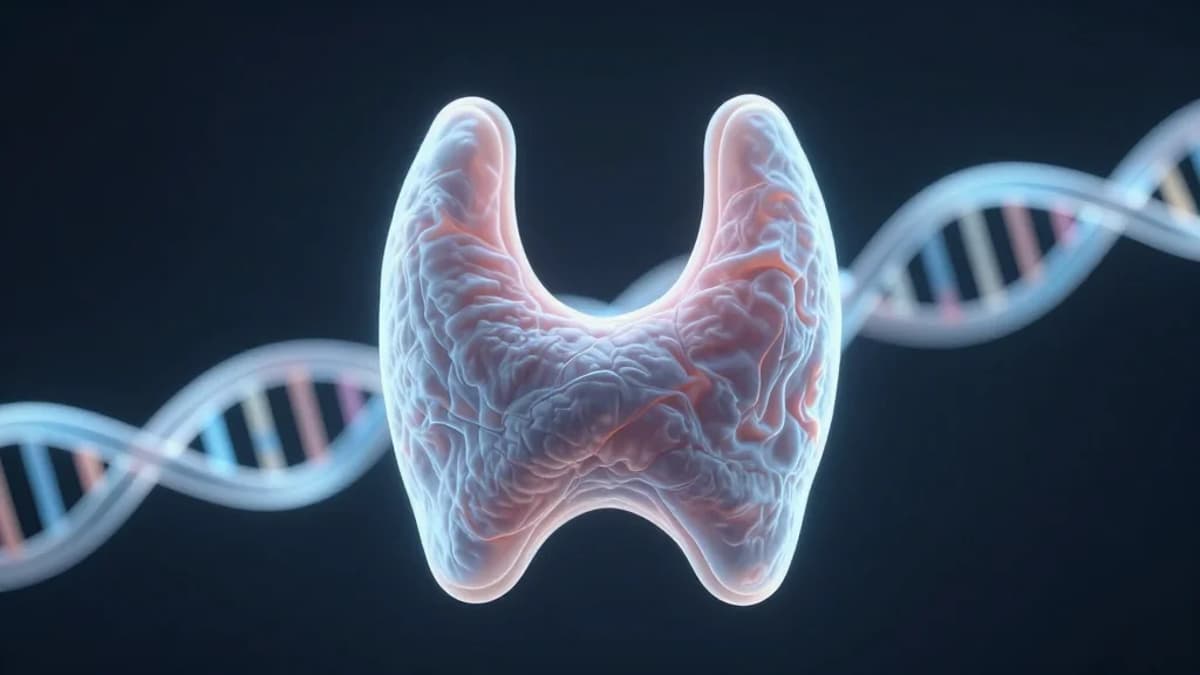
Study Reveals Genetic Balancing Act Between Autoimmunity and Cancer Risk
•February 26, 2026
0
Why It Matters
The discovery links AIHT genetics to cancer protection, informing precision immunotherapy and risk‑stratified screening strategies. It underscores how population‑scale genomics can reveal dual‑effect variants that shape both disease susceptibility and treatment outcomes.
Key Takeaways
- •Identified 400+ AIHT genetic markers, 50 protein‑coding.
- •10% variants reduce skin‑cancer risk.
- •38% signals tied to general autoimmunity, 20% thyroid‑specific.
- •Genetic trade‑off mirrors checkpoint‑inhibitor side effects.
- •FinnGen and UK Biobank data enabled high‑power analysis.
Pulse Analysis
Autoimmune hypothyroidism, the most common thyroid disorder, has long eluded comprehensive genetic characterization. By leveraging the massive FinnGen and UK Biobank cohorts, researchers achieved unprecedented statistical power, uncovering over 400 associated loci. \n\nA striking outcome of the analysis is the inverse relationship between certain AIHT variants and skin‑cancer incidence.
Approximately one‑tenth of the identified signals encode checkpoint proteins that normally dampen immune activity. Reduced checkpoint function appears to boost immune surveillance against malignant cells while simultaneously increasing the risk of the immune system attacking thyroid tissue. \n\nThe broader implications extend to precision medicine and drug design.
Understanding which genetic profiles confer both autoimmunity and cancer protection can guide patient stratification for immunotherapies, potentially predicting adverse events before treatment. Moreover, the study showcases the power of population‑scale biobanks to reveal pleiotropic effects, encouraging further integration of genomic data into clinical decision‑making. Future work using organoid models and functional assays aims to translate these genetic insights into actionable interventions, paving the way for therapies that balance immune activation with safety.
Study reveals genetic balancing act between autoimmunity and cancer risk
0
Comments
Want to join the conversation?
Loading comments...