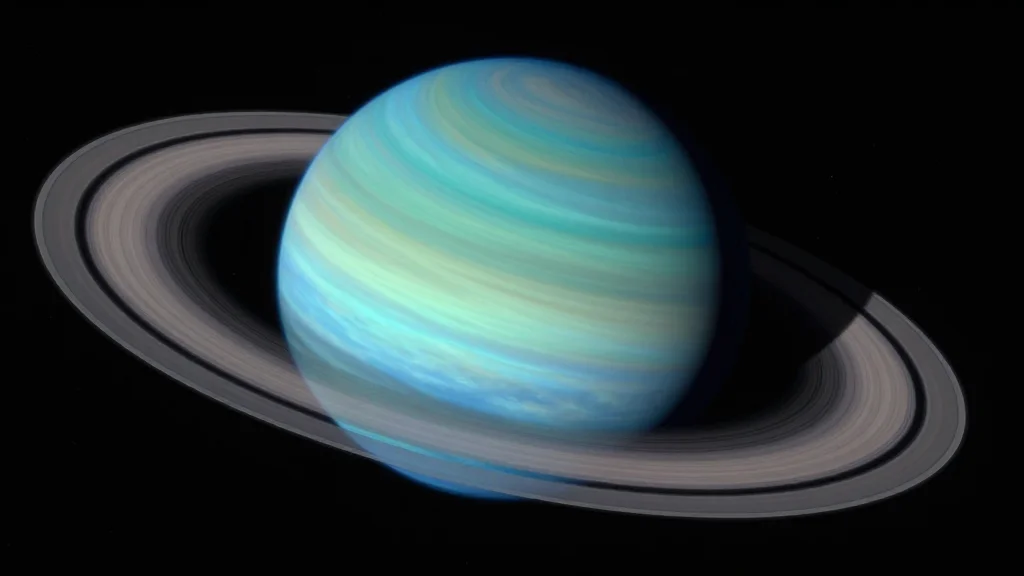

Why It Matters
Understanding the formation mechanisms of Uranus' outer rings reshapes our grasp of planetary ring dynamics, especially for bodies far from the Sun where solar radiation pressure is weak. By pinpointing micrometeoroid impacts and collisional cascades as distinct drivers, the study provides a template for interpreting faint ring systems around other ice giants, potentially revising models of mass transport and dust lifecycles in the outer solar system. The detection of organic‑rich material also raises questions about the distribution of complex chemistry beyond the traditional habitable zone, informing future astrobiological investigations. Beyond pure science, the work illustrates the power of synthesizing multi‑decadal observations from a suite of space‑based and ground‑based telescopes. It underscores the value of preserving archival data, which can yield breakthroughs when re‑examined with modern analytical techniques. As space agencies plan next‑generation missions to the ice giants, these insights will help prioritize instrument suites and observation strategies aimed at unraveling the subtle processes that sculpt planetary environments.
Key Takeaways
- •Study identifies micrometeoroid impacts on moon Mab as the source of Uranus' μ ring
- •Collisions among non‑icy, organic‑rich bodies generate the ν ring
- •μ ring appears blue; ν ring appears red, reflecting differing compositions
- •Research integrates data from Hubble, James Webb, Keck and Voyager 2
- •Findings provide a comparative framework for faint rings around other ice giants
Pulse Analysis
The new Uranus ring study arrives at a moment when the planetary science community is re‑evaluating the diversity of ring systems across the solar system. Historically, Saturn's spectacular rings have dominated discourse, while the more subdued rings of Uranus and Neptune were relegated to niche interest. By delivering a detailed, mechanism‑specific explanation for Uranus' outer rings, the research forces a shift in how scientists conceptualize ring longevity and replenishment. The dual‑origin model—micrometeoroid‑driven for the μ ring and collision‑driven for the ν ring—suggests that even low‑density environments can sustain rings through continuous, albeit subtle, processes.
From a methodological standpoint, the study exemplifies the growing trend of data fusion, where archival observations are re‑processed with contemporary algorithms to extract new physical parameters. This approach maximizes the scientific return on past missions like Voyager 2 and leverages the unprecedented sensitivity of JWST. As funding agencies prioritize cost‑effective science, such integrative analyses will likely become a staple, especially for distant targets where new spacecraft visits are infrequent.
Looking ahead, the implications for upcoming missions are profound. A dedicated Uranus orbiter could directly sample the μ and ν rings, testing the organic composition hypothesis and measuring particle size distributions in situ. Moreover, the study's emphasis on micrometeoroid fluxes may influence the design of protective shielding for spacecraft operating in the outer solar system. In sum, the work not only resolves a long‑standing mystery but also sets a new benchmark for how planetary ring science will be pursued in the coming decade.
Study Uncovers Origins of Uranus' Faint Outer Rings
Comments
Want to join the conversation?
Loading comments...