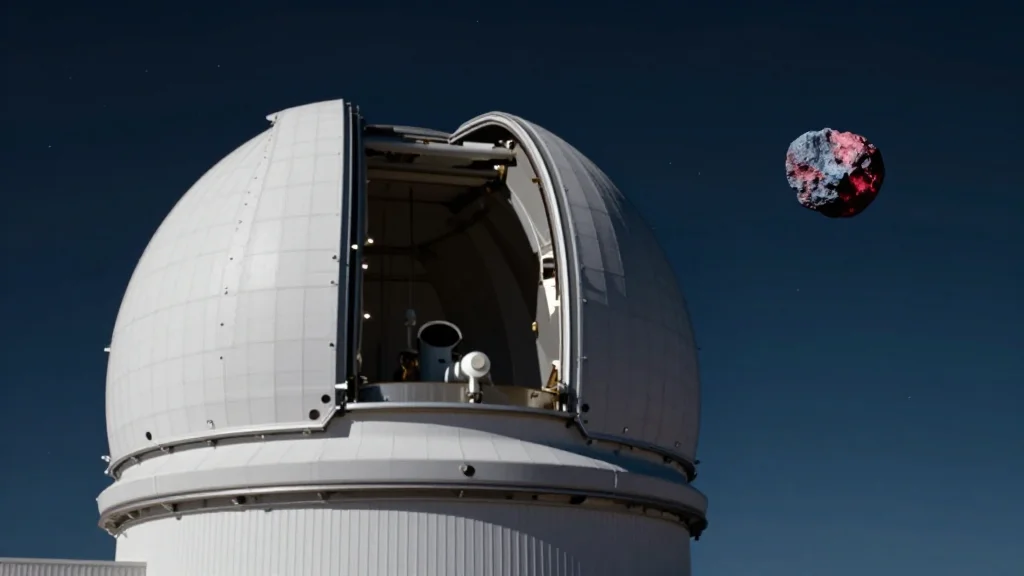
Subaru Telescope Sheds Light on the "Color Mystery" Of Jupiter Trojan Asteroids
Why It Matters
Understanding Trojan colors refines theories of solar‑system evolution and Jupiter’s early migration, impacting models of planetesimal formation and the distribution of volatile materials.
Key Takeaways
- •Subaru observed >500 Jupiter Trojans, confirming bimodal color distribution.
- •Red Trojans chemically resemble Kuiper‑belt objects, implying distant origin.
- •Less‑red Trojans match main‑belt composition, suggesting local formation.
- •Color groups correlate with orbital inclination, hinting at capture dynamics.
- •Findings bolster planetary migration models predicting mixed‑origin Trojan populations.
Pulse Analysis
The Jupiter Trojan asteroids—two swarms sharing Jupiter’s orbit at the L4 and L5 Lagrange points—have long puzzled astronomers because their surface colors do not fit neatly into existing taxonomic classes. Early surveys identified a wide spread of spectral slopes, leading to the so‑called “color mystery”: why some Trojans appear markedly red while others are comparatively neutral. This ambiguity hampered attempts to trace their provenance, a key piece in reconstructing the early dynamical history of the giant planets. Clarifying the color distribution is therefore essential for any robust model of solar‑system evolution.
Using the 8.2‑meter Subaru Telescope equipped with the Hyper Suprime‑Cam, an international team captured high‑precision photometry of more than 500 Trojans across visible and near‑infrared wavelengths. The data reveal a striking bimodality: roughly 40 % of the sample exhibits a deep red slope, while the remaining objects cluster around a neutral, less‑red spectrum. Spectral modeling links the red cohort to organic‑rich, irradiated ices typical of Kuiper‑belt bodies, whereas the less‑red group aligns with silicate‑dominated, thermally processed material found in the main asteroid belt. Moreover, the two groups show a subtle but consistent offset in orbital inclination.
These results lend strong support to migration scenarios in which Jupiter’s early movement scattered planetesimals from both the outer and inner solar system into the Trojan clouds. A mixed‑origin population explains the observed color dichotomy and provides a natural laboratory for studying how volatile‑rich bodies survive in a relatively warm environment. The findings also have practical implications for future missions, such as NASA’s Lucy probe, which will sample both color groups and test compositional predictions on the ground. Continued spectroscopic follow‑up will refine the link between color, composition, and dynamical history.
Subaru Telescope Sheds Light on the "Color Mystery" of Jupiter Trojan Asteroids
Comments
Want to join the conversation?
Loading comments...