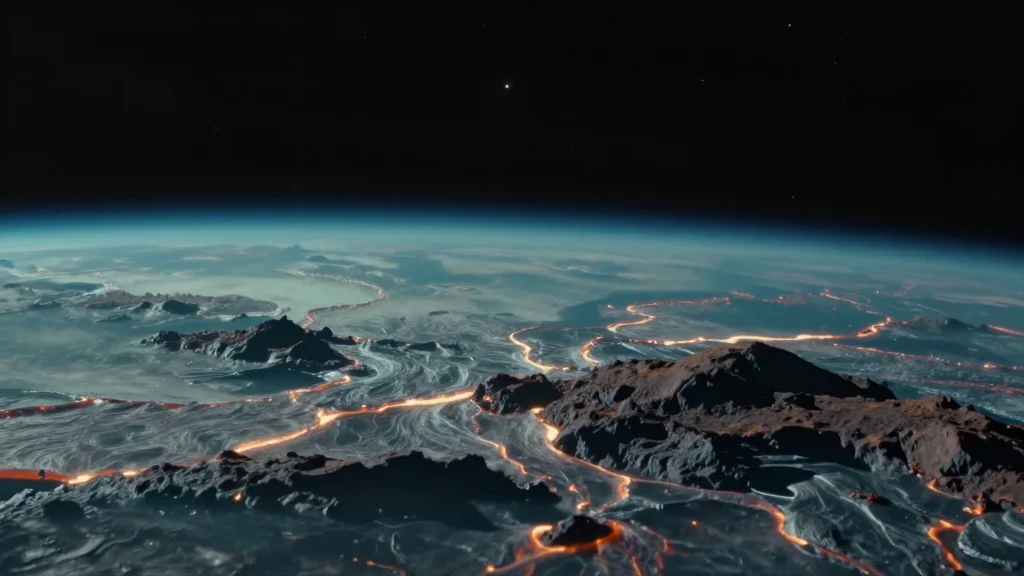
Sulphur-Soaked Lava World Is in a Planetary Class All Its Own
Why It Matters
The discovery forces a rethink of how super‑Earths are categorized and informs models of planet formation, atmospheric retention, and potential habitability across the galaxy.
Key Takeaways
- •L 98‑59 d is 35 ly away, 1.6 × Earth’s diameter
- •Planet hosts a global magma ocean with a sulphur‑rich interior
- •Thick hydrogen atmosphere and tidal heating keep magma liquid
- •Suggests a new class of sulphur‑rich super‑Earths
Pulse Analysis
The detection of L 98‑59 d marks a milestone for exoplanet science, showcasing JWST’s ability to probe atmospheric composition and interior structure on worlds beyond our solar system. By measuring the planet’s transit spectrum, researchers identified signatures of a high‑pressure hydrogen envelope and trace sulphur compounds, confirming a molten silicate mantle beneath. This level of detail, previously limited to larger gas giants, now extends to super‑Earths, expanding the catalog of known planetary types.
Unlike the intensely irradiated magma world 55 Cancri e, L 98‑59 d resides around a modest red dwarf, receiving relatively low stellar flux. Its thick hydrogen atmosphere acts as an insulating blanket, while gravitational interactions with neighboring planets generate tidal heating that together sustain a liquid magma ocean for billions of years. The planet’s low density and persistent primordial atmosphere challenge conventional models that predict rapid loss of light gases on close‑in rocky planets, suggesting that interior composition and external heating can dramatically alter evolutionary pathways.
The broader implication is a reshaping of the super‑Earth taxonomy, which has relied largely on size alone. If more sulphur‑rich, magma‑ocean planets are uncovered by upcoming missions such as ARIEL and the next generation of ground‑based observatories, scientists will need to incorporate compositional sub‑classes into classification frameworks. This will refine target selection for habitability studies, improve statistical models of planet formation, and potentially reveal environments where exotic chemistry—rather than Earth‑like conditions—dominates. Continued machine‑learning simulations and expanded spectroscopic surveys will be essential to map this emerging planetary frontier.
Sulphur-soaked lava world is in a planetary class all its own
Comments
Want to join the conversation?
Loading comments...