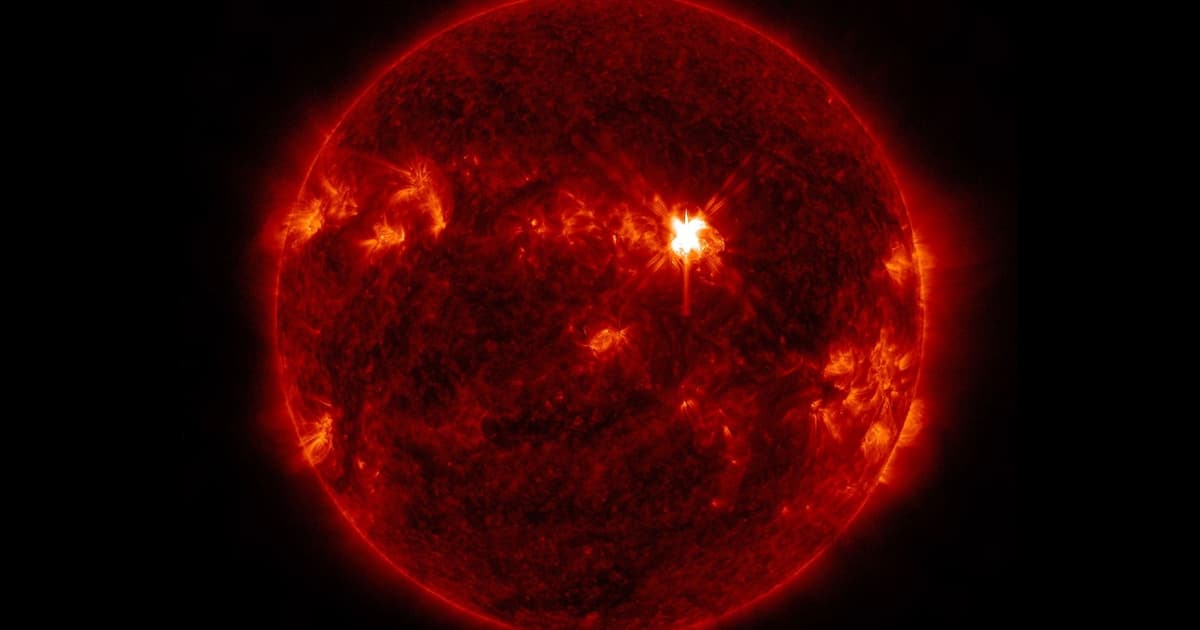
Sun Erupts with 3 Solar Flares, Raising Chances of Northern Lights for U.S.
Why It Matters
A geomagnetic storm of this magnitude can disrupt critical communications, navigation and energy systems, while also offering a rare public spectacle of northern lights far south of their typical range.
Key Takeaways
- •Three X1.0 solar flares headed for Earth within 24 hours
- •Flare combo may produce a strong to severe geomagnetic storm
- •Potential disruptions to satellites, power grids, and navigation systems
- •Increased chance of aurora sightings across lower U.S. latitudes
Pulse Analysis
The recent trio of X1.0 solar flares underscores the heightened activity of Solar Cycle 25, which has entered a more volatile phase. Space weather forecasters track such eruptions because their electromagnetic emissions and accompanying coronal mass ejections can interact with Earth’s magnetosphere, amplifying the risk of geomagnetic disturbances. When multiple flares converge, the resulting plasma cloud can carry amplified magnetic fields, increasing the probability of a storm that ranks between "strong" and "severe" on the NOAA scale. This event illustrates why continuous monitoring by agencies like NASA and the Space Weather Prediction Center is essential for early warning and mitigation.
A storm of this intensity poses tangible threats to modern infrastructure. High‑energy particles can induce currents in long conductive pathways, potentially overloading transformers and triggering localized blackouts. Satellite operators must brace for increased drag and radiation exposure that can degrade orbit stability and impair communication links. Aviation routes that rely on high‑frequency radio navigation may experience signal degradation, prompting airlines to adjust flight paths. Historical incidents, such as the 1989 Quebec blackout, demonstrate how a single geomagnetic event can cascade into widespread economic disruption, reinforcing the need for resilient grid designs and robust satellite shielding.
Beyond the technical challenges, the anticipated aurora borealis offers a cultural and economic upside. Forecasts suggest visible displays as far south as the Midwest, sparking interest from tourists and photographers eager to capture the rare light show. Local businesses, from hotels to outdoor gear retailers, stand to benefit from a surge in visitor traffic. However, the excitement must be balanced with public awareness of potential service interruptions. As space weather prediction models improve, stakeholders across energy, telecommunications, and travel sectors can better prepare for both the risks and the rewards of such solar events.
Sun erupts with 3 solar flares, raising chances of northern lights for U.S.
Comments
Want to join the conversation?
Loading comments...