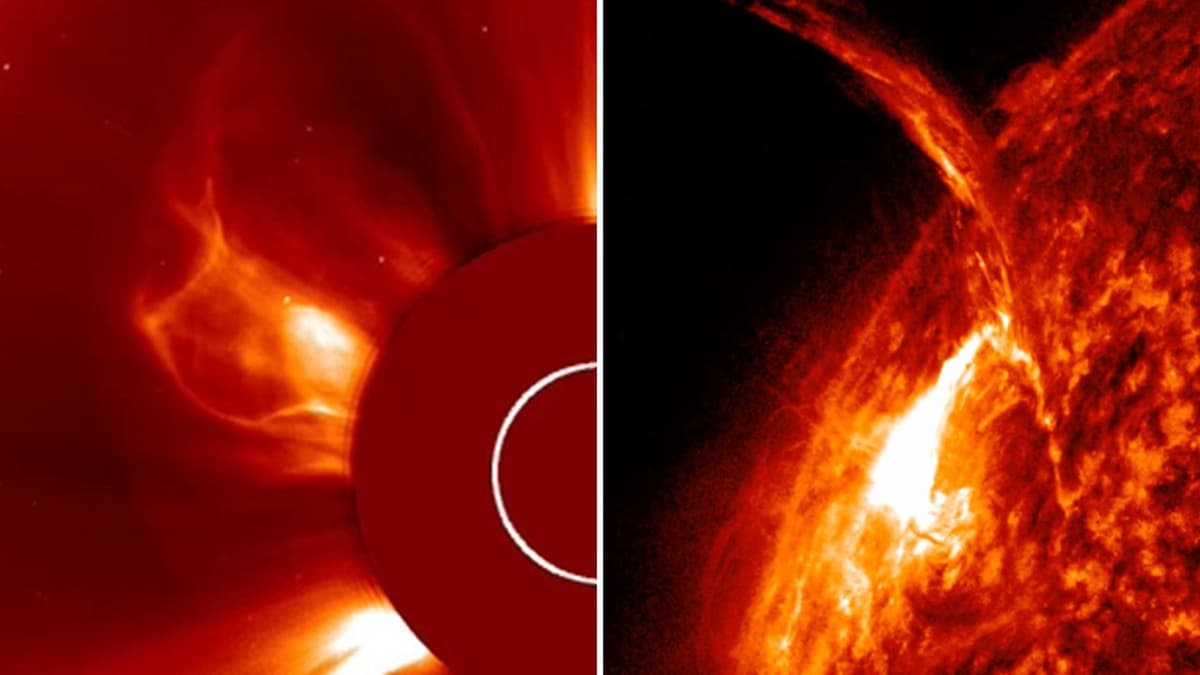
Sun Unleashes Colossal Solar Flare and Coronal Mass Ejection, Raising the Chances of Northern Lights This Week
Why It Matters
The glancing CME could disrupt HF communications and spark northern‑light displays, affecting aviation, maritime operations and tourism. Continued solar activity raises the risk of stronger geomagnetic storms that can impact power grids and satellite systems.
Key Takeaways
- •M5.7 flare erupted May 10, producing a CME aimed near Earth.
- •CME may brush Earth May 13, causing G1 geomagnetic storm.
- •Potential aurora displays expected in northern U.S. and U.K.
- •Forecasts warn of further M‑class flares from AR 4436 and AR 4432.
- •Radio blackouts affected HF communications during flare peak.
Pulse Analysis
The May 10 eruption marks one of the strongest solar flares of the current solar cycle, reaching M5.7 on the NOAA X‑ray scale. An M‑class event releases ten‑times more energy than a C‑class flare, enough to ionize the upper atmosphere and temporarily shut down high‑frequency radio links. While X‑class flares dominate headlines, M‑class eruptions are far more frequent and often precede larger storms. Analysts compare this flare to the May 2024 G5 event, noting that the Sun’s activity is climbing as sunspot AR 4436 rotates into the Earth‑directed sector.
The associated coronal mass ejection is traveling east of Earth but models from NOAA’s Space Weather Prediction Center and the U.K. Met Office suggest a peripheral brush on May 13. A G1 geomagnetic storm, the lowest official level, can still induce faint auroras at latitudes as low as the northern United States and the United Kingdom. More importantly, the CME’s charged particles may cause brief HF radio blackouts, affecting aviation routes over the Atlantic and maritime communications. Satellite operators monitor the event for potential surface charging and drag increases.
Looking ahead, the same active regions—AR 4436 and neighboring AR 4432—are expected to generate further M‑class flares and possibly an X‑class eruption within days. For power utilities, airlines, and the burgeoning aurora‑tourism market, early warnings translate into operational adjustments and marketing opportunities. Space weather forecasting has become a critical component of risk management, prompting investments in real‑time monitoring and resilient infrastructure. Stakeholders should stay tuned to NOAA alerts as the Sun continues its ramp‑up toward solar maximum.
Sun unleashes colossal solar flare and coronal mass ejection, raising the chances of northern lights this week
Comments
Want to join the conversation?
Loading comments...