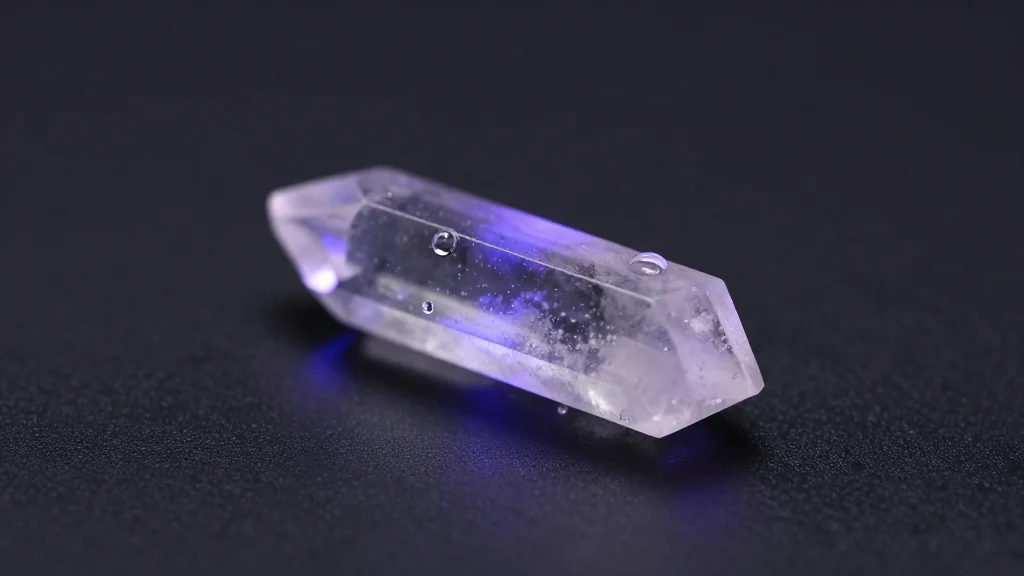
Sunlight Triggered Crystal Lattice Harvests Drinking Water From Air and Stores It
Key Takeaways
- •Sunlight-activated MOF creates cavities that store water molecules
- •Each cavity holds two water molecules, ~5% of crystal mass
- •UV-triggered shape change enables on-demand water capture and release
- •Cadmium-based proof of concept; less toxic alternatives under study
- •Scalable crystal synthesis could support decentralized water harvesting
Pulse Analysis
Water scarcity is looming as a defining challenge of the next decade, with the United Nations warning that half of the world’s projected population could face stress by 2050. Traditional desalination and distribution networks demand significant energy and capital, prompting researchers to explore materials that can harvest moisture directly from the atmosphere. Metal‑organic frameworks, celebrated with the 2025 Nobel Prize in Chemistry, have long been prized for their tunable porosity, but most require external pressure or heat to adsorb water. The new light‑activated MOF sidesteps these constraints by using sunlight as the sole trigger, aligning with broader sustainability goals.
The breakthrough hinges on a reversible photochemical reaction: ultraviolet exposure reshapes the organic linkers within the crystal lattice from an “H”‑like to an “X”‑like configuration, spawning a network of nanocavities. Each cavity captures two water molecules, translating to about five percent of the crystal’s total mass—a modest figure per unit but potentially massive when multiplied across industrial‑scale production. Unlike conventional sorbents, the material stores water without needing a pressure differential, and the captured moisture can be released on demand simply by reversing the light stimulus or applying mild heating. This simplicity could lower operational costs and enable portable water‑harvesting devices.
Scaling the technology presents both opportunities and hurdles. The researchers used cadmium atoms for proof of concept, raising toxicity concerns; however, they are already exploring greener metal alternatives. Manufacturing the crystals in bulk will require consistent linker synthesis and controlled UV exposure, but the self‑assembling nature of the framework suggests a viable pathway. If commercialized, the MOF could power off‑grid water stations, support disaster relief efforts, and integrate with smart‑city infrastructure that monitors humidity and sunlight. Investors and policymakers should watch this development as it moves from the lab toward pilot projects, potentially reshaping the economics of water access in arid and remote regions.
Sunlight triggered crystal lattice harvests drinking water from air and stores it
Comments
Want to join the conversation?