Why It Matters
Solar activity drives space‑weather events that can disrupt satellites, communications, and power grids, so unexpected changes affect risk assessments. Accurate cycle outlooks help industries and policymakers prepare for potential geomagnetic storms.
Key Takeaways
- •May 2026 sunspot count rose, defying NOAA predictions
- •Solar maximum may be double‑peaked, extending cycle length
- •Recent research links shallow sunspot confinement to internal solar changes
- •Historical predictions have consistently missed actual sunspot activity
- •NOAA added new curve in 2025 suggesting start of decline
Pulse Analysis
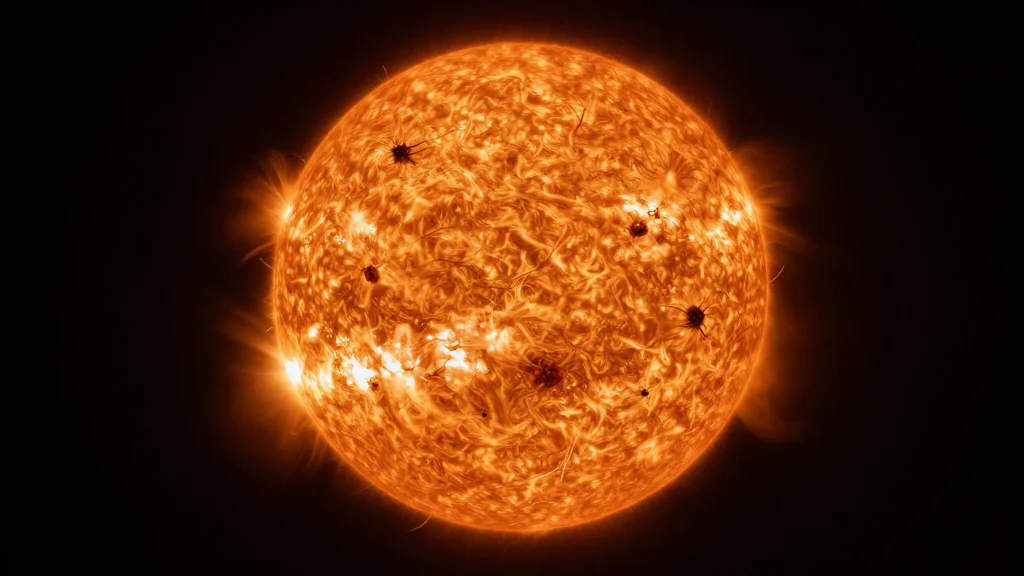
The Sun’s 11‑year cycle is a cornerstone of space‑weather forecasting, yet each cycle brings its own quirks. NOAA’s latest solar‑cycle progression chart shows May’s sunspot count edging upward, a surprise given the steady decline that followed the 2023 peak. While the numbers remain below the red‑curve forecast released in 2020, the green dot for May highlights a deviation that could signal a brief resurgence. Analysts compare this pattern to the double‑peaked maximum of Solar Cycle 23, where a secondary surge prolonged heightened activity and complicated prediction models.
For satellite operators, airlines, and power‑grid managers, even modest fluctuations matter. Increased sunspot activity often precedes solar flares and coronal mass ejections, which can induce geomagnetic storms capable of degrading GPS accuracy, disrupting radio communications, and inducing currents that stress transformers. A potential second peak would extend the window of elevated risk, prompting firms to reassess contingency plans and insurance premiums. Moreover, the timing of the cycle’s descent influences the scheduling of space‑mission launches, as agencies aim to avoid periods of heightened radiation exposure.
Scientific confidence remains limited. Recent studies suggest sunspots are now confined to the Sun’s outer 600 miles, hinting at deeper structural shifts that traditional models may not capture. NOAA’s 2025 addition of a magenta curve, indicating an early decline, underscores the evolving consensus among solar physicists. As researchers integrate helioseismic data and long‑term magnetic observations, the community hopes to refine forecasts. Until then, stakeholders must monitor the Sun’s behavior closely, recognizing that the next six months will likely reveal whether May’s bump is a fleeting anomaly or the start of a broader, double‑peaked maximum.
Sunspot update: May sunspot activity jumps
Comments
Want to join the conversation?
Loading comments...