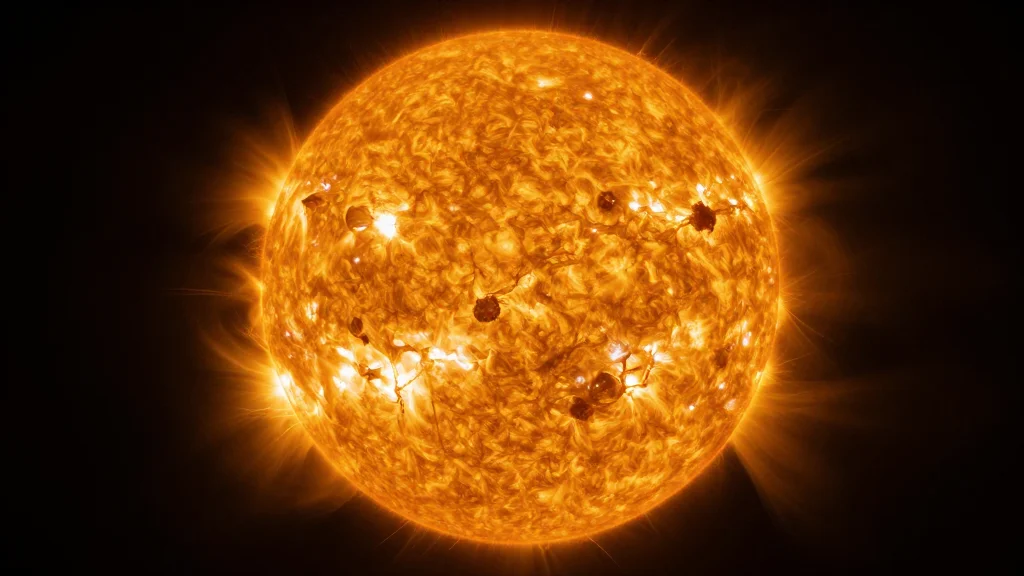
Sunspot Update: The Number of Sunspot Continues to Decline
Why It Matters
Persistently low sunspot activity undermines the reliability of space‑weather forecasts that protect satellite, power‑grid, and aviation operations, and it adds uncertainty to climate models that factor solar irradiance.
Key Takeaways
- •NOAA observed record low sunspots in March and April 2026
- •Prediction curves consistently overestimate current solar activity
- •Weak, short cycles defy historic length‑activity correlation
- •Low sunspot activity may influence short‑term climate trends
Pulse Analysis
The latest NOAA solar‑cycle progression chart reveals that March and April 2026 delivered sunspot counts well below the agency’s own April 2025 projection. This marks the second consecutive month where observed activity lags behind a suite of forecasts dating back to 2007, 2009, and 2020. The discrepancy highlights a growing gap between empirical solar behavior and the models used by researchers and commercial forecasters, raising questions about the underlying assumptions that drive space‑weather predictions.
For industries that depend on accurate solar forecasts, the implications are immediate. Satellite operators rely on sunspot‑driven geomagnetic storm alerts to safeguard orbital assets, while electric‑grid managers use the same data to anticipate geomagnetically induced currents that can overload transformers. Aviation routes, especially polar flights, adjust flight paths based on anticipated radiation levels tied to solar activity. The persistent under‑performance of sunspot cycles therefore introduces operational risk, prompting firms to consider more conservative contingency planning and potentially invest in alternative monitoring technologies.
Scientifically, the current weak and abbreviated solar cycle challenges long‑standing heuristics that link cycle length with peak activity. If the Sun’s output continues to deviate from expectations, climate models that incorporate solar irradiance as a variable may need recalibration, especially in the context of the so‑called "global warming pause" observed over the past two decades. The uncertainty underscores a broader need for enhanced solar‑physics research, improved predictive algorithms, and cross‑disciplinary collaboration to better inform both commercial risk assessments and policy decisions related to climate resilience.
Sunspot update: The number of sunspot continues to decline
Comments
Want to join the conversation?
Loading comments...