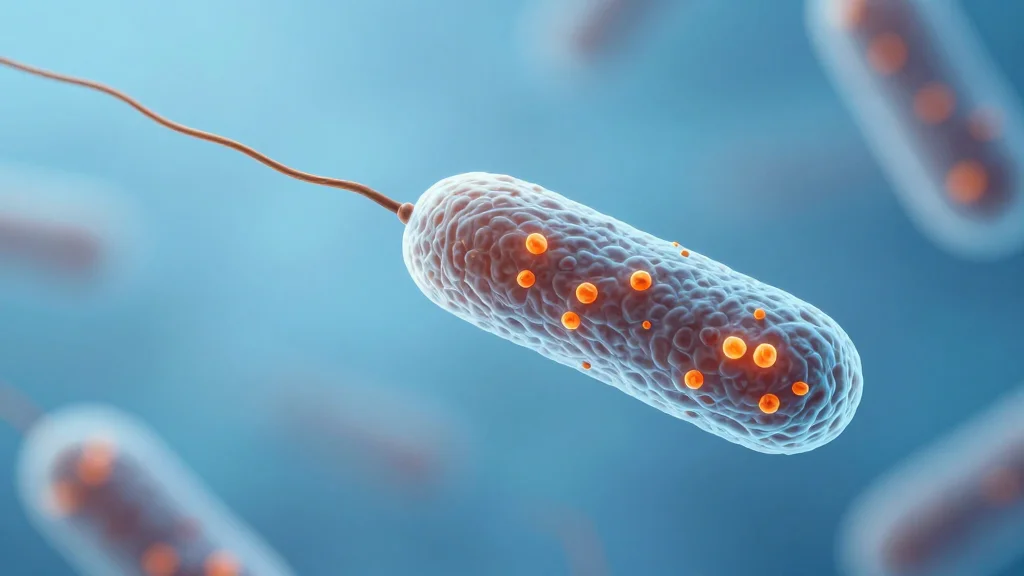
Super-Resolution Microscopy Provides Real-Time Picture of Bacteria Degrading Biomass with Enzyme Complexes
Why It Matters
By delivering a quantitative map of cellulosome activity, the work lowers the technical barrier to designing microbes that can replace costly pretreatment and added enzymes in cellulosic biofuel production, accelerating a cheaper, greener energy supply chain.
Key Takeaways
- •Super‑resolution microscopy captured 15,000 images of C. thermocellum in 30 ms intervals
- •Machine‑learning clustering revealed >1,000 cellulosomes concentrated at biomass contact points
- •Cellulosomes dynamically relocate, depleting from bacterial surface in later growth stages
- •Quantitative imaging enables engineering of microbes for consolidated bioprocessing
- •Technique can be applied to other enzyme‑producing microbes and consortia
Pulse Analysis
Cellulosomes—massive, multi‑enzyme protein complexes—are the secret weapon that makes Clostridium thermocellum one of the most efficient natural biomass degraders. While scientists have long known these structures enable the bacterium to break down tough lignocellulose, they lacked a functional, high‑resolution picture of where and how the complexes operate. The new study bridges that gap by leveraging a 30‑nanometer super‑resolution microscope that records images every 30 milliseconds, producing a dataset of over 15,000 frames that capture the bacterium’s life cycle in unprecedented detail.
The breakthrough comes from pairing this imaging power with an unsupervised machine‑learning clustering algorithm. The software automatically identified hidden patterns, revealing that more than 1,000 cellulosomes can cluster in a nanometer‑scale zone where the cell touches plant biomass. As degradation progresses, the complexes migrate away from the cell surface, effectively depleting the bacterium of its enzymatic arsenal in later stages. This dynamic redistribution, now quantified through histograms and statistical analyses, provides a concrete metric for researchers to assess the impact of genetic modifications on cellulosome performance.
For the bioenergy sector, the implications are profound. Consolidated bioprocessing—where a single microbe both breaks down biomass and ferments sugars into fuels—has been hampered by the high cost of pretreatment and supplemental enzymes. Quantitative, real‑time imaging equips engineers with the data needed to fine‑tune cellulosome architecture, potentially slashing those expenses and accelerating commercial-scale cellulosic biofuel production. Moreover, the methodology is transferable to other enzyme‑rich microbes, opening a broader pathway for biotech firms to harness nature’s own catalytic machinery for sustainable chemical manufacturing.
Super-resolution microscopy provides real-time picture of bacteria degrading biomass with enzyme complexes
Comments
Want to join the conversation?
Loading comments...