Superconductivity Breakthrough Could Unlock Ultra-Efficient Electronics
Why It Matters
By overcoming temperature and magnetic‑field limitations, the breakthrough paves the way for practical superconducting components that dramatically cut energy loss in data centers and emerging quantum technologies.
Key Takeaways
- •Chalmers team enhanced cuprate superconductivity via nanofaceted substrate
- •Ultrathin YBCO films remained superconducting at higher temperatures
- •Approach resists strong magnetic fields, a major practical hurdle
- •Surface engineering offers alternative to chemical material redesign
- •Could accelerate energy‑efficient electronics and quantum hardware deployment
Pulse Analysis
Superconductors have long promised zero‑loss power transmission, yet their reliance on cryogenic cooling and sensitivity to magnetic fields have kept them confined to niche labs. Modern ICT infrastructure now consumes up to 12% of global electricity, prompting researchers to hunt for alternatives that can slash the heat‑generated waste of conventional silicon chips. While high‑temperature cuprates marked a step forward, achieving stable performance under real‑world magnetic environments remained elusive, limiting adoption in power grids, magnetic resonance imaging, and quantum processors.
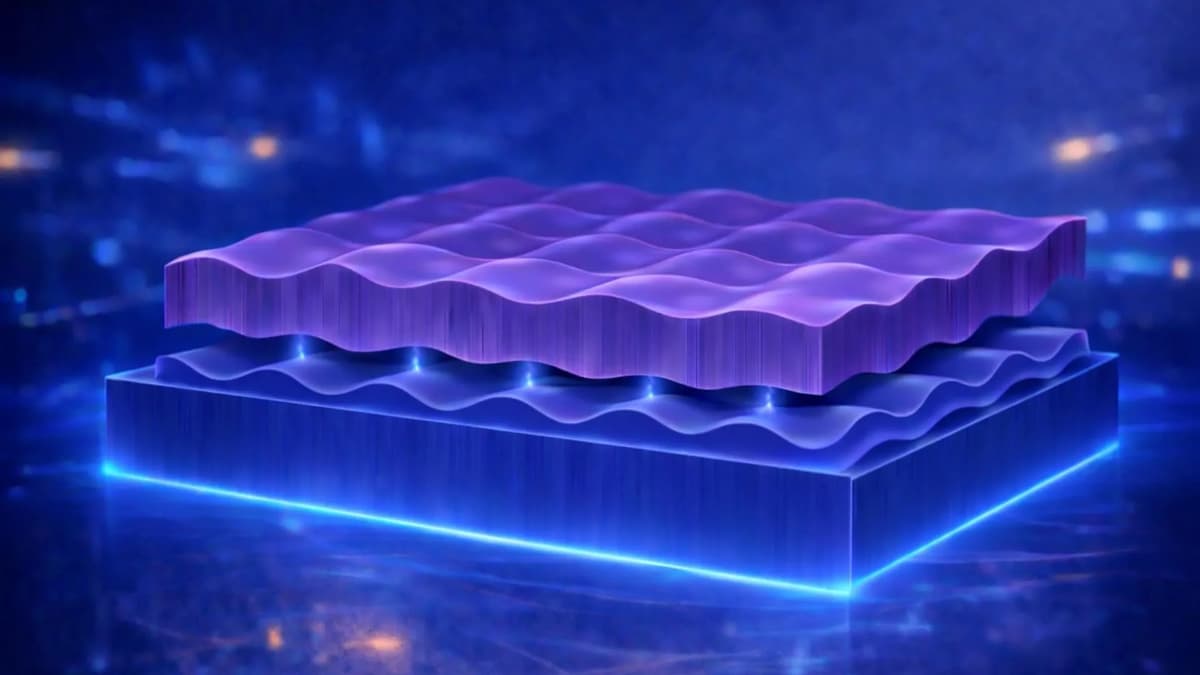
The Chalmers breakthrough flips the conventional material‑centric strategy on its head. Instead of tweaking the chemistry of YBa₂Cu₃O₇‑δ, the team engineered the substrate’s surface into a pattern of nanoridges and valleys. This nanoscale topography directs the growth of a few‑nanometer‑thick superconducting layer, aligning electron pathways and reinforcing the superconducting phase even as temperatures rise and magnetic fields intensify. The result is a demonstrable increase in critical temperature and magnetic‑field tolerance without altering the cuprate’s composition, offering a reproducible, potentially low‑cost manufacturing route.
If the method scales, it could reshape several high‑value markets. Data‑center operators could replace resistive interconnects with superconducting links, cutting cooling costs and boosting bandwidth. Power‑grid engineers might deploy loss‑free transmission lines that operate closer to ambient conditions, easing the burden of expensive cryogenics. Moreover, quantum computing platforms, which already grapple with magnetic interference, stand to gain more stable qubit environments. The study signals that substrate engineering may become a cornerstone of next‑generation superconducting technology, accelerating the transition toward ultra‑efficient electronics across the energy and tech sectors.
Superconductivity breakthrough could unlock ultra-efficient electronics
Comments
Want to join the conversation?
Loading comments...