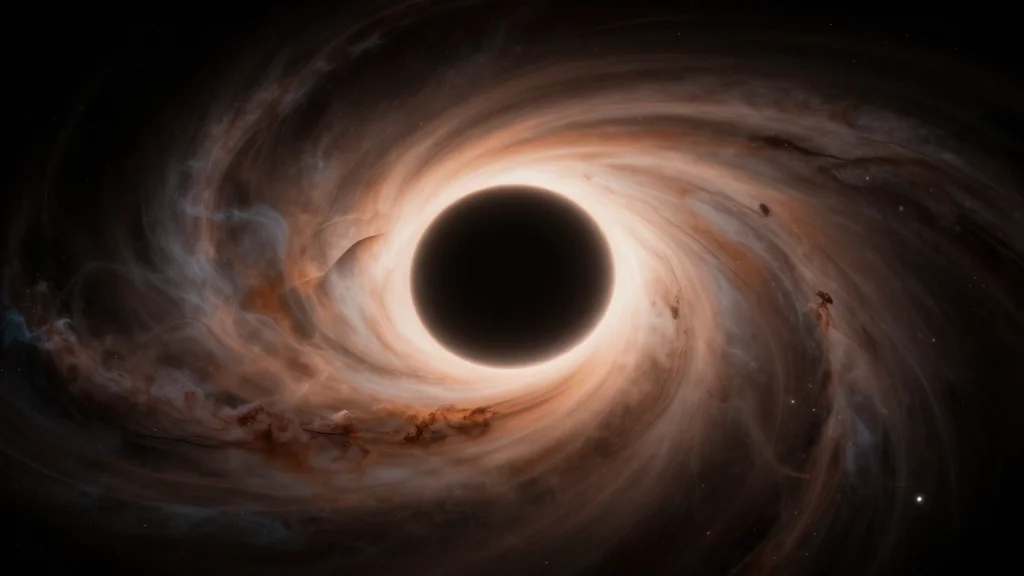
Supermassive Black Holes Could Be the Universe's Biggest Planet Nurseries
Why It Matters
If AGN tori indeed spawn millions of planets, it reshapes theories of planet formation and expands the potential habitats for exotic worlds, influencing both astrophysics and the search for extraterrestrial life.
Key Takeaways
- •AGN dust tori may host the universe's largest planet populations
- •Modeled planets grow faster, potentially exceeding Jupiter's mass
- •Extreme AGN conditions could push planets to stellar masses
- •Findings suggest a new core‑accretion pathway for star formation
- •Observational evidence is still required to validate the theory
Pulse Analysis
Planet formation has long been associated with thin, rotating disks of gas and dust encircling young stars. These protoplanetary disks provide the gentle environment needed for dust grains to stick together, eventually forming planetesimals and full‑size worlds. The new study flips this paradigm by showing that the outer torus of an active galactic nucleus—spanning light‑years and bathed in intense radiation—can replicate many of the same temperature and density conditions found in stellar disks, opening a surprising venue for planet birth.
The authors employed magnetohydrodynamic simulations to track dust coagulation within AGN tori, revealing that the extreme gravity and high material density accelerate growth rates dramatically. In this setting, nascent planets could balloon to sizes well beyond Jupiter, and continued accretion might push some objects into the mass regime of low‑mass stars. This blurs the conventional boundary between planet and star formation, suggesting a hybrid core‑accretion channel that could populate galaxies with exotic, massive worlds previously unaccounted for in cosmological models.
Confirming these theoretical predictions will require next‑generation observatories capable of resolving the dense, dusty environments around supermassive black holes. Instruments such as the James Webb Space Telescope and upcoming extremely large telescopes could detect signatures of planet‑scale structures or anomalous infrared emission within AGN tori. If validated, the discovery would expand the catalog of potential planetary habitats, reshape our understanding of galaxy evolution, and add a new dimension to the search for life beyond the Milky Way.
Supermassive black holes could be the universe's biggest planet nurseries
Comments
Want to join the conversation?
Loading comments...